


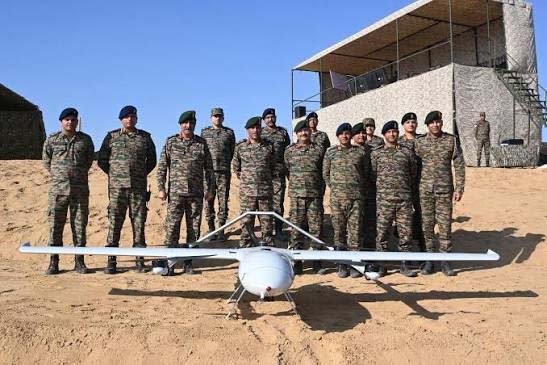
NEW DELHI. The Indian Air Force is establishing a dedicated development and manufacturing hub at Sulur, Tamil Nadu, to spearhead a domestic ecosystem for advanced attack drones and loitering munitions.
The Indian Air Force (IAF) is taking a decisive step toward restructuring its asymmetric warfare strategies by launching a comprehensive, indigenous kamikaze drone (loitering munition) programme. This strategic move aims to create a highly robust, self-reliant defence pipeline to build mass-scale precision attack systems entirely within India.

The Sulur Aerospace Node
At the centre of this initiative is the establishment of a specialised infrastructure hub at the Sulur Air Force Station near Coimbatore, Tamil Nadu. Chosen for its existing operational layout and its strategic location within the Tamil Nadu Defence Industrial Corridor, Sulur will serve multiple unified purposes:
- Design & Evaluation: Bridging the gap between military operational requirements and technological engineering.
- Production Scaling: Collaborating with domestic private-sector defence firms and MSMEs to manufacture sub-components, composites, and advanced guidance electronics.
- Testing and Validation: Conducting rigorous quality controls and field trial simulations for airworthiness and high-altitude readiness.
Transforming Contemporary Air Doctrine
Lessons pulled from recent global conflicts have underscored that low-cost, precise loitering munitions can effectively overwhelm traditional air defences and neutralise high-value armoured assets on the battlefield.
By scaling up a domestic attack drone ecosystem, the IAF intends to reduce its long-term dependence on expensive foreign imports while securing a highly agile, rapidly deployable aerial asset class. This localised initiative closely aligns with India’s overarching Make in India and Aatmanirbhar Bharat paradigms, pushing high-tech defence tech maturity across domestic industrial sectors.






