


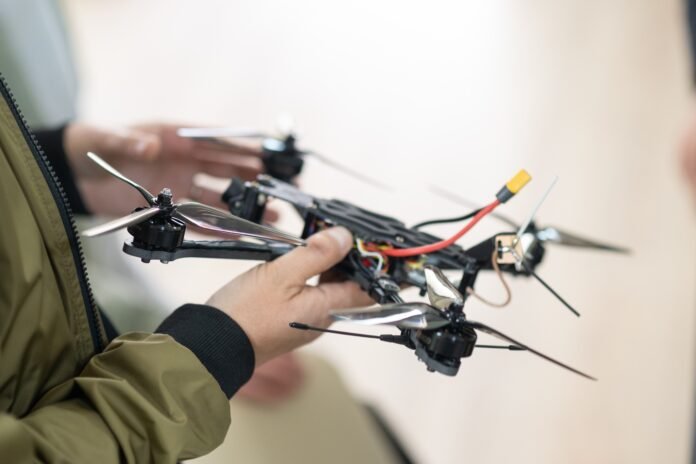
Tel Aviv: The armed drones, widely termed as “poor man’s artillery”, are changing the role of the artillery in combat.
Armed drone, especially FPV (first-person view) drone munitions and cheap one-way attack drone, are widely called the “poor man’s artillery” because they provide affordable, precision firepower that can substitute for or supplement traditional artillery, especially for forces lacking artillery ammunition or expensive air assets.

The reason is the price of an artillery shell (approx. US $ 5000) and the cost incurred on armed drone is around approx. US $500.
Giora Eiland, a retired Major General of the Israel Defence Forces and a former head of the Israeli National Security Council, told Raksha Anirveda that the armed drones, especially those directed to the target via a fiber optic, are in some aspects a good substitute for traditional artillery.
”A cannon is a very vulnerable target for the enemy and needs logistics to keep operating. FPV’s can engage targets in ranges of 15 km, in Ukraine the range is up to 30 km. This weapon is mostly constructed from elements available in the civil market,” said Eiland and further added that the fiber optic guided FPV hit the targets very precisely.
FPV drones first emerged in Ukraine as “poor man’s solution” to artillery shortages: repurposed hobby drones became a force multiplier when artillery ammunition was scarce. They’re destroying tanks disproportionately: 2/3 of Russian tanks destroyed recently were taken out by FPV drones.

Experts say it is impossible to replace a 155mm shell because drones can’t sustain high-rate fire or create the same explosive effects.
The US Army is now integrating one-way attack drones into artillery formations to fill the mid-range gap between mortars and long-range precision weapons, acknowledging drones as a complementary firepower layer rather than a pure substitute.

The Israeli defence forces (IDF) are trying to protect their units operating in Lebanon by using primitive methods like fifing that protect combat units. In parallel, major effort to develop more advanced effective systems is underway. Some Israel soldiers have been killed by fiber optic FPV operated by the Hezbollah.

-The writer is an Israel-based freelance journalist. The views expressed are of the writer and do not necessarily reflect the views of Raksha Anirveda





