


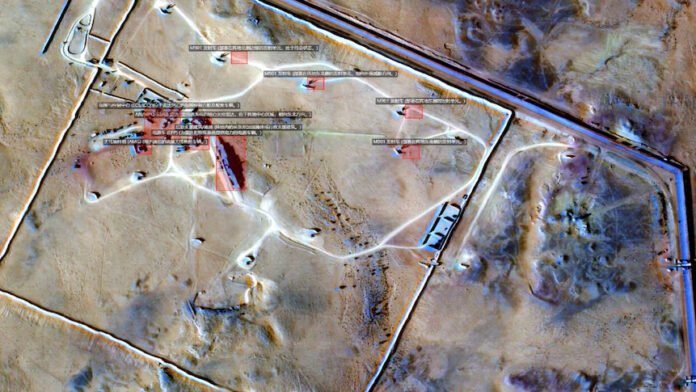
Tel Aviv: The TEE-01B commercial Chinese earth observation satellite’s images helped Iran hit Israeli and American targets in the war, as per the assessment of intelligence sources.
Maj Gen (Ret.) Professor Isaac Ben-Israel told Raksha Anirveda that images from such a commercial earth-imaging satellite can be a very important asset for preparing attacks. If the resolution of this Chinese satellite is 0.5 metres, it is of great importance for accurate attacks on ground targets. He has held several posts in operations, intelligence and weapon development units of the IAF. He headed the IAF Operations Research Branch, Analysis and Assessment Division of IAF Intelligence, and was the Head of Military R&D in Israel Defence Forces and Ministry of Defence.

Earth Eye Co., a Chinese commercial space company, developed and launched the TEE-01B Earth observation satellite employing an in-orbit delivery paradigm, which transfers control to outside clients after launch. Compared to Iran’s previous Noor-series satellites, it provides high-resolution imagery with a resolution of about 0.5 metres, making it possible to see vehicles, aircraft, and changes in infrastructure.
For about $36.6 million, Iran’s Islamic Revolutionary Guard Corps (IRGC) Aerospace Force obtained operational control in late 2024, along with tasking rights, data services through Beijing ground infrastructure supplier Emposat, and technical assistance.
Leaked Iranian documents, orbital data, and satellite tasking records (per Financial Times investigation) show TEE-01B was used to surveill US-linked sites before and after Iranian strikes. Monitored locations included: Prince Sultan Air Base (Saudi Arabia), Muwaffaq Salti Air Base (Jordan), US Fifth Fleet areas (Bahrain), Erbil Airport (Iraq), sites in Kuwait, Djibouti, Oman, and UAE (some near civilian infrastructure).
According to the sources the Iranian contract with the Chinese company is as a leap in Iran’s space-based surveillance, bypassing sanctions.


-The writer is an Israel-based freelance journalist. The views expressed are of the writer and do not necessarily reflect the views of Raksha Anirveda





