


Pratt & Whitney has authorised Hermeus to manufacture the F100-PW-229, one of the most widely used fighter engines in the US military inventory. The production licencing agreement creates a new qualified American source for the engine as demand rises for existing fighter fleets and emerging uncrewed aircraft programmes.
The agreement was announced on September 15, 2026 at the Air, Space & Cyber Conference in National Harbour, Maryland. Under its terms, Hermeus will use a rapid-build manufacturing approach while meeting Pratt & Whitney’s requirements for quality, safety and facility activation. The companies did not disclose the value of the agreement or a firm production schedule.

The F100-PW-229 is an afterburning turbofan engine that powers versions of the F-15 and F-16 fighter aircraft. The F100 family has accumulated more than 32 million flight hours and has supported US combat aviation for over five decades. Its long service record and large installed base make it a strategically important powerplant for the American defence-industrial network.
Pratt & Whitney is seeking additional manufacturing capacity as military customers continue to operate and upgrade F-15 and F-16 aircraft. The US Air Force has also identified future demand for engines to support aircraft such as the F-15EX, as well as potential applications in the Collaborative Combat Aircraft programme. A recent Air Force request for information projected peak demand exceeding 180 engines annually by fiscal 2034.
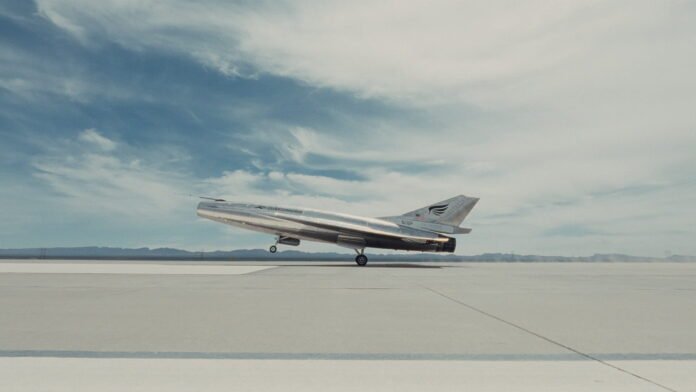
For Hermeus, the agreement is closely connected to its Quarterhorse aircraft. The company is developing Quarterhorse as an autonomous, high-speed unmanned aircraft, and the F100 already powers the platform. Hermeus said the aircraft achieved supersonic flight earlier this year, making it the first privately developed unmanned supersonic jet to reach that milestone, according to company and industry reports.
Manufacturing its own engines could give Hermeus greater control over Quarterhorse production, including scheduling, integration and potential cost reduction. Chief Executive Zach Shore described the arrangement as making Hermeus the first vertically integrated aircraft manufacturer under the Quarterhorse programme.

The company’s role will not make it an independent designer of clean-sheet fighter engines. Instead, Hermeus will act as a second production source for Pratt & Whitney, using the established F100 design and manufacturing standards. The arrangement allows Hermeus to expand into engine production without assuming the much larger technical and financial burden of developing a completely new military powerplant.
The deal also supports a broader US effort to strengthen the defence industrial base. Creating additional sources for mature systems can reduce pressure on a single manufacturer, improve supply-chain resilience and provide greater flexibility during periods of increased demand. It may also allow production methods developed for newer aircraft to be applied to an established engine programme.

Hermeus is pursuing a wider high-speed aviation strategy built around rapid prototyping and repeated flight testing. Its Quarterhorse programme is supported by a $219 million contract from the Defence Innovation Unit to demonstrate flight at speeds of up to Mach 3. The company is also developing Chimera, a turbine-based combined-cycle propulsion system intended to combine a conventional turbine engine with ramjet technology for hypersonic flight.
The F100 licence could help connect those ambitions with a proven propulsion architecture. Hermeus has said its experience working with the engine may reveal opportunities to simplify manufacturing and reduce costs, although any changes must remain consistent with Pratt & Whitney’s certification and quality requirements.
The initial manufacturing work is expected to take place within Hermeus’ existing production footprint. The company has indicated that its expansion will remain focused primarily on aircraft, with engine production supporting Quarterhorse and broader US defence requirements.
The agreement does not immediately place Hermeus engines into operational fighter fleets. Production must first meet Pratt & Whitney’s qualification and site-activation standards. Nevertheless, the partnership marks a significant step for the startup – and adds a new industrial partner to one of America’s longest-serving fighter-engine programmes.






