


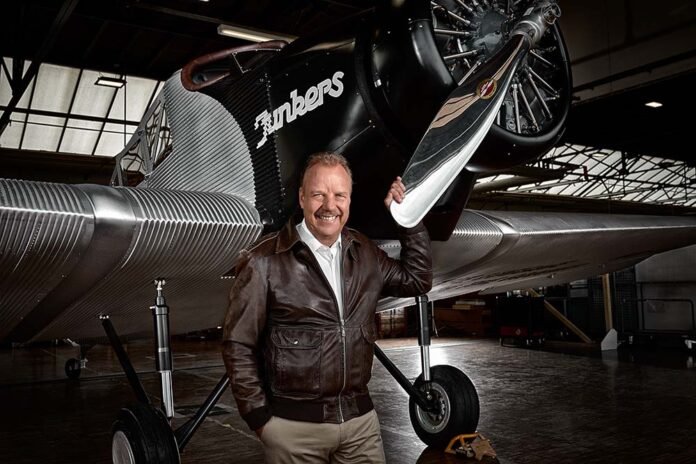
Dubai. More than a hundred years after Hugo Junkers revolutionised aviation with the world’s first all-metal aircraft, his name is returning to the skies – and this December, it lands in Dubai. Junkers Aircraft GmbH has confirmed it will present its complete aircraft range at the MEBAA Show 2026, running December 8-10 at the DWC Dubai Airshow. Visitors and journalists will find the company at Booth 38, where four aircraft – the A50 Junior, A50 Heritage, A60, and A60 RG – will be on display.
A Brand Built on a Pioneer’s Legacy
The Junkers name carries serious historical weight. Engineer Hugo Junkers (1859-1935) pioneered all-metal aircraft construction, cantilever wings, and lightweight design principles that reshaped early flight. His 1915, J1 became the world’s first all-metal aircraft, and the 1919s F13 followed as the first all-metal passenger aircraft – a machine so revolutionary that by the mid-1920s, Junkers aircraft carried roughly 40 per cent of the global air traffic.

That legacy resurfaced in the modern era: a newly built F13 took its first flight in 2016, followed by the A50 Junior in 2021 and the A60 in 2023. Since 2022, the company has been led by co-owners Dieter Morszeck – the former CEO of RIMOWA, who transformed the luggage brand into a global premium name and has long championed historic aircraft preservation – and Dominik Kälin, a trained aircraft engineer with roots at Pilatus who founded his own aircraft-structure companies before joining Junkers.

Handcraft Over Assembly Lines
What sets today’s Junkers apart is how the aircraft are made. Rather than mass production, the company operates what it calls a ‘manufactory’ in Oberndorf-Hochmössingen in Germany’s Black Forest, where a team of around 100 employees builds every aircraft largely by hand.
Roughly 98 per cent of components are developed and assembled in-house, and a single aircraft requires more than 1,000 individually made parts, over 10,000 rivets and upward of 2,500 hours of craftsmanship – nearly half the 4,500 hours a comparable build would have taken a century ago, thanks to modern precision tooling paired with traditional metalworking.
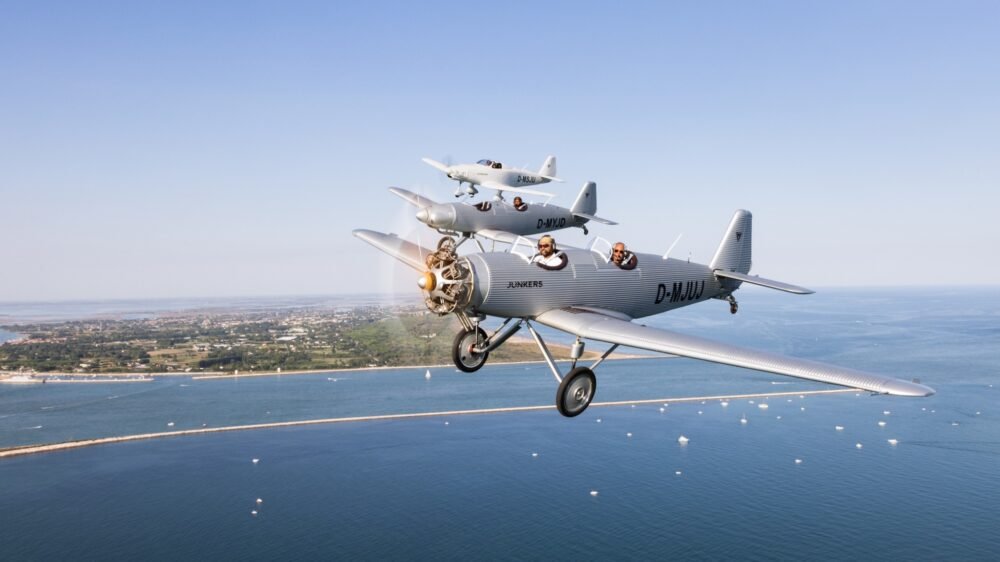

“A Junkers aircraft should create an emotional connection from the very first moment,” said Dieter Morszeck, Managing Director of Junkers Aircraft. “The design recalls the great pioneering days of aviation, but what we build today is a thoroughly modern aircraft. This combination of heritage, craftsmanship and flying experience is what makes Junkers unique.”
Four Aircraft, One Design Language
At Dubai Airshow, visitors will see the full spread of the current model family. The A50 Junior is a 600 kg ultralight low-wing aircraft powered by a Rotax 912iS engine, fitted with Garmin G3X avionics, Beringer brakes, and a Galaxy rescue system.

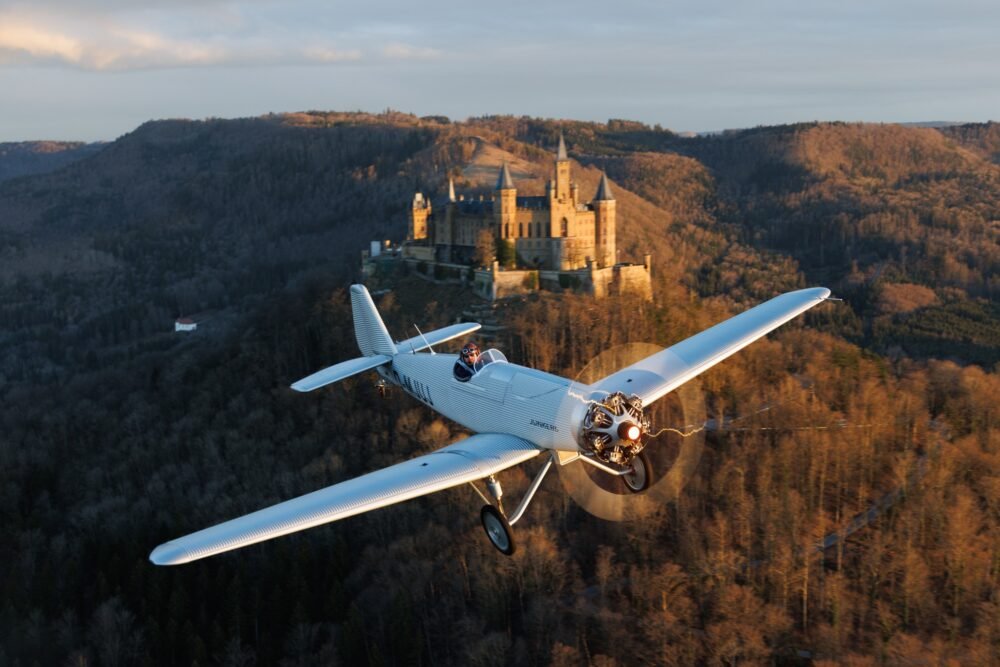
The A50 Heritage takes a more authentic approach, reviving a 1920s-style seven-cylinder radial engine, wooden propeller and tandem seating with analog instruments.
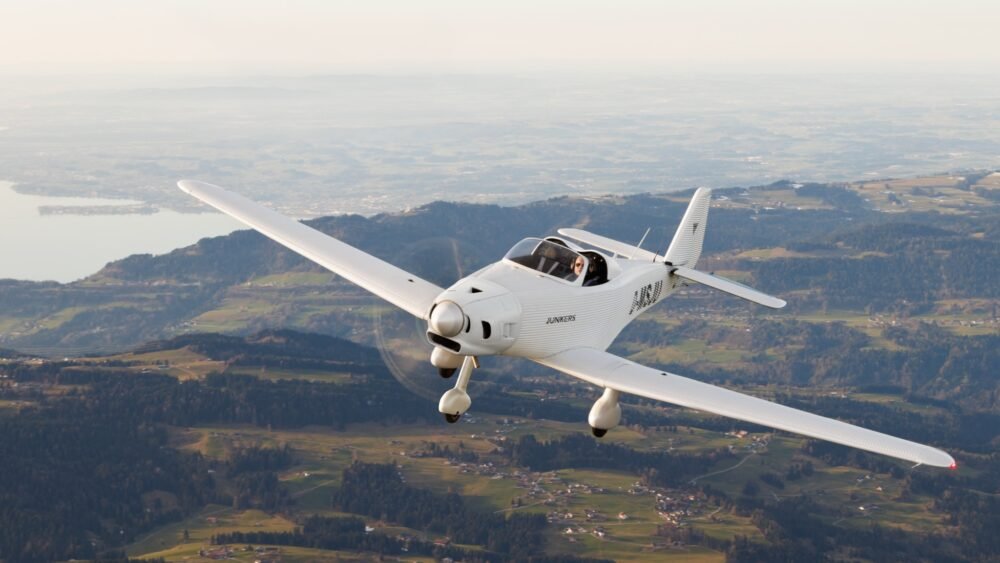
The A60 modernises the formula further with side-by-side seating, a convertible open-or-closed canopy and a sports-car-inspired interior, while the A60 RG adds retractable landing gear for improved aerodynamics and a sharper, more dynamic feel – both powered by 130 hp Edge Performance engines.
Why Dubai, Why Now
The MEBAA Show gives Junkers a stage in front of an international aviation audience of pilots, buyers and industry partners. “Dubai is the perfect place to showcase what Junkers stands for today: exceptional aircraft, German craftsmanship and a passion for flying,” Morszeck said.
Beyond the aircraft, the company will also introduce its new line of Junkers chronographs, produced by a Junkers subsidiary, extending the brand’s design identity from cockpit to wrist. Journalists and media representatives can request individual meetings with the Junkers team at Dubai Airshow throughout the three-day show.






