


On the sidelines of the ASEAN summit in Manila, Prime Minister Narendra Modi, Australian Prime Minister Anthony Albanese, Japanese Prime Minister Takaichi Sanae and US President Donald Trump held a Quad summit. It took place for the first time in more than two years, signalling that the informal group, which had conducted its inaugural formal meeting on the sidelines of the ASEAN Regional Forum (ARF) in Manila in May 2007, was not dead.
However, not long-ago critics had started writing obituaries about this informal grouping because Trump, in his second term in the White House, preferred giving more emphasis on maintaining transactional relations with the US’s allies and partners than taking a leadership role on critical geopolitical issues in the Indo-Pacific region. As a result, India which was supposed to host the summit in 2025 could not do so.

This time, if the Quad leaders met on the sidelines of the ASEAN summit in the Philippines, it lacked warmth, a fact clearly visible during the photo session of the group leaders. Held in the backdrop of Republicans losing majority in both chambers of the US Congress in the mid-term election, the Quad was expected to provide Trump with an opportunity to showcase the US’s commitment to the Quad.
It was also expected to give him an opportunity to demonstrate his administration’s resolve to sustain American leadership and strategic influence in the Indo-Pacific. But the engagement turned out to be little more than a diplomatic formality, raising questions about the level of political commitment behind the grouping.
Significantly, immediately after the Quad meeting, Trump travelled to Shenzhen, China, to attend the Asia-Pacific Economic Cooperation (APEC) summit, where he participated in a trilateral meeting with Chinese President Xi Jinping and Russian President Vladimir Putin on the sidelines of the gathering.
Strategic Neglect of Indo-Pacific
The Indo-Pacific region has been the most neglected area during the first two-year of Trump’s four-year term as the US President despite the region witnessing serious challenges on the geopolitical front due to China’s assertiveness. From the South China Sea to the Taiwan Strait, Beijing has enhanced its military projection.

Despite announcing new maritime surveillance initiatives, the Manila summit felt like a mere diplomatic formality as Trump quickly pivoted to meet Xi Jinping and Vladimir Putin at APEC
In this background, the Japanese Defence Ministry’s think tank’s report presents eye-opening details. Released on November 13, Japan’s National Institute for Defence Studies in its annual China Security Report 2027 said Beijing is prioritising control of the South China Sea to deter US military intervention in the event of possible invasion of Taiwan.
The think tank report said China is strengthening its naval capabilities to project military power far from its mainland. According to the report, China wants to secure sea lanes beyond the first island chain, which stretches from Japan’s remote southern islands through Taiwan to the Philippines.

Highlighting planned move of Beijing through the South China Sea, the Japanese think-tank’s report said if Chinese forces were to blockade the Bashi Channel between Taiwan and the Philippines and achieve air and maritime superiority south of Taiwan, they could gain an advantage in advancing toward the self-ruling island from the South China Sea. The report further said Beijing is seeking to exert control over ASEAN countries by linking security and economic issues.
Despite such developments, the US under the Trump administration first of all dropped “Indo” from “Indo-Pacific”, then limited Quad interactions to only official and ministerial levels, while emphasising cooperation with China by reducing hostility with it.
In 2026, Trump and Xi Jinping met twice, with further meetings likely to take place at the Asia-Pacific Economic Cooperation summit on November 17-18 in Shenzhen, home to the Chinese tech giants such as Tencent, Huawei and BYD. The two leaders are also expected to meet at the Group 20 summit in Miami in December.
Earlier, in order to improve relations with Beijing, the US withdrew restrictions on the sale of advanced chips to China, put a pause on the imposition of 100% on Beijing and kept in abeyance $14 billion defence package to Taiwan.
Democrats Control and Future Action
With Democrats now controlling the House of Representatives and the Senate, they will not only chair important Congressional committees, but also gain greater opportunity to review the Trump administration’s dealings with Beijing. They may examine implications of Trump’s negotiations with Chinese President Xi Jinping.
Chinese experts fear that Democrats could make things difficult for Trump now. Their apprehension is that Democrats would put pressure Trump over resumption of arms sales to Taiwan, which have been put on hold.
While such issues will come for review, what is unnerving Chinese experts is that Democratic lawmakers, who are recognised as champions of the Taiwan cause, would call for stronger deterrence against Beijing over the self-ruling island.
While Beijing expands its naval reach toward Taiwan and the South China Sea, Washington has softened its stance by easing tech restrictions and pausing Taiwan defence aid
On technology restrictions and China’s growing military strength in the Indo-Pacific region, it is very difficult to rule out Democrats’ possible application of pulls and pressure on Trump. They will ensure that Trump adopts a tough approach towards Beijing.
Iran Fiasco
The Pentagon has acknowledged the deaths of 23 US troops since February 28 when US-Israel launched a war against Iran. Along with this, the US has lost 81 aircraft in the ongoing Iran war. What about US’s Gulf allies?
According to Allianz Trade estimates, due to the war, Gulf countries suffered over $200 billion, especially in energy infrastructure. More than 80 energy facilities have been damaged during the conflict, mainly in Saudi Arabia, Kuwait, Qatar and Bahrain. Of them, one third-were severely damaged, said the Allianz Trade report.
It further said that the overall cost to Gulf economies is likely to reach $790 billion, equivalent to a cumulative shortfall of 5.9% of GDP against the pre-war trend by 2030.
The American economy is itself suffering from war-hit pangs. As per the Congressional Budget Office (CBO), from February 28 to October 16, the war has cost $47.1 billion. The Trump administration has requested up to $70 billion in emergency military spending to cover the costs of the Iran war and to pay for new weapons and personnel.
Outside the cost of war, on the US defence budget, the American public have paid through the nose for increased prices for food and shelter. Consumer prices also increased more than expected in October, even as petrol prices fell to a four-month low following some easing of closure of the Strait of Hormuz on global markets. According to the US’s Bureau of Labour Statistics, the Consumer Price Index for all items rose by 0.4% in October, continuing an inflationary trend since July.
Estimates from the National Energy Assistance Directors Association maintain that US households are likely to face higher fuel costs this winter, as heating costs are projected to average $1,002 across all fuels, up 7.1% from last winter.
The ongoing US-Israel war with Iran has claimed American lives, inflicted massive economic damage on Gulf allies, and driven up domestic inflation and winter heating costs
Challenge from Democrats
Democrats have been strongly opposed to Trump’s decision to launch military action against Iran. Given that Democrats now control both chambers of the US Congress, they will ensure that the Trump administration does not carry out a military campaign against Tehran without the Congressional approval.
Moreover, since Democrats will be in various Congressional committees, they can summon senior Trump administration officials to explain the objectives, costs and consequences of the war. Experts maintain that Democrats can use defence spending and confirmation of presidential nominees, as leverage to press Trump to seek Congressional approval for continuing the war.
For Trump himself, the Iran war has not served him in good stead on the political and economic front. Although the US President is keeping a brave face on his unwarranted action against Tehran, Vice President JD Vance pulled the rug from under Trump’s feet by stating that war with Iran was the primary reason behind Republicans defeat in the midterm election.
Now given Democrats stated position on war with Iran, and Americans’ growing unhappiness with Trump’s action, the US President has hinted at de-escalation in Iran. Last week he told media persons that renewed US attacks on Iran were highly unlikely but that America was locked and loaded, should the circumstances change. But Democrats have several plans up their sleeves. To deter the Trump administration from continuing war against Iran, Democrats have expressed their willingness to impeach Defence Secretary Pete Hegseth once the new session begins.
Now controlling both chambers, Democrats are poised to curb Trump’s unilateral military actions in Iran, challenge his Beijing outreach and press for stronger deterrence over Taiwan
Possible Turnaround in India-US Ties
In the backdrop of change in political landscape following Republicans defeat in the midterm election, it is likely that Trump’s anti-India approach, especially on tariff and trade could encounter stronger opposition in Congress. Experts say Democrats may question and challenge the rationale behind imposing high tariffs on friendly and key strategic partners like India.
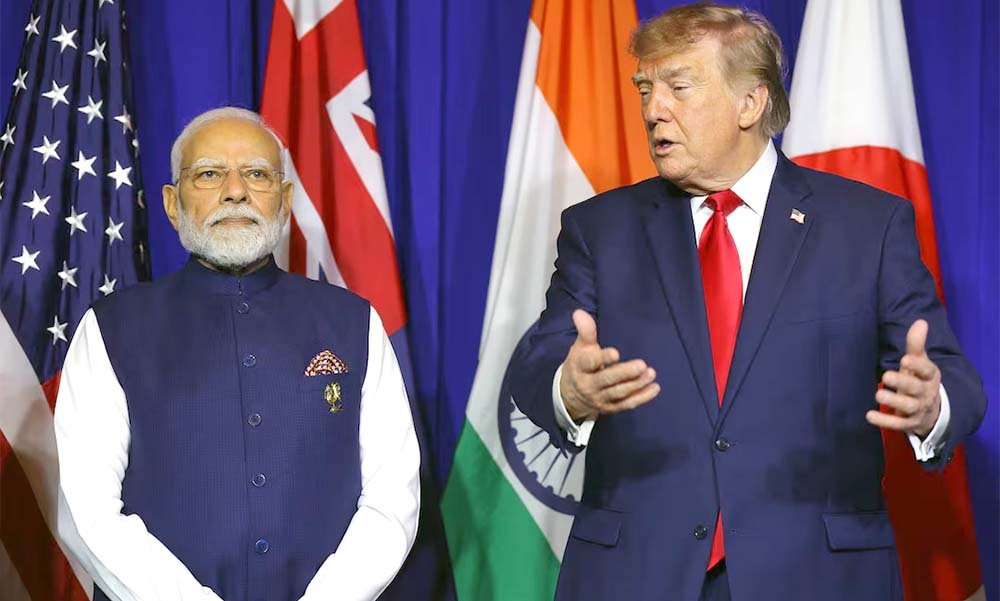
During the election, about two-thirds of voters, as per AP’s Voter Poll of 100,000 mid-term voters, said Trump’s tariffs on foreign imports had done more harm than good to the US economy. The mid-term election results bear clear reflection of voters’ frustration against Trump’s policies.
They were highly unconvinced by the US President’s claims of an economic turnaround. According to AP, consumer prices have risen 3.7% over the past 12 months, compared with an inflation rate of 3% when Trump began his second term.
With Trump now no longer facing an election in the remaining two-year of his second presidential term, he would like to conclude a trade deal with India very soon. However, some experts view it differently. According to them, since Trump will face huge political constraints at the domestic front, he may seek an early trade deal with India to show his influence on the international front.
They argue that India, taking benefits of the changed political landscape in the US, may bargain for a balanced trade agreement with Washington. Clarifying it further, they say that New Delhi may ensure that all its sensitivities are addressed in the proposed trade agreement.
Weakened by midterm losses and voter backlash over tariffs, Trump may seek a quick trade deal with India, giving New Delhi leverage to secure balanced terms
Overall, although the Quad summit was convened at short notice, its leaders announced several initiatives, including Indo-Pacific Maritime Surveillance Collaboration. It has exposed the uncertainty surrounding America’s commitment to the region at a time when China is steadily expanding its military and economic influence.
Trump’s preference for transactional diplomacy and his efforts to improve relations with Beijing have raised questions about the future direction of US strategic engagement. However, the Democrats’ control of Congress could impose domestic political constraints on his China policy, Iran strategy and approach towards traditional partners such as India.
For New Delhi, this changing political landscape presents both challenges and opportunities. India must use the growing Congressional scrutiny of Trump’s policies to push for a more balanced trade agreement while ensuring that its strategic partnership with Washington remains insulated from the uncertainties of American domestic politics.
Ultimately, the credibility of the Quad and the stability of the Indo-Pacific will depend not on summit-level declarations but on sustained political commitment, strategic coordination and a willingness among its members to stand together in the face of China’s growing assertiveness.

The writer is a senior journalist with wide experience in covering international affairs. The views expressed are of the writer and do not necessarily reflect the views of Raksha Anirveda






