


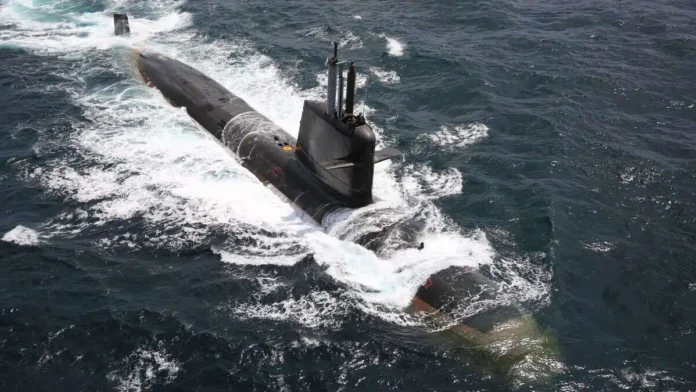
India is edging towards a major expansion of its conventional submarine fleet, with Defence Secretary Rajesh Kumar Singh saying two acquisition proposals have completed the internal procurement process and are awaiting approval at the highest level of government. Together, the German and French-linked programmes are estimated to cost ₹1.11 lakh crore.
The larger proposal, valued at about ₹75,000 crore, would see six submarines built in India through a partnership between German firm Thyssenkrupp Marine Systems (TKMS) and state-owned Mazagon Dock Shipbuilders Limited (MDL). The second, estimated at ₹36,000 crore, would fund three additional Scorpene-class submarines, extending the Navy’s existing Kalvari-class fleet. The figures remain estimates; neither proposal is a signed contract, and final government clearance is still pending.

The German programme, known as Project 75(I), is intended to deliver a newer generation of conventional submarines equipped with air-independent propulsion (AIP). Unlike conventional diesel-electric boats that must periodically surface or snorkel to recharge their batteries, AIP-equipped submarines can remain submerged longer, helping reduce their exposure to detection. India’s original Project 75(I) requirements also encompass modern weapons, sensors, support systems and technology transfer, with a stated goal of strengthening domestic design and construction capabilities.
For the proposed project, TKMS would work with MDL on submarine design and technology, while construction is expected to take place in India. The partnership could create industrial opportunities beyond the shipyard itself, including for Indian suppliers and manufacturers. But domestic construction and technology transfer do not mean immediate delivery: one recent assessment puts the lead submarine’s arrival roughly seven years after a contract is signed.
The Scorpene proposal offers a different route to expansion. MDL has already built six Kalvari-class submarines with French assistance, giving the shipyard experience with the design and an established production base. That familiarity could make a follow-on order less complex to set up than a new class, though it would still depend on approval, contract terms and production schedules. The additional boats would be based on an existing platform, while Project 75(I) aims to introduce AIP-equipped submarines and a broader transfer of advanced construction expertise.
The need for replacement vessels is pressing. A recent report puts the Navy’s conventional fleet at 16 diesel-electric submarines, with older boats facing retirement and new programmes still years from delivering vessels. The Ministry of Defence’s original Project 75(I) announcement described the planned six-submarine programme as a way to bolster domestic submarine construction and bring new technologies into India’s industrial base.

The fleet gap also has a regional context. China continues to expand its naval capabilities, while Pakistan is inducting Chinese-designed Hangor-class submarines. But acquiring new platforms is only one part of building undersea capability: training, maintenance, weapons, sensors and a sustainable supply chain will shape how effectively the submarines can be operated over their service lives.
The projects’ combined price tag is striking, but approval would mark a step toward procurement, not an immediate increase in operational strength. The key milestones after clearance would be final contract negotiations, construction arrangements and the start of production. Project 75(I) has faced years of delay, and the long interval between signing and delivery means that near-term fleet pressure will persist even if the German programme moves forward.

Singh’s announcement therefore signals progress, while leaving important questions open. The final cost, timetable and terms of the Scorpene proposal remain subject to decision, and the German programme still needs the required top-level clearance.
If both proposals proceed, they would give India two parallel avenues to strengthen its conventional submarine force: a new German-backed class and a potential extension of the French-designed fleet. The scale of the investment makes the next decisions consequential, but delivery, not announcement, will determine when the Navy’s underwater strength actually grows.







