


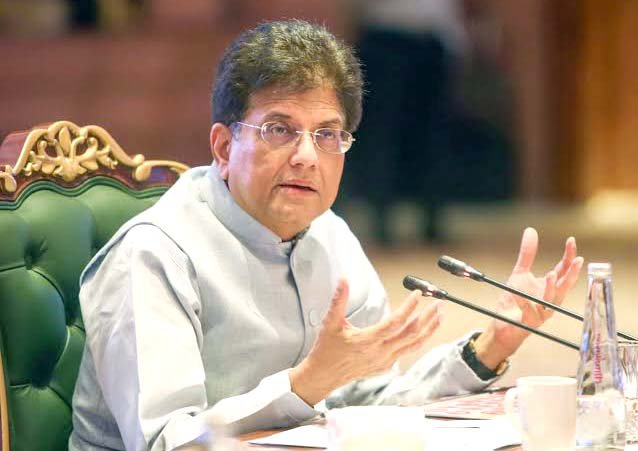
India has already placed orders for more than 1,200 aircraft, but will need over 2,000 to meet its requirements, Union Commerce and Industry Minister Piyush Goyal said during a visit to Egypt. The government is pressing established aircraft manufacturers for faster supplies, he said, as airlines struggle to expand capacity in one of the world’s fastest-growing aviation markets.
“We have ordered more than 1,200 planes, and we are ready to order another 1,000 planes; we need more than 2,000 planes for our requirements,” Goyal told reporters. His comments signal the scale of India’s anticipated fleet expansion, but do not amount to an announcement that airlines have placed fresh orders for 1,000 aircraft.

The minister was speaking during a two-day visit to Egypt, where he is discussing ways to strengthen trade and investment ties. He said a larger Indian fleet could support more flights between the two countries. EgyptAir currently operates direct services linking India and Egypt, and Goyal said additional aircraft could create room for greater air connectivity.
The immediate challenge is turning existing orders into operational capacity. Indian carriers, including IndiGo and Air India, have placed large orders with Airbus and Boeing, but deliveries are scheduled over several years. A recent industry report cited a projected 7.1 per cent annual growth rate for India’s commercial aircraft fleet between 2026 and 2036, among the highest forecasts globally.
That growth outlook makes delivery timing central to the sector’s plans. Manufacturers are contending with large order backlogs and supply-chain constraints, including shortages of engines and other components. Some aircraft ordered by Indian airlines are scheduled for delivery as late as 2034, according to information. New orders alone, therefore, would not quickly resolve the capacity squeeze.
The shortage has consequences for passengers and airlines alike. Without enough aircraft, carriers have less flexibility to add routes and increase frequencies, even when demand is rising. It can also constrain international connectivity, including potential expansion on routes such as India-Egypt. Goyal’s remarks tie the aircraft pipeline not just to airline growth but to India’s broader ambition to strengthen links with overseas markets.

The government is also looking at the financing and leasing ecosystem that helps airlines access aircraft. More than 85 per cent of aircraft operated by Indian carriers are leased, according to the report. In September, the Civil Aviation Ministry convened a high-level committee to examine bottlenecks, including access to bank credit, regulatory clearances and the development of leasing expertise in India.
Alongside purchases and leasing, the government is seeking a larger role for India in global aerospace manufacturing. Airbus has two final assembly lines in the country, for military transport aircraft and helicopters. Boeing and Airbus together procure components and services worth around $2 billion annually from India, while Brazilian manufacturer Embraer has partnered with the Adani Group to explore regional aircraft manufacturing.

These industrial links could deepen as India’s aviation market expands, but building aircraft locally is a long-term undertaking. The immediate priority, reflected in Goyal’s appeal to manufacturers, is to speed up delivery of planes already ordered. Any additional orders would add to the pipeline and potentially strengthen future capacity, while leaving the near-term shortage dependent on production schedules and supply chains.
For now, the minister’s statement sets out the government’s estimate of the country’s aircraft needs and its readiness to place further orders. Whether that ambition translates into a larger fleet will depend on airlines’ procurement decisions, manufacturers’ ability to deliver and the financing arrangements that make aircraft available.







