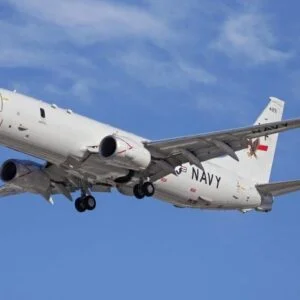
Hongkong: The United States sent 67 large reconnaissance planes to the South China Sea in July, a sharp increase on the previous two months, says a Chinese think tank.

The planes included the US Navy’s newest maritime patrol and anti-submarine aircraft the P-8A Poseidon, EP-3E electronic warfare and reconnaissance aircraft and MQ-4C high-altitude long endurance unmanned aerial vehicles, according to the South China Sea Strategic Situation Probing Initiative (SCSPI).
“This is a sharp increase when compared to 35 times in May and 49 times in June,” the Peking University based think tank said on Weibo, China’s social media platform. “It’s almost twice as many as in May.”
Besides an increase in frequency, the intensity of US patrols also jumped in July, SCSPI said. “As many as 13 reconnaissance planes took off at night to conduct surveillance operations in the South China Sea. Nine aircraft entered the range of 70 nautical miles of the baseline of China’s territorial waters, six aircraft entered the range of 60 nautical miles, and one aircraft flew as near as 40 nautical miles.”
The change reflected a shift by the US from a “preventive” to a “confrontational” stance and indicated it was preparing for military action, according to SCSPI. “[All these] suggested a strong intention of preparing the battlefield.”

SCSPI director Hu Bo told nationalist tabloid Global Times on August 2 that he was worried about the rising risks of military conflicts between China and the US. “Given the current overall relations between China and the US, if any maritime or aerial accident takes place, the conflicts could likely not be effectively managed resulting in escalation.
“Therefore, the uncertain factors in Chinese and US militaries’ interactions in the South China Sea are getting bigger and the risks higher,” Hu said.

Collin Koh, a research fellow from the S Rajaratnam School of International Studies at Singapore’s Nanyang Technological University, said the Chinese military was conducting a series of activities in the South China Sea and it was not surprising to observe an uptick in US military activities, including reconnaissance flights.
“The increase in frequency and intensity of such reconnaissance flights is most plausibly directed at the recent tensions in the South China Sea … Those flights would generate useful, up-to-date information on Chinese and other concerned South China Sea parties’ movements in the area,” he said.
Koh said that considering the recent geopolitical tensions, accidental or inadvertent incidents had become distinct possibilities.
“I won’t discount a repeat of what happened back in April 2001 when a US Navy EP-3 reconnaissance aircraft was involved in a close air encounter with a PLA jet that challenged the flight,” he said.
The increased US military activities in the disputed South China Sea coincide with worsening ties between the world’s largest two countries.
In July, the US and Australia declared Chinese claims over the South China Sea were illegal, saying they were inconsistent with international laws, in a new stance which drew a rebuke from Beijing.
Also in July, the US deployed two aircraft carrier groups, the USS Nimitz and USS Ronald Reagan, to conduct tactical air defence exercises in the South China Sea “in support of a free and open Indo-Pacific”.
Territorial disputes in the South China Sea – most of which is claimed by Beijing – have been a long-standing source of regional tension, including with rival claimants Vietnam, the Philippines, Malaysia, Brunei and Taiwan.
While Washington does not have claims in the strategic waters, it has been a vocal critic of Beijing’s increasingly aggressive assertions of its sovereignty in the South China Sea, and the US has regularly staged freedom of navigation operations there.