


The Series A round was led by Accel, with Keen, Lakestar and Seedcamp participating. The investment follows a €5.5 million seed round announced less than five months earlier, when SE3 emerged from stealth and disclosed its work with military customers. The company has since dropped “Labs” from its name.
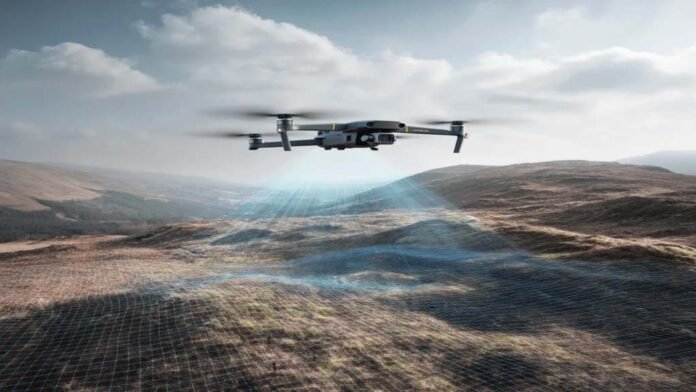
SE3’s software combines video and sensor data from drones and ground vehicles to create a shared, three-dimensional picture of an operating environment. It identifies objects and their relationship to the terrain, enabling operators to query the map in ordinary language and request information, such as possible routes or reconnaissance.

The company also develops software for unmanned systems to determine their position and coordinate when satellite navigation is unavailable or disrupted. Its technology is designed to work across vehicles from different manufacturers, rather than being tied to one drone maker’s hardware and software.
That approach targets a challenge for armed forces seeking to combine equipment from multiple suppliers: different platforms may not readily share data or coordinate. SE3 says a common software layer can improve interoperability and reduce dependence on a single manufacturer’s technology stack. The company describes its platform as open architecture, intended to connect vehicles, sensors and suppliers.
The company’s capabilities are at different stages of development. Chief Executive Lukas Köstler told Fortune that SE3’s basic capability for drones to determine their position without GPS has been delivered thousands of times and is robust. More advanced fleet-command functions remain under development, he said, with work underway under contracts with Germany’s armed forces, the Bundeswehr. SE3 also has contracts in Ukraine, where its technology is deployed.
SE3 says its system combines conventional computer vision with a language-model interface and established software tools. Rather than using a general-purpose language model to interpret raw sensor feeds or directly make physical decisions, a conventional planning algorithm calculates routes. Operators can require human approval for actions such as take-off, Fortune reported. The system can operate offline, and customers can choose which AI model provides its language interface.

The company originated in the computer-vision laboratory of Daniel Cremers at the Technical University of Munich. Köstler and Chief Technology Officer Simon Klenk were doctoral students there; Cremers is now SE3’s chief science officer. Köstler previously worked on Tesla’s Autopilot team and at Nvidia Research, according to Fortune.
SE3’s partners include Hensoldt, a sensor manufacturer; Auterion, which develops software for uncrewed systems; and drone developer ERC. Its push for integration across platforms could make it a supplier to a range of military customers. It also puts the startup in competition with established defence firms offering more integrated systems.

SE3 plans to use the new funding to grow its workforce from about 40 people to roughly 120 and establish offices in London, Berlin, the Nordic and Baltic countries and Poland. Köstler said defence would remain the company’s primary revenue source for at least the next year, while a small team begins exploring civilian robotics. The company serves European NATO members and allies and says its operations are subject to German export controls.
The raise comes as European defence technology companies draw investor interest amid heightened focus on autonomous systems and battlefield digitisation. SE3’s challenge will be to scale deployments and demonstrate that its software works reliably across varied platforms and operating conditions. The company describes its GPS-denied navigation capability as robust, while its more advanced fleet-command functions remain in development – a distinction likely to matter to prospective customers weighing the technology’s readiness.







