


Tel Aviv: As the US is not using its full military force to bring Iran to give up its nuclear plans, Washington is evaluating other ways of applying pressure on Tehran.
The US and Israel are discussing the idea of a land blockade against Iran, but no decision has been made and no such blockade has been implemented.

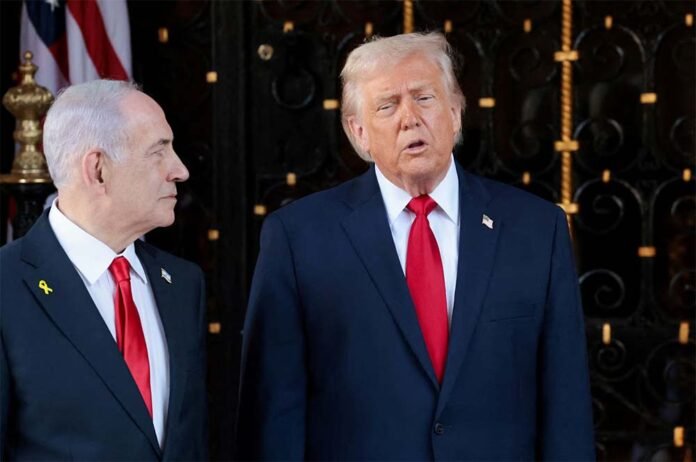
The proposal is one of several options being examined by President Donald Trump and Prime Minister Benjamin Netanyahu to increase economic pressure on Iran after months of strikes and other measures failed to force Tehran’s hand.
The concept, as described in reports, is to tighten or effectively close Iran’s land border crossings by pressuring its neighbours to restrict imports, exports, and potentially weapons flows.
Iranian land borders include: Iraq, Turkey, Pakistan, Afghanistan, Turkmenistan, Armenia, and Azerbaijan—states with very different relationships to Washington, Jerusalem, and Tehran, which makes enforcement highly complex.
Analysts and retired US generals describe a full land blockade as “almost impossible” to enforce in practice, especially because: Iraq is heavily influenced by Iran and hosts powerful pro-Iran militias; Turkey maintains its own strategic calculus and is unlikely to fully align with a US–Israeli squeeze. In addition, borders in the east (Afghanistan, Pakistan, Turkmenistan) are porous and already subject to smuggling networks.

Some officials suggest the idea may also serve as strategic signalling or deception, to confuse Tehran about the allies’ next moves rather than as a fully realistic operational plan.
Israeli sources said that the plan is hard to implement given geography and regional politics, though limited, targeted border pressure via specific partners remains possible.


-The writer is an Israel-based freelance journalist. The views expressed are of the writer and do not necessarily reflect the views of Raksha Anirveda





