


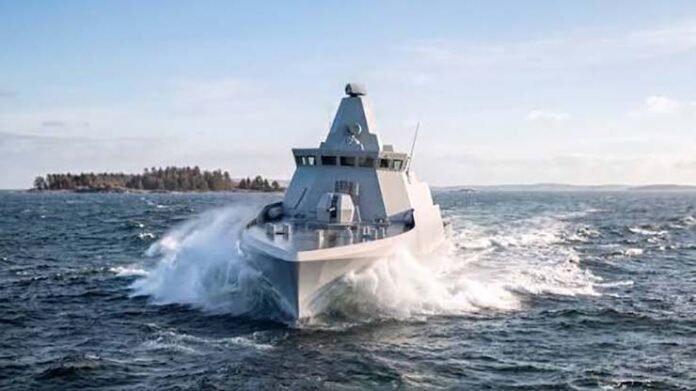
The Swedish defence company announced the system on October 27, describing it as the latest evolution of its Giraffe radar family. Saab says the radar can detect, track and classify aircraft, drones, missiles and crewed or uncrewed vessels, giving naval crews information intended to support early warning and operational decisions.
The headline performance figure is a maximum range of up to 250 kilometres against air targets, with a stated surface-target range of up to 50 kilometres. Those are manufacturer-reported figures, not independently verified detection results; actual performance can depend on target characteristics, radar installation and operating conditions.

Saab says the system uses active electronically scanned array (AESA) radar hardware, a new software architecture and updated processing capabilities. Its product information describes the AMB-D as a C-band, multi-channel digital 3D naval radar. In practical terms, the system is designed to give a ship’s crew a three-dimensional picture of activity around the vessel, while monitoring targets in the air and on the water.
The radar is intended to address a varied threat environment. Aircraft and missiles may approach from different directions and altitudes, while drones and small surface vessels can complicate surveillance, particularly in busy or cluttered areas. Saab says the system can classify both crewed and uncrewed surface vessels as well as airborne targets. The announcement does not identify a customer, a contract or a delivery schedule for the new radar.
Electronic protection and adaptability are central to the product’s pitch. Saab says Sea Giraffe AMB-D includes electronic counter-countermeasures designed to help it operate in the face of jamming. Its modular, software-defined architecture is intended to support integration with other naval systems and allow upgrades as requirements change. Such features can matter to navies seeking to modernise sensors without replacing an entire combat-system architecture, though the company has not published specific integration timelines or customer configurations for AMB-D.
The launch builds on an established product line. Saab says Sea Giraffe AMB radars have more than two decades of operational use, and that the wider company has more than 70 years of radar-development experience. The older Sea Giraffe AMB has been selected for multiple naval platforms, including US Navy Independence-class littoral combat ships, according to Saab product information. That history offers a potential route to market for the new model, but does not mean existing users have ordered or adopted AMB-D.

The product sits within a broader Saab naval radar portfolio that includes Sea Giraffe 1X and Sea Giraffe 4A. These systems are aimed at different installation and mission needs, making ship size, sensor role and compatibility important factors for buyers. The AMB-D announcement emphasises 3D surveillance and tracking across air and surface domains, rather than presenting the radar as a stand-alone weapon system.
For naval forces, the value of a radar depends not only on its maximum stated range but also on how reliably it detects, tracks and shares information with other onboard systems. Saab says the AMB-D is intended to provide accurate target information for distributed, multi-domain operations, where sensors contribute to a wider operational picture. No independent test results or operational deployment details were included in the announcement.

Saab’s unveiling therefore marks a new development in its naval surveillance offering, with AESA hardware, updated processing and a software-led design as key features. Whether the system gains customers will depend on procurement decisions and how it performs in specific shipboard environments. For now, its advertised range and capabilities remain company specifications, while the announcement leaves open when and where the radar will first enter service.






