


New Delhi: India’s strategic posture towards Pakistan has entered a critical new phase, marked by escalating unrest in Pakistan-occupied Kashmir (PoK), grassroots economic boycotts, and calculated diplomatic signalling from New Delhi.
Recent developments, culminating in Prime Minister Narendra Modi’s pointed remarks during his December 25, 2025 speech in Lucknow, reveal a multifaceted pressure campaign designed to exploit Islamabad’s vulnerabilities.

This convergence of internal dissent in PoK and India’s assertive rhetoric underscores a deliberate shift following the military confrontations of early 2025, particularly Operation Sindoor.
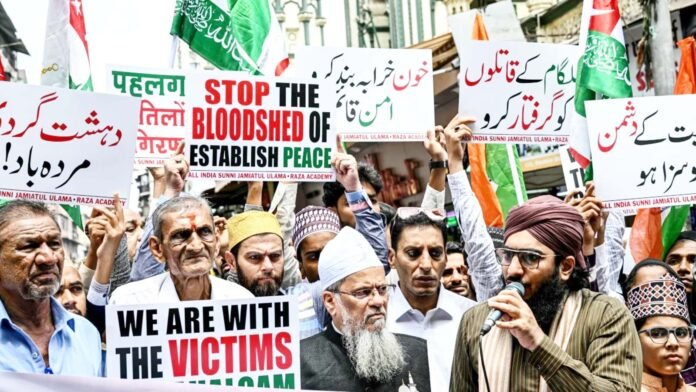
Protests in PoK have intensified into a sustained campaign of civil disobedience, with shutter-down strikes paralysing daily life across key towns. Led by the Awami Action Committee, demonstrators demand affordable essentials amid hyperinflation that has rendered flour, electricity, and fuel prohibitively expensive.
What began as sporadic outrage has evolved into a potent symbol of defiance, as locals publicly shun Pakistani products—once badges of national loyalty—opting instead for smuggled or black-market alternatives.
This boycott trend, amplified on social media under hashtags like #PoKOnBoil, exposes the fragility of Islamabad’s grip on the region. Residents openly contrast their plight with the infrastructure boom and stability in Indian-administered Jammu and Kashmir, where projects like the Chenab Bridge and improved connectivity have transformed lives. Such comparisons fuel narratives of neglect, portraying PoK as a forgotten colony suffering under Pakistani mismanagement.

Pakistan’s Prime Minister Shehbaz Sharif confronts a perfect storm: domestic economic collapse exacerbated by IMF austerity measures, and now the spectre of an uncontrollable uprising in PoK. Reports indicate security forces have resorted to heavy-handed crackdowns, including internet blackouts and mass arrests, yet these tactics only stoke further resentment. International observers, including human rights groups, have spotlighted the unrest, drawing unwelcome scrutiny to Islamabad’s governance failures.
Amid this turmoil, Modi’s Lucknow address—delivered at the Rashtra Prerna Sthal inauguration—served as a masterstroke of strategic communication. Referencing the BRAHMOS missile production facility in the city, he signalled India’s unmatched military readiness. The supersonic cruise missile, jointly developed with Russia and now indigenously produced, embodies New Delhi’s technological edge, capable of precision strikes deep into adversarial territory.

Modi reiterated India’s firm stance post-Operation Sindoor, the 2025 counter-terrorism operation that neutralised multiple terror launchpads across the Line of Control. His declaration that “terror and talks cannot go together” dismissed any premature dialogue, framing Pakistan’s proxy warfare as the sole barrier to peace. This message resonated globally, reinforcing India’s narrative of restraint met with provocation.
Layered atop military posturing is India’s invocation of the Indus Waters Treaty (IWT) suspension, enacted under the maxim that “blood and water cannot flow together.” Following Pakistani-orchestrated attacks in 2025, New Delhi accelerated western river projects like the Shahpurkandi Dam and Ujh Multipurpose Project, curtailing water flows into Pakistan.
Satellite imagery confirms reduced discharges into the Chenab and Ravi, amplifying flood risks in Punjab and Sindh during monsoons while bolstering India’s riparian security.
Islamabad’s anxieties mount as these measures erode its deterrence calculus. Economic distress—compounded by trade boycotts and remittance dips—threatens regime stability, with PoK emerging as a flashpoint that could inspire similar unrest in Balochistan and Khyber Pakhtunkhwa. Analysts warn of a “noose-tightening” effect, where India’s non-kinetic tools amplify kinetic threats.
The Lucknow speech also projected India’s diplomatic maturity, invoking historical context by deeming PoK an “unresolved mistake” from 1947. By tying development in Lucknow—home to BRAHMOS and aviation hubs—to national resolve, Modi appealed to domestic audiences while cautioning adversaries. This holistic strategy integrates economic leverage, informational warfare, and military signalling.
Pakistan’s responses remain reactive: Sharif’s cabinet has floated economic relief packages for PoK, yet funding shortfalls undermine credibility. Overtures for third-party mediation, including from China, falter against India’s insistence on bilateralism. Meanwhile, global powers like the US and EU express measured concern, prioritising counter-terrorism over water disputes.
Looking ahead, Modi’s “next strategic move” hints at calibrated escalation, potentially involving further IWT adjustments or enhanced border infrastructure. PoK’s volatility could precipitate Islamabad’s miscalculation, testing India’s red lines. New Delhi’s approach—patient yet unyielding—positions it to shape outcomes, compelling Pakistan to confront its internal rot before external pressures become insurmountable.
This evolving dynamic heralds a redefined regional balance, where grassroots defiance in PoK intersects with India’s multifaceted offensive, leaving Islamabad isolated and adrift.






