


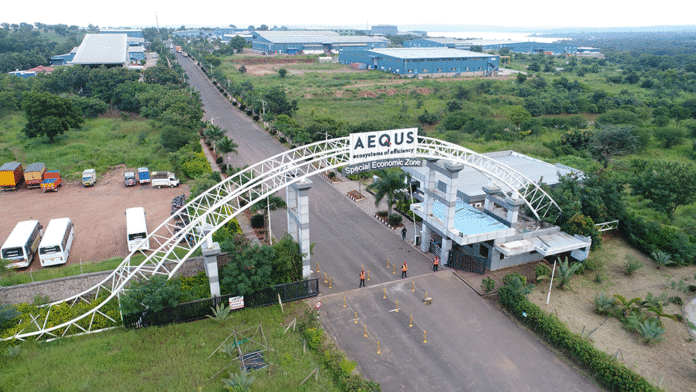
Belagavi: India’s first notified precision engineering and aerospace cluster, the Aequs SEZ, has emerged as one of the country’s most advanced green manufacturing ecosystems, utilising close to 100% renewable energy and setting a benchmark for sustainable industrial infrastructure.
Also referred to as the Belagavi Aerospace Cluster (BAC), the SEZ meets the energy needs of units located at the 250 acres plus campus through a combination of rooftop solar installations, open-access renewable energy sourced from third-party providers and green power supplied by the State Electricity Board.

Thanks to this integrated energy framework, BAC is among the very few industrial manufacturing clusters in India to have come this close to complete green energy transition at scale.
Shyam Kalyanasundaram, CEO, Aequs Infra, said,“At Aequs Infra, sustainability is embedded into the way we design and operate industrial ecosystems. The Aequs SEZ at Belagavi demonstrates how large-scale manufacturing can successfully integrate renewable energy while delivering reliability, operational efficiency, and cost competitiveness to customers. As one of the few industrial clusters in the country to have achieved renewable energy adoption at this scale, we believe this model can serve as a blueprint for future-ready industrial infrastructure in India.”
Celebrating this milestone with employees and customers on the occasion of the World Environment Day on June 05, he added such events are a reminder that sustainability must move beyond intent and translate into measurable action.
The licensed power distribution network within the BAC campus enables efficient and reliable energy deliver to the 35 plus customers at the campus including multinational and Indian companies who cater to some of the biggest names in the global aerospace industry. This integrated infrastructure not only reduces the carbon footprint of operations but also delivers operational efficiencies and a compelling cost saving of over 30% to units operating within the cluster.

Furthermore, the BAC’s ecosystem model encompassing the entire manufacturing value chain from raw materials to the finished product, all within a single location, makes it the most sustainable location reducing the distance travelled by aerospace parts travelled from the typical 5000 kms to just under 500 metres. This integrated approach reduces the carbon footprint per part making the BAC unique among aerospace facilities worldwide.
Aequs Infra has adopted a similar approach at the other industrial clusters it operates in Hubballi and Koppal where it operates the India’s first Durables Goods Cluster and Toy cluster, respectively.







