


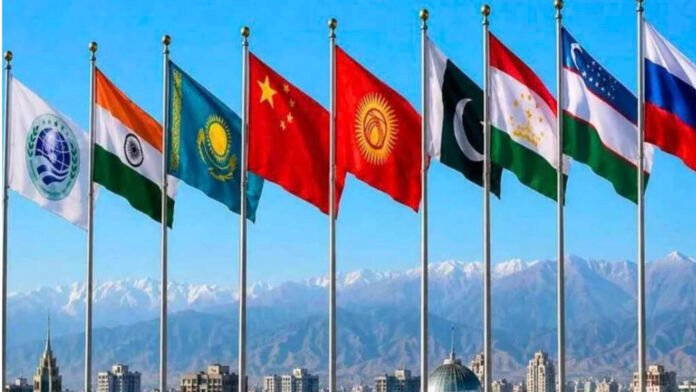
The 26th meeting of the Shanghai Cooperation Organisation (SCO) heads of state taking place in Bishkek, the capital city of Kyrgyzstan, from August 31 to September 1, 2026, is going to be an important milestone in the context of both regional geopolitics and its ramifications for global geopolitics.
The SCO Summit meeting is taking place at a critical juncture of global geopolitics; namely, the Iran-US war putting West Asian geopolitics in a sort of quandary. Similarly, the continuation of the Russia-Ukraine war is also posing a substantial challenge to global security. The fallout of both wars is immense in terms of its ramification in terms of supply securitisation of oil and gas supplies to the world community. Incidentally, in both wars, SCO members, namely Iran and Russia, are involved. At the same time, a new form of power realignment is taking place globally, where the US is trying to create a new security architecture at its whim. This is also creating a standoff within the Euro-Atlantic security structure (like the EU-US conflict, disdain within NATO, etc) having its ramifications for global security.

Within the SCO also there are a host of challenges, like China’s dominance and its expansionist tactics, which are creating much anxiety and uneasiness and both Pakistan and Turkey’s role in promoting and patronising terrorism. These moves on the part of China, Pakistan and Turkey are posing a security threat to SCO member countries. All these developments need to be examined in greater depth to determine how far the SCO, as a regional body, will address them at the forthcoming Bishkek SCO Summit.
With both Iran and Russia directly embroiled in major conflicts, global energy and gas markets face severe instability. Western sanctions and unilateral trade barriers further complicate supply chain security for major Eurasian energy importers like India and China
Context of SCO
Over the years, the SCO, as a regional body, has traversed a long path, starting basically as a mechanism for addressing border disputes among China and Russia, Tajikistan, Kyrgyzstan and Kazakhstan. It originated in the form of the Shanghai Five in the year 1996, and since then this regional body has been actively engaged in Eurasian geopolitics. In 2001, with the admission of Uzbekistan, this body changed its name to the Shanghai Cooperation Organisation. Soon after, it started the institutionalisation process.
Thus, given the complexities as well as structural challenges, three major questions need to be addressed concerning SCO. These are:
- Whether the SCO can generate a normative framework that can provide ideological cohesiveness?
- To what extant this regional body has initiated the process of creating an equity-based trade and tariff regime?
- How does this regional body look at the issue of supply securitisation, especially of food and energy resources? Has it adopted a plan of action? and,
- To what extent is the SCO, as a regional body, been able to address the complex challenge of combatting radicalism, extremism and terrorism?
Framework of SCO
The viability of any regional security mechanism is primarily determined by how far it is able to address the issues confronting the region. Using them as a matrix, it is necessary to evaluate the success of the SCO as a regional body.

Looking at the first question, it can be stated that, evaluating its operation over the years, the SCO has failed to evolve a normative framework which could have made this body highly successful. One of the major reasons for this is the trust deficit among the member countries.
Despite the presence of the Regional Anti-Terrorist Structure (RATS) in Tashkent, the SCO struggles to effectively combat radicalism. The active promotion and patronisation of cross-border terrorism by members and partners like Pakistan and Turkey pose a direct threat to regional stability
For instance, China’s belligerent moves in this region, as well as both Turkey and Pakistan’s role in promoting and sponsoring terrorism, has generated a lot of apprehension among other member countries of the SCO. Similarly, China’s border disputes with member countries of the SCO have also impacted the functioning of the SCO. There exists scope for promoting a cohesive normative ideology of the SCO in terms of an alternative to the Euro-Atlantic order.

In this context, the SCO, as a regional body, can provide an alternative to the Western concept of democracy. Similarly, the SCO can outline new norms for global governance and can also play a role in promoting an equity-based world order.
Another area where the SCO can play a meaningful role is promoting an equity-based trade and tariff regime. It can be noted that all three major members of the SCO, India, Russia and China, are continuously facing a new form of economic warfare from the United States, the dominant actor in global trade. Russia is under prolonged sanctions; on the other hand, the Trump Administration is threatening both India and China with high tariffs. In this context, the SCO should outline a new framework through which better bargaining can be done with the US over trade and tariff issues. At the same time, there is a need to promote greater trade among the member countries of the SCO.
Facing aggressive US tariffs, economic warfare and sanctions, SCO members are increasingly driven to build equity-based trade regimes. Establishing intra-group financial mechanisms is critical to counter Western market domination and safeguard critical mineral supply chains
The third aspect that needs to be addressed in the SCO forum at the Bishkek SCO Summit is the issue of supply securitisation of energy and other critical minerals. Though the SCO has three major global energy producers in the form of Russia, Iran and Kazakhstan and the two largest consumers of energy, i.e., India and China, but due to a lack of institutional mechanisms within the SCO, a secure energy market has yet to develop within the grouping.
This is impacting the cohesiveness of the grouping. The same can be evident from the behaviour of the United States, which is employing arms-twisting measures to put both Iran and Russia on the back foot. Even when India reached out to Russia to secure energy to tide over its domestic demand, the US put up a lot of obstructions. The US is doing this in the name of sanctions on Russia. But the moot point is that the US wants to promote exporting its own energy to the international market by putting restrictions on both Russia and Iran.
Similarly, the issue of critical minerals is also assuming importance in recent years; the SCO should delve into this issue. Along with energy security, the SCO Mechanism should also delve into sustainable environmental security, mitigating environmental hazards and developing a cohesive charter for promoting an equitable and sustainable global environmental regime. At the same time, ensuring food security should be given priority at the SCO Summit. The Summit should also discuss at length the transfer of technology to member countries so that it can facilitate a sustainable energy transition.
The third aspect that needs to be addressed by the SCO is to what extent this regional body will effectively develop counter-terrorism measures to combat regional and global terrorism.
As discussed in the beginning, both Pakistan – a full member and Turkey – a dialogue partner, of the SCO are constantly violating both the Spirit and Charter of the SCO by promoting and patronising terrorism. In fact, over the years, Pakistan has been a nursery of global terrorism.
It may be noted that both China and Turkey are providing tacit support to Pakistan in its nefarious endeavours. In this context, there is a need to re-examine the membership of Pakistan and Turkey in the SCO body.
Though the SCO has established the Counter-Terrorism Centre, Regional Anti-Terrorist Structure (RATS), in Tashkent, it has failed to play any meaningful role in combatting terrorism except in conducting regular military exercises among the member countries. At the same time, the SCO summit at Bishkek should develop a cohesive mechanism to fight against “religious extremism, terrorism and separatism”. Discussing these three issues at the Bishkek Summit will isolate both Pakistan and Turkey in the SCO forum and will put China on the back foot.
While looking at some of the above-mentioned issues which the SCO can address, there is a need to look at how India, being a major player in the SCO, looks at the regional organisation.
India’s Perspective on SCO
Looking at the complex geopolitics of Eurasia, there is a need to examine how India looks at the SCO. It may be noted that ever since India became a member of the SCO in 2017, India has been constantly promoting the spirit of the SCO despite facing many odds. It is a known fact that China constantly opposed India’s membership in the SCO. However, when India became a member, it was quite successful in balancing this regional body, which was largely skewed in favour of China. In fact, Russia as well as Central Asian countries expected India to balance the hegemonic position of China in the SCO.
As a key member balancing its role in the SCO with its participation in the Quad, India works to counter Chinese hegemony while championing the interests of the Global South. New Delhi continuously advocates for regional connectivity rooted strictly in sovereignty and territorial integrity
Another important challenge India confronted was how to balance its membership in the SCO while at the same time being a member of the strategic Quad, which emerged as a nodal body in the Indo-Pacific region. The important consideration for India is how to promote the interests of the member countries, which can be in sync with the Global South countries.
In this context, if one looks at India’s membership in the SCO, over the years India has played an important role in giving voice to the countries of Central Asia and supporting Russia on crucial issues. ranging from food security to technology transfer.
Similarly, India, at various summits of the SCO, criticised China’s expansionist moves in a few SCO countries through its imperial project, One Belt One Road (OBOR). India’s policy prescription towards the SCO can be found in the speeches of Prime Minister Narendra Modi at the Tianjin SCO Summit, which took place in 2025. At the Summit, Prime Minister Modi emphasised three critical challenges the SCO is facing and how to overcome them. He stated, “India’s vision and policy towards the SCO are built on three key pillars: S – Security; C – Connectivity; O – Opportunity”.
These three nuances are emerging as the key foundation for successful operationalisation of SCO. In this context, Prime Minister Modi emphasised that SCO can play a vital role in “promoting multilateralism and an inclusive world order”. At the same conference, he also emphasised the need to promote connectivity but emphasised that the same “must uphold the principles of sovereignty and territorial integrity”. Prime Minister Modi’s statement should be seen in the context of China’s use of its OBOR project to promote its own expansionist move.
Similarly, in his speech, he also gave a call to “oppose terrorism in every form and manifestation”, as well as checkmating and curbing “contemporary challenges such as organised crime, drug trafficking, and cybersecurity”.
To move beyond a Chinese-dominated sphere of influence, strategic proposals call for decisive structural reforms. This includes isolating state sponsors of terrorism and potentially renaming the group to the Eurasian Security Organisation to reflect its broader geographical and strategic scope
The above speech of Prime Minister Modi elucidates India’s approach to the SCO. If one prepares a balance sheet of India’s role in the SCO, it can be underlined that New Delhi is getting an opportunity to navigate the diplomacy of Eurasia. At the same time, India has also enhanced its bilateral diplomacy with Central Asian countries, Russia, Iran and Belarus through the SCO forum.
On the other hand, India is facing challenges from China and Pakistan, who are trying to hijack the SCO under their sphere of influence. In this context, in the forthcoming Bishkek Summit, India should make an effort to exclude both Pakistan and Turkey from this regional organisation. This will promote greater regional cohesion and stability.
At the same time, India should initiate the process of changing the name of this Organisation. It can be renamed as the Eurasian Security Organisation or any other name acceptable to member countries. This is necessary to checkmate the preponderance of China in this grouping. The word Shanghai was incorporated in a particular context when the Organisation was limited to five countries, but since membership has extended over the years, so has its scope; hence, there is urgency to change its name.
Hence, India’s role is pivotal in making the SCO a viable regional organisation for ensuring peace, security and development. Overall, looking at the complex geopolitical challenges that both the SCO as a regional body and global geopolitics are currently facing, it can be underlined that this body can play a vital role in balancing global geopolitical equilibrium as well as regional security.

The author teaches at the School of International Studies, JNU, New Delhi. The views expressed are personal and do not necessarily carry the views of Raksha Anirveda





