

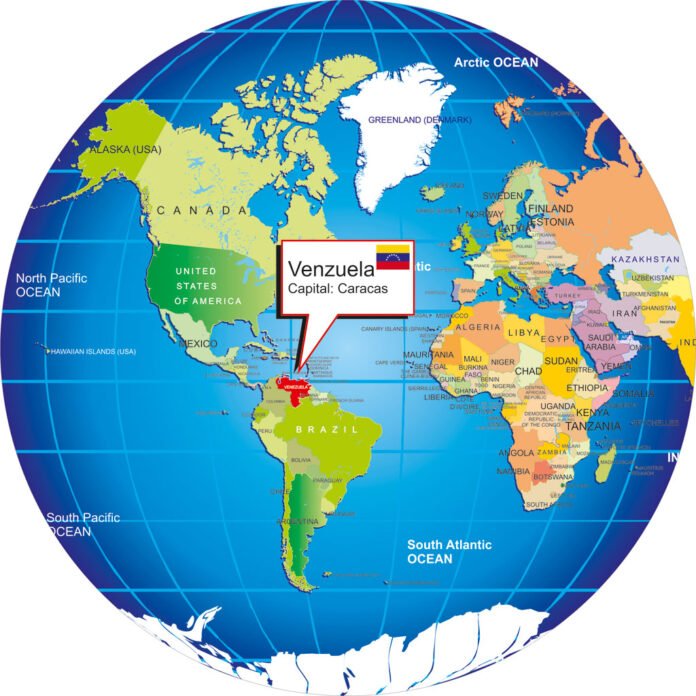
Two powerful earthquakes hit the northern coastal state of La Guairá in Venezuela a few hours before sunset on June 24, 2026. Caracas seismic centre recorded the first tremor of 7.2 magnitude on the Richter scale, and it lasted for 30 seconds. It was followed by the second, more dangerous, earthquake after about 30 minutes, which measured 7.5 in magnitude and lasted for almost a minute. The entire country was shocked as reports of devastation started trickling in. The death toll has risen to about 2,000. BBC reported that 43,200 people are still missing, 10,571 reported severely wounded, and 1.5 lakhs locals have been displaced. Nearly 58,000 houses and buildings have collapsed, and a national emergency has been declared to deal with nature’s fury. An earthquake of this magnitude has occurred in Venezuela for the first time since its independence in 1811, according to the Venezuelan government.
United Nations and friendly countries responded with humanitarian aid and relief materials. International disaster relief teams are gradually reaching affected areas, and rescue missions are continuing. India was one of the first nations to respond and initiated a relief and rescue mission within the 72-hour crucial rescue window. India launched Operation Amistad, dispatching relief material to Venezuela.

Brief history: Venezuela is the northernmost country in South America and is on the western coast of the Atlantic Ocean with a 2,800 km pristine coastline. It is situated on the tri-junction of the Coco, Caribbean, and South American seismic plates. Caracas is the capital and largest modern city. It is located southwest of the Caribbean islands. Officially, it is known as the Bolivarian Republic of Venezuela. It is also called the ‘Little Venice’. The western border touches Colombia. Brazil is in the south, and Guyana is the eastern neighbour. It is strategically located on sea and air routes linking North and South America.
The Maroon Brigade received a warning order in the late evening for Op Amistad on June 25, 2026. The two Indian Air Force C-17 Globemaster III took off from a western airbase at midday on June 26 and headed for Caracas, which is almost 14,000 km away across various oceans
The Angela Falls on the Orinoco River originates from the Andes Range and flows across the country and joins the Atlantic. It is on the Guyana highlands and the world’s highest waterfalls, more attractive and enchanting than Niagara Falls.
History shows that the country was discovered by Columbus in 1498 and became a Spanish colony. It achieved independence on July 5, 1811, and became a republic in 1830. During most of the 20th century, it was ruled by military rulers. It has had a democratic government since 1959. The total geographical area is about 912,000 sq km, and the population is 32 million, and they follow the Roman Catholic sect. Venezuela is endowed with one of the largest oil reserves globally and is a highly urbanised nation. It has 23 states and one capital state. Maracaibo. Barquisimeto and Valencia are the other important cities.
Political transition: Venezuela was a Spanish colony, and Spanish is widely spoken in the country. There was a long dispute between the US and Britain over ownership of Venezuela’s trading rights. In 1899, Cipriano Castro, assisted by Juan Gómez, seized power and ruled till 1908. He was under a huge debt due to foreign investors. He left for Germany for medical treatment, and Gómez carried out a coup and became the president and ruled till 1935. The economy boomed as large oil reserves were found and Venezuela became an oil exporter.

Isaías Medina Angarita took over as president in 1935 after the death of Gómez and initiated several reforms. Angarita was removed in a military coup. Gallegos ruled till 1948 and was replaced by Chabud, who ruled till 1958. Perez Jimenez, supported by a military junta, took over in 1958. After the unification of the three parties, Romulo Betancourt was sworn in but was replaced by Rafael Calderas in 1974. Carlos Andres Perez became president in 1974, and the economy boomed during his time due to an increase in global oil prices. Hugo Chavez, a left-winger, ruled the country from 1999 to 2013.
The Indian Relief team consisted of 41 members led by Col Jagneet Gill, with a tranche of 66 tonnes of relief material, including 60 field hospitals of para brigade, medicines, tents, drinking water, medical equipment, and two BHISHM Cubes (Bharat Health Initiative for Sahayta, Hita and Maitri)
Chavez-Maduro Era: President Hugo Chavez was elected in 1998. He was a communist and launched the Bolivarian revolution and served for almost 14 years, even facing a military coup attempt. His achievements were significant. He introduced the Robinson Mission with 100% literacy, employment generation, infrastructure development, economic reforms, poverty reduction measures, hospitals, and healthcare. Venezuela’s happiness index prospered, but due to overspending, the nation faced a financial crisis. He died in 2013 after a prolonged illness. Nicholas Maduro, who was Vice President, was appointed as President in 2013, and emerged as one of the most powerful presidents. He was elected three times and ruled for 13 years until January 3, 2026.

There were huge protests in 2014 against hyperinflation, shortage of essential goods, crime, and corruption. The police action resulted in 40 fatalities and arrests of opposition leaders and thousands of rioters. In 2016, an emergency was declared. The economy was in a bad state. The corruption was at its peak. US President Donald Trump imposed sanctions in 2017 on Venezuelan Oil exports and froze its gold reserves and assets abroad.
In 2019, President Maduro was re-elected in a controversial election. US sanctions continued and devastated the Venezuelan economy despite its large oil reserves. EU and Canada also imposed sanctions. CIA organised covert ops by the Silver Corps to eliminate Maduro, but he survived. In 2021, Venezuela struck a deal with Iran, which provided oil diluents and commenced exports. Maduro was declared by the National Electoral Council to have been elected in 2024 for the third time. The opposition leader, a former diplomat, Edmundo Gonzalez, also claimed victory by a huge margin. Maduro now decided to develop his economy and crush the protests. He made several deals with countries requiring oil and focused on huge exports.
India stands shoulder to shoulder with a friend in need and demonstrated intercontinental capability to despatch medical assistance and relief materials to victims of natural disasters on the other side of the globe, following the dictum of ’Vasudhaiva Kutumbakam’ (the whole world is a family)
On September 1, 2025, the US launched Operation Southern Spear on the pretext of curbing narco terrorism and illicit weapon trafficking, but the main objective was the blockade of Venezuela and a change of regime. On January 3, 2026, under code name OP Absolute Resolve, the US carried out heavy air strikes in Caracas’ outskirts, and US Delta Force, in a commando operation, captured President Maduro and his wife Cilia Flores, took him to USS Iwa Jima and later to an unknown destination. China and Russia condemned the US operation. Vice President Deicy Rodriguez has been appointed as President. On January 23, 2026, Venezuela opened the oil sector to the private sector, which will allow US companies to extract oil from Venezuela’s oil fields. The US President offered Venezuela to become 51 state of the US, which was boldly turned down by Deicy Rodriguez, saying, “We will maintain good relations with the USA, but we are not a colony but an independent sovereign state.”
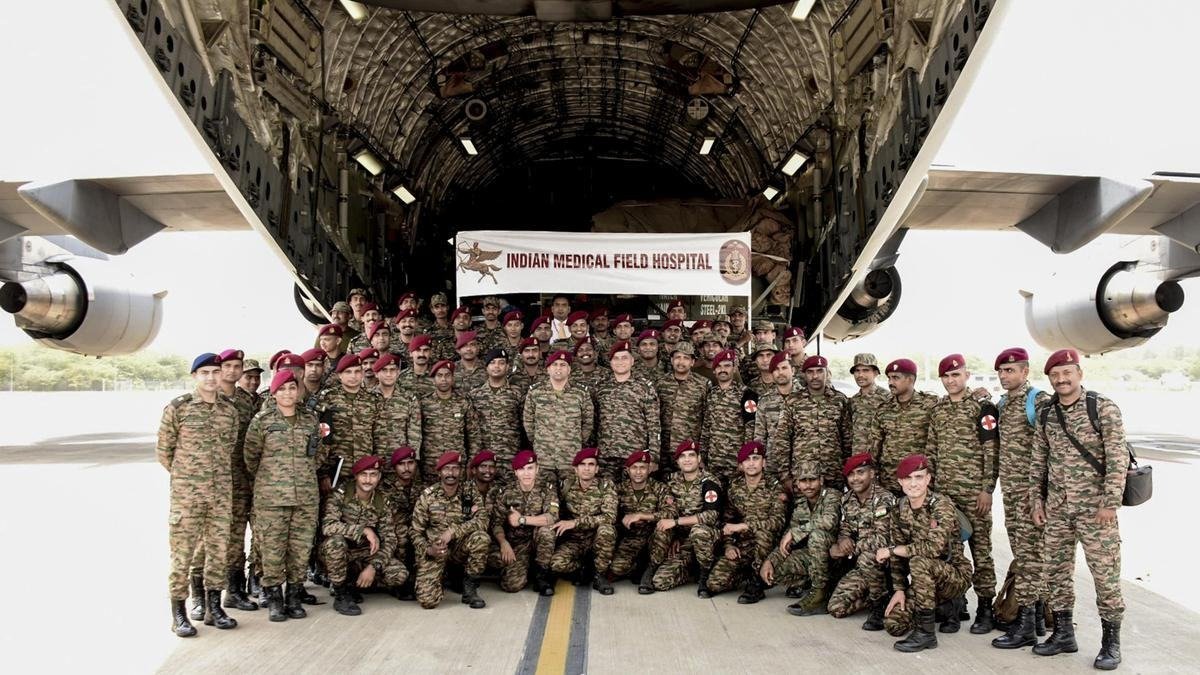
India’s Op Amistad: The warning order was received by the Maroon Brigade in the late evening for Op Amistad on June 25, 2026. The two Indian Air force C17 Globe masters III took off from a western airbase at midday on June 26 and headed for Caracas, which is almost 14,000 km away across various oceans. The huge birds landed safely at Maiquetia International Airport on June 27, 2026, at 1427 hours, as confirmed by External Affairs Minister Dr S Jaishankar in a press brief. He announced that India has launched Operation Amistad (meaning friendship in Spanish), a humanitarian relief mission to Venezuela under the direction of the Prime Minister. The Indian Relief team consisted of 41 members led by Col Jagneet Gill, with a tranche composed of 66 tonnes of relief material, including 60 field hospitals of para brigade, medicines, tents, drinking water bottles, medical equipment, and two BHISHM Cubes (Bharat health initiative for sahayta, hita and maitri). They are basically modular mobile operation theatres that can be airlifted and installed within 6 hours and provide treatment to 200 traumatic casualties. India stands shoulder to shoulder with a friend in need and demonstrated intercontinental capability to despatch medical assistance and relief materials to victims of natural disasters on the other side of the globe, following the dictum of ’Vasudhaiva Kutumbakam’ (the whole world is a family).
“Venezuela is a valued partner, and our close cooperation will be of immense importance in the Global South,” Prime Minister Narendra Modi said and assured Venezuela’s Acting President, Deicy Rodriguez, that India will always cooperate and stand shoulder to shoulder in the event of an unforeseen crisis
India has maintained cordial relations with Venezuela since 1959 and has been an important trade partner. The Acting President, Deicy Rodriguez, visited India on June 4, 2026, and had a bilateral meeting with Prime Minister Narendra Modi. The two leaders had an extensive discussion on expanding cooperation in energy, critical minerals, technology, healthcare, and cultural ties. “Venezuela is a valued partner, and our close cooperation will be of immense importance in the Global South,” Prime Minister Modi said and assured her that India will always cooperate and stand shoulder to shoulder in the event of an unforeseen crisis. His words proved true as the Indian rescue mission took off for Caracas and landed with relief material and a modular hospital within 72 hours of the calamity. Venezuelan President lauded the Indian initiative.
India has always been a pioneer in launching global Humanitarian Assistance and Disaster Relief Missions (HADR). Operation Castor and Rainbow (Maldives and Sri Lanka tsunami 2004), Operation Raahat (Yemen 2015, evacuated 4,700 Indians and 2,000 foreign nationals during Yemen civil war), Operation Maitri (Nepal earthquake 2015), Operation Devi Shakti 2012 (Afghanistan evacuation after Taliban takeover), Op Sagar 2021 (Supply of 30 crore Covid vaccines to 99 countries), Op Ganga 2022 (massive evacuation from Ukraine), Op Dost 2023 (earthquakes in Turkiye and Syria), Op Karuna 2023 (Cyclone Mocha in Myanmar), Operation Brahma 2025 (Myanmar earthquake). Indian government, Indian Armed Forces, and NDRF have been complemented by the UN and disaster-affected nations time and again for global HADR missions.
-The writer is an Indian Army veteran and a defence analyst. He has keen interest in Geo-strategic affairs and writes regularly on internal and external affairs issues related to India and neighbours. The views expressed are personal and do not necessarily reflect the views of Raksha Anirveda





