


A week after Russian President Vladimir Putin’s unexpected visit to the disputed Kuril Islands, Japanese Defence Minister Shinjiro Koizumi arrived in India with aim to strengthen defence cooperation under ‘Japan-India Special Strategic and Global Partnership’, which constitutes one of the pillars for peace, stability and prosperity in the Indo-Pacific.
While Putin’s visit to the disputed islands, known as the Northern Territories in Japan, revived decades old tension between the two countries, with Tokyo claiming that the islands were illegally seized by the Soviet Union during the final days of World War II, the world’s third largest economy fears that Russia together with China and North Korea is posing increasingly serious strategic challenges.

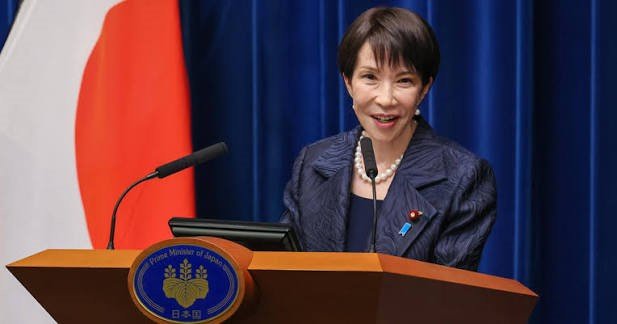
Against this background, Japan, under Prime Minister Sanae Takaichi is mulling several options, including unveiling the country’s three key documents: National Security Strategy, National Defence Strategy and Defence Buildup Programme in 2027. Along with this, Japan has decided to strengthen its strategic partnership with countries like India, Australia and other like-minded countries to work as bulwark against geopolitical uncertainty in the Indo-Pacific region.
Japanese Defence Minister Shinjiro Koizumi’s high-stakes visit to India reinforced the ‘Japan-India Special Strategic and Global Partnership,’ issuing a firm, unified stance against unilateral attempts by regional powers to alter the territorial status quo by force
Growing China-Russia Defence Cooperation
The Japanese Defence Minister’s visit to India last week should be viewed in this context. India and Japan “expressed their strong opposition to any unilateral actions that impede freedom and safety of navigation and overflight, as well as to any attempts to change the status-quo by force or coercion,” the joint statement issued after a meeting between Defence Minister Rajnath Singh and his Japanese counterpart Shinjiro Koizumi in New Delhi on August 20, maintained.
Indirectly, it was in reference to China whose assertive military stand in the South China Sea, East China Sea and the Taiwan Strait together with the US’s shift in its focus away from the region to the Middle East, has triggered uncertainty in the region. Among Japanese, in particular, a sense of unease has deepened in the wake of regular naval drills in the Pacific by the navies of China and Russia.
From 2012 onwards, as per various media reports, the two countries have held multiple joint naval exercises in the Pacific region. This year from July 5 to July 13, they conducted joint sea exercises in the Yellow Sea. A year earlier, the two countries carried out a joint naval exercise in the Sea of Japan. Signalling growing partnership between them, they conducted joint naval exercises in the South China Sea in 2016 and 2024.

Heightened joint naval drills and strategic bomber patrols near Japanese airspace by Moscow and Beijing – alongside Putin’s visit to the disputed Kuril Islands – have elevated Tokyo’s strategic alarm, accelerating its regional counter-balancing efforts
While such military-led activities have impacted the geopolitical situation in the region, what Tokyo worries the most is growing anti-Japanese sentiment in Russia.
Japan’s Ukraine Policy
For growing anti-Japanese sentiment in Russia, some strategic experts hold Japan responsible. They maintain that Japan has overwhelmingly supported US and Western countries’-led sanctions against Moscow. Not only that, it has used financial, strategic and military muscles to back Ukraine.

Since February 2022, when Russia launched the war against Ukraine, Japan has provided more than $20 billion aid to Kiev, including $6 billion in 2026. Besides, Japan has become a major supplier of weapons to Kiev. Last year, Japan supplied an undisclosed number of missiles to Ukraine.
Even though Japan’s defence policy bars supply of lethal technologies to countries with which it has no Equipment and Technology Transfer Agreements, it has put no restrictions on providing lethal arms to Ukraine. In May 2026, Japan purchased $14.7 million worth of US-made military equipment for supplying them to Ukraine.
Kiev has now set its eyes on Japanese advanced military platforms, including anti-ballistic missile systems. As per media reports, Kiev is in talks with Tokyo for setting up Mitsubishi Heavy Industries-led defence manufacturing units in Ukraine. Japan’s Mitsubishi is one of the few companies to hold a licence to manufacture the US-made Patriot missiles. Ukraine also wants military electronics, advanced radar systems, communication equipment and guidance systems from Japan.
Frequent ballistic missile launches into nearby waters and reports of Pyongyang expanding its nuclear arsenal to as many as 120 warheads have intensified Japan’s urgent security recalculations
In fact, Tokyo wants to see that Ukraine does not lose the battle against Russia. It fears that if Ukraine collapses under military attacks from Moscow, it will embolden China to attack Taiwan. Japan’s Okinawa Prefecture is just 110 km away from Taiwan. As such, military strikes against Taiwan and its consequent capture by China will have direct bearing on the security and existence of Japan.
Deepening China-Russia-North Korea Partnership
North Korea is already making the Japanese cast sleepless nights by regularly firing missiles in areas around Japan. On August 20, Pyongyang launched around 10 ballistic missiles of which some fell outside Japan’s exclusive economic zone and others dropped around South Korea. It was North Korea’s third missile launch this month, underscoring the scale of challenges faced by Japan and South Korea in the region.
A few days ago, South Korean Defence Minister Ahn Gyu-back told his country’s lawmakers that North Korea may possess as many as 120 nuclear weapons, more than twice the 57 warheads cited by US President Donald Trump earlier. Whatever may be the truth, growing military engagements between Russia, China and North Korea have exacerbated tensions in Japan.
Its reflection can be seen in Japan’s Defence White Paper 2026, which cites the case of provocative Russian-Chinese bomber patrols around Japan and Moscow’s support for North Korea’s military modernisation. In December 2025, a patrol by Chinese and Russian bombers travelled in the direction of Tokyo after passing over Japan’s southern islands, cited Japan’s Defence White Paper.
Guided by Prime Minister Takaichi’s realistic stance on regional threats, strategic experts suggest Tokyo may eventually challenge historical taboos by openly evaluating nuclear deterrence capabilities to safeguard national sovereignty
This year in June too, China and Russia sent bombers on a similar flight path. “Joint Chinese and Russian bomber flights and naval exercises are clearly intended as a show of force against our country and represent a serious concern for national security”, Japan’s annual defence assessment report said, adding that Tokyo should respond with its comprehensive national power and in cooperation and collaboration with its allies, like-minded countries and others.
Japan’s Roadmap to Reshape Pacific Security
While the Japanese Defence Minister’s visit to India last week imparted fresh momentum to Tokyo’s military and strategic relations with New Delhi, it also highlighted Japan’s broader effort to reshape the regional security architecture. This is particularly significant as the country’s 2026 Defence White Paper is the first to be released under Prime Minister Sanae Takaichi, who is well known for advocating a more active and meaningful role for Japan in regional security.
The 598-page White Paper identifies China as Japan’s “unprecedented and greatest strategic challenge,” underscoring Tokyo’s growing concerns about the shifting balance of power and security dynamics in the region. China has already given a 7% jump in its defence spending to US $281 billion in 2026. Given this, Japan’s Defence Ministry has sought a record 8.9 trillion-yen (US $56 billion) budget for the next financial year.
In fact, in comparison to China’s defence spending, Japan’s defence budget is much lower. Despite this, Prime Minister Takaichi is drawing a roadmap for her country’s defence, which includes the revision of the three security documents. Going by military experts, it would not surprise anyone if Japan sidelines its taboo of the past and looks towards nuclear options keeping in mind its national security interests.
Japanese Prime Minister Takaichi has been a votary of developing nuclear deterrence. In 2024, as a minister, she had written several articles on Japan’s security situation and she had argued that the country’s current position on nuclear policy was not realistic.

The writer is a senior journalist with wide experience in covering international affairs. The views expressed are of the writer and do not necessarily reflect the views of Raksha Anirveda





