


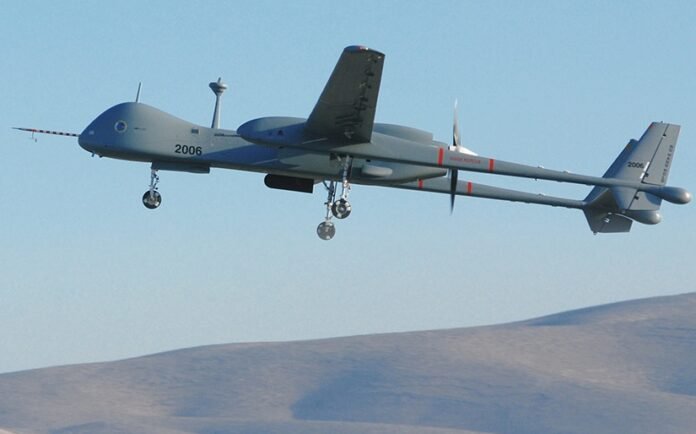
Tel Aviv: The serious problem first emerged in Ukraine and then in Israel. Massive use of armed drones. The current air defences have not been efficient enough.
Israel has taken emergency steps to counter the problem that first appeared on its northern border with Lebanon and then as armed drones were launched from Iran and Yemen.
As of September 2025, Israel is more equipped to deal with this fast developing threat and according to sources, some European countries have requested information about the effective defences.
Israel’s partial solution is based on air defence system like Iron Dome, David’s Sling and Barak but requires the active role of combat helicopters.
European NATO nations are already rushing to modify their defenses and strategies to meet this changing danger since they are not entirely equipped to handle prolonged, huge Russian drone attacks.
Significant gaps in layered, cost-effective counter-drone capabilities, logistical difficulties, cost imbalance, and political reluctance about engagement regulations have been shown by recent Russian drone incursions into the airspace of Poland, Romania, and other eastern NATO allies.
Israeli experts say that the problem is combined from detection and verification. These are the two critical capabilities that will make the systems developed to deal with the dramatically fast growing threat of armed drones, capable. Both capabilities still need a lot of improvement.
Most European NATO air defence networks were optimised for high-end threats rather than for the saturating effect of cheap, expendable drones or swarms.
There are few fielded multi-layer detection and interception solutions that can counter mass drone attacks at scale and cost-effectively. Air-to-air missiles and advanced SAMs are effective but economically impractical for routine swarm repulsion.
Israel is developing new air defence systems that will be capable to counter swarms of armed drones. One is the high power laser developed by Israeli company Rafael. But the expert claim that only a combination of kinetic and soft defence system will be capable of doing the mission.

-The writer is an Israel-based freelance journalist. The views expressed are of the writer and do not necessarily reflect the views of Raksha Anirveda





