


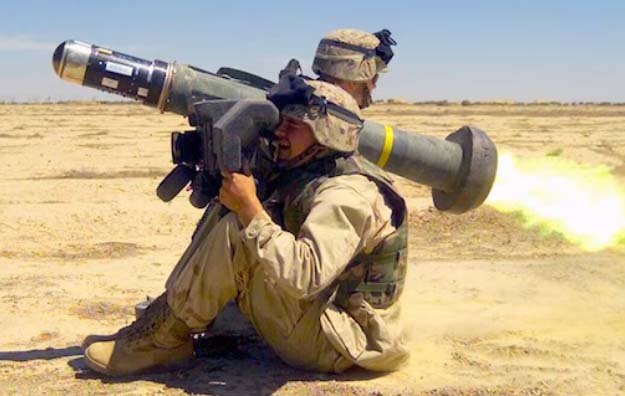
The formalisation of the Foreign Military Sales (FMS) agreement between New Delhi and Washington for the FGM-148 Javelin anti-tank guided missile (ATGM) system represents a defining moment in contemporary geopolitics. This deal is not merely a transaction for tactical battlefield hardware; it is a structural realignment of Indian infantry modernisation and a massive step forward for the Indo-US strategic partnership. For decades, the Indian Army’s anti-armour requirements depended heavily on legacy Soviet and Russian systems, or were constrained by the long development cycles of domestic alternatives. By inducting the battle-tested, man-portable Javelin system, India is rapidly addressing critical operational vulnerabilities along its highly contested borders while rewriting the rules of its defence integration with the West.
History and Context: The Evolution of a Strategic Choice
To understand the significance of the Javelin deal, one must look at India’s long, complex history of anti-tank missile procurement. For nearly two decades, the Indian Army has faced a severe deficit in modern third-generation ATGMs. The backbone of its anti-armour capabilities long rested on the Milan-2T (a French-designed system manufactured under license by Bharat Dynamics Limited) and the Russian Konkurs. While reliable in their era, these are second-generation wire-guided or Semi-Automatic Command to Line of Sight (SACLOS) missiles. They require the operator to remain stationary and guide the missile to the target, exposing frontline troops to immediate counter-fire.

The quest for a ‘Fire-and-Forget’ man-portable anti-tank guided missile (MPATGM) began in earnest over a decade ago. Initially, the United States offered the Javelin under the Defence Technology and Trade Initiative (DTTI) in the early 2010s. However, those early talks collapsed. New Delhi was deeply hesitant about Washington’s strict technology-transfer restrictions and the lack of co-production guarantees under the FMS route. Turning away from the US, India pivoted towards Israel’s Spike ATGM, even issuing a Letter of Intent for a massive contract. Yet, that deal was cancelled at the eleventh hour in 2017 to protect and prioritise the domestic development of the Defence Research and Development Organisation’s (DRDO) indigenous MPATGM.
While DRDO has made commendable strides with its domestic MPATGM programme, the realities of modern warfare and urgent border standoffs forced a pragmatic reassessment. The brutal lessons of the Russia-Ukraine conflict vividly demonstrated the unmatched lethality of the Javelin against modern armoured columns. Concurrently, persistent tensions along the Line of Actual Control (LAC) highlighted an urgent need for an ultra-lightweight, combat-proven, top-attack weapon that can be deployed instantaneously by infantry units at extremely high altitudes. The maturation of the Indo-US major defence partnership — bolstered by foundational pacts such as COMCASA and BECA — finally paved the way to revive and conclude the Javelin agreement through the FMS pipeline.
The quest for a ‘Fire-and-Forget’ man-portable anti-tank guided missile began in earnest over a decade ago. Initially, the United States offered the Javelin under the Defence Technology and Trade Initiative in the early 2010s. However, the talks collapsed. India hesitated about Washington’s strict technology-transfer restrictions and the lack of co-production guarantees
Technological Features: Top-Attack Lethality and High-Altitude Utility
The FGM-148 Javelin brings distinct technological advantages that radically transform the operational philosophy of Indian infantry battalions. At the heart of its utility are three core capabilities:
- Fire-and-Forget Capability: Unlike legacy wire-guided systems, the Javelin utilises an advanced long-wave infrared (LWIR) seeker. Once the operator locks onto a target and pulls the trigger, the missile guides itself autonomously. This allows the two-man infantry crew to immediately take cover, reload, or displace to a safer position, exponentially increasing battlefield survivability.
- Top-Attack Profile: Modern Main Battle Tanks (MBTs) carry heavy explosive reactive armour (ERA) on their front and sides. The Javelin bypasses this strength by utilising a high-trajectory flight path. It climbs steeply into the air and dives vertically onto the target, striking the tank’s roof — the thinnest and most vulnerable part of any armoured vehicle. Equipped with a tandem-charge warhead, it easily defeats ERA and penetrates the hull beneath.
- Soft-Launch Mechanism: The Javelin features a unique two-stage propulsion system. The first motor ejects the missile safely out of the launch tube before the main flight motor ignites. This minimises the ‘backblast’ zone, allowing soldiers to safely fire the weapon from inside enclosed spaces, urban bunkers, or cramped high-altitude sangars without injuring themselves or giving away their position.
For the Indian Army, this weapon’s physical footprint is as critical as its lethality. Weighing roughly 22 kilograms combined (missile and Command Launch Unit), it is genuinely man-portable. In the rugged, oxygen-depleted environments of Ladakh, Sikkim, and Arunachal Pradesh, where moving heavy vehicular weapon platforms is logistically gruelling, a small foot-soldier team’s ability to carry tank-killing capabilities on their backs is a massive force multiplier.

Opportunities: Geopolitical and Industrial Dividends
The Javelin contract unlocks several critical opportunities for India, spanning tactical battlefield dominance, global diplomatic positioning, and industrial learning curves.
The brutal lessons of the Russia-Ukraine conflict vividly demonstrated the unmatched lethality of the Javelin against modern armoured columns. Persistent tensions along the LAC also highlighted an urgent need for an ultra-lightweight, combat-proven, top-attack weapon that could be deployed instantaneously by infantry units at extremely high altitudes
Restoring the Anti-Armour Deterrence Equilibrium
Tactically, the Javelin provides an immediate counterweight to aggressive military positioning along India’s northern borders. Frontline PLA formations have heavily integrated light tanks and heavily armoured infantry fighting vehicles tailored for high-altitude warfare. The deployment of Javelin-equipped Indian infantry units across key valleys and mountain passes creates a potent, asymmetric barrier, forcing any adversarial armoured thrust to face unacceptable attrition rates.

Deepening Strategic Interoperability
Geopolitically, this deal cements India’s position within a trusted defence ecosystem. Purchasing premium, frontline American hardware signals a deep level of mutual strategic trust. It enhances interoperability during multilateral exercises, unifies tactical doctrines, and proves that despite India’s legacy dependence on Russian hardware, New Delhi is fully capable of integrating elite Western technology into its primary combat formations.
Industrial Knowledge Spillovers
Industrially, the FMS route for the initial batches offers a gateway for Indian defence public sector undertakings (DPSUs) and private firms to study global maintenance, logistics, and life-cycle support standards. Mastering the sustainment of such sophisticated infrared-seeking tech provides invaluable engineering benchmarks that can be directly applied to perfect and mass-produce India’s domestic missile programmes.
Weighing roughly 22 kilograms, Javelin is man-portable. In the rugged, oxygen-depleted environments of Ladakh, Sikkim, and Arunachal Pradesh, where moving heavy vehicular weapon platforms is logistically gruelling, a small foot-soldier team’s ability to carry tank-killing capabilities on their backs is a massive force multiplier
Challenges: Navigating Cost, Sovereign Control, and Indigenisation
Despite its clear advantages, the Javelin acquisition is not without significant strategic and operational friction points. Navigating these challenges requires careful, long-term policy calibration.
The Fiscal Strain of Premium Hardware
The foremost challenge is financial sustainability. The Javelin is an incredibly expensive system; a single missile unit costs significantly more than legacy wire-guided alternatives or domestic iterations. Relying on an expensive foreign FMS loop for mass infantry deployment risks draining capital acquisition budgets that are urgently needed for other big-ticket modernisation programmes, such as twin-engine fighter jets and naval fleet expansion.
End-Use Monitoring and Strategic Autonomy
A perennial concern in Indo-US defence commerce is Washington’s stringent regulatory framework. All FMS acquisitions are bound by rigorous End-Use Monitoring (EUM) clauses. This means US defence personnel retain the right to periodically inspect the location and operational status of the supplied hardware. For a nation like India, which guards its strategic autonomy fiercely, balancing these foreign compliance mandates with sensitive, classified border deployments requires delicate diplomatic tightrope walking.
The Javelin is an incredibly expensive system; a single missile unit costs much more than legacy wire-guided alternatives or domestic iterations. Relying on an expensive foreign FMS loop for mass infantry deployment risks draining capital acquisition budgets needed for other big-ticket modernisation programmes, such as twin-engine fighter jets and naval fleet expansion
Balancing the ‘Make in India’ Mandate
The most profound strategic dilemma is the structural tension between immediate imported procurements and the national mandate for Aatmanirbhar Bharat (Self-Reliant India). If India imports foreign ATGMs in massive volumes, it risks undermining the commercial viability and domestic momentum of home-grown projects such as the DRDO MPATGM or the private sector’s indigenous missile solutions. New Delhi must ensure that the Javelin serves strictly as an immediate, gap-filling bridge rather than an open-ended dependency that smothers domestic defence innovation.
| Feature / Domain | FGM-148 Javelin (US) | Legacy Systems (Milan/Konkurs) | Indigenous MPATGM (India) |
| Guidance System | Infrared Seeker (Fire-and-Forget) | Wire / SACLOS (Requires Tracking) | Infrared Seeker (Fire-and-Forget) |
| Attack Profile | Direct and Top-Attack | Direct Flight Path Only | Direct and Top-Attack |
| Portability | High (Ultra-lightweight for Infantry) | Moderate (Heavy tripod/ground mounts) | High (Optimised for infantry use) |
| Procurement Status | Signed FMS Agreement | Phasing out of frontline service | In advanced trials / Low-rate production |
Conclusion: A Strategic Bridge to Self-Reliance
The India-US Javelin deal is a masterclass in pragmatic statecraft. It proves that modern Indian defence planning has broken free from rigid ideological dogmas. By choosing to import an elite, combat-proven weapon system through the US FMS pipeline, New Delhi has prioritised the immediate, non-negotiable security needs of its frontline soldiers deployed in the Himalayas.
However, the true success of the Javelin deal will be measured by how effectively India leverages this influx of Western technology. The acquisition must not become a crutch. Instead, it must be utilised as an operational stopgap that buys valuable time for India’s domestic defence industrial complex to mature. By combining immediate American technological lethality with an unwavering, long-term commitment to indigenous manufacturing, India is successfully forging a modern, self-reliant infantry capable of deterring any adversary across any terrain.

–The writer is Assistant Professor, ICFAI School of Liberal Arts, ICFAI University, Jaipur. The views expressed are of the writer and do not necessarily reflect the views of Raksha Anirveda





