


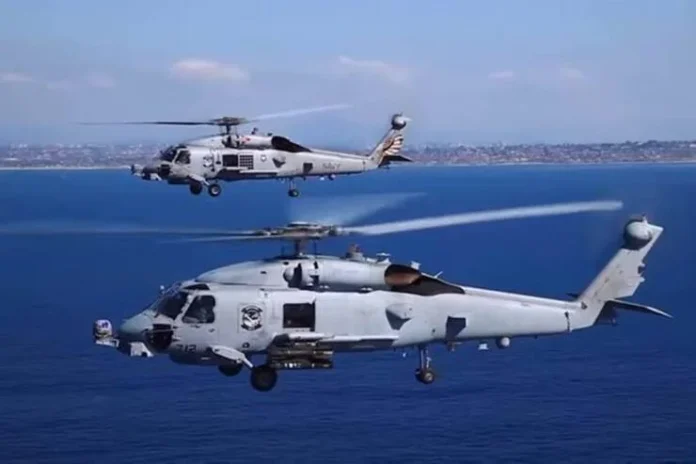
The Indian Navy has successfully received 21 of the 24 MH-60R “Seahawk” multi-mission helicopters originally ordered under a $2.6 billion Foreign Military Sales (FMS) contract signed with the United States in 2020. With the final three airframes slated for imminent delivery, naval planners have initiated high-level internal discussions to secure a substantial repeat order for the platform.
The push for a follow-on contract is driven by a stark reality: India’s expansive coastline and vital sea lanes are coming under intense underwater surveillance from regional adversaries. The Navy’s current inventory of shipborne multi-role helicopters remains severely stretched, creating an operational shortfall that a secondary batch of Seahawks is intended to systematically eliminate.

Advanced Anti-Submarine Warfare Focus
Manufactured by Lockheed Martin’s Sikorsky, the MH-60R is widely regarded as one of the most capable naval helicopters in service globally. The platform significantly enhances the defensive and offensive posture of India’s frontline surface combatants:
The Seahawk’s primary strength lies in its sophisticated acoustic processing suite, high-resolution search radars, and variable-depth dipping sonar systems. These subsystems allow naval aircrews to detect, track, and, if necessary, destroy quite diesel-electric and nuclear-powered submarines at extended distances before they can threaten Indian carrier strike groups or commercial maritime corridors.
Strengthening the Fleet Air Arm
The Indian Navy has already raised its first MH-60R squadron, INAS 334 “Seahawks,” stationed at INS Garuda in Kochi. These advanced assets are being deployed across frontline warships, including the indigenously built aircraft carrier INS Vikrant, guided-missile destroyers, and stealth frigates.
Current Fleet Status and Operational Readiness
As of mid-June 2026, the delivery status of the 24 ordered helicopters is as follows:

- 15 helicopters are fully operational and deployed with frontline squadrons (INAS 334 and INAS 335).
- 3 helicopters remain in the United States for the advanced training of Indian aircrew.
- 3 helicopters are undergoing India-specific upgradation and certification, including the integration of indigenous electronic warfare suites and secure communication systems, before being handed over.
The remaining three units of the original order are scheduled for delivery by the end of 2026. The operational helicopters will also be sent to the US in rotation for similar progressive upgrades.
Strategic Drivers for Additional Procurement
The push for a follow-on order is driven by an urgent operational gap exacerbated by regional geopolitical shifts:

Regional Threats: Increased underwater activity by China in the Indian Ocean Region and the impending induction of Air-Independent Propulsion (AIP) equipped Hangor-class submarines by Pakistan have heightened the need for robust ASW assets.
Fleet Expansion: The Navy is on track to become a 200-plus ship force by 2035, with numerous new warships requiring helicopter support. Currently, only a fraction of ships have dedicated air assets.
Interim Solution: With domestic helicopter projects still in development, acquiring more MH-60Rs offers the fastest route to plugging the capability void, leveraging existing logistics and training infrastructure.
Financial and Logistical Support
To sustain the growing fleet, the Ministry of Defence signed a ₹7,995 crore (approx $830 million) support agreement with the US in November 2025. This five-year deal ensures maintenance, spares, and operational availability, and laying the logistical groundwork for potentially expanding the fleet size further.
Standardising a single, high-performing platform allows the Navy to streamline its maintenance infrastructure, pilot training programmes, and spare parts supply lines, accelerating overall fleet readiness.
By securing a follow-on order, the Indian Navy aims to firmly establish a long-term, modern fleet air arm. This expansion ensures that India maintains a highly responsive, survivable aerial shield over its strategic waters, directly reinforcing its role as a primary security provider across the broader Indo-Pacific.






