

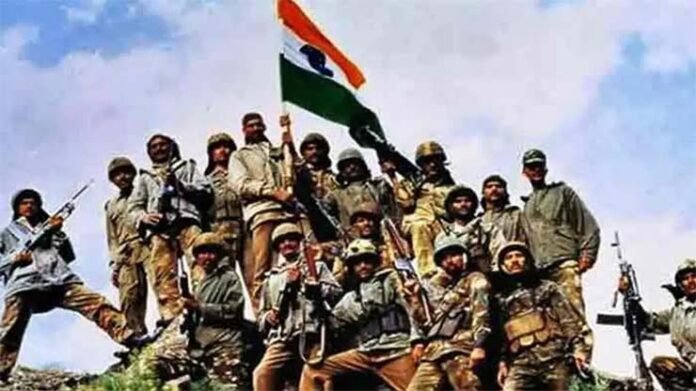
On July 26, 1999, 27 years ago, the guns fell silent after 83 days of intense fighting on the Ladakh and Karakoram ranges in the Himalayas. Then Prime Minister Atal Bihari Vajpayee, admiring the valour and determination of the Indian Armed Forces, declared the end of Operation Vijay, as the Line of Control (LoC) had been restored. Kargil War was the fifth round of conflict between India and Pakistan since the partition of India on August 14, 1947. The British ensured, by drawing the Radcliffe Line in western/eastern India, while lowering the Union Jack and declaring Pakistan as a separate nation out of India in 1947, that the Indian subcontinent remains a conflict zone forever.
The first round of the conflict started in October 1947, when Razakars in massive strength, supported by the Pakistani military, in a rogue convoy advanced on the Muzaffarabad, Baramulla, Srinagar axis, displaying an orgy of violence, rape, loot, and murder of locals. The war lasted for a full year, and as Indian forces were in the process of gradually restoring lost territories, Prime Minister Jawaharlal Nehru, in panic, rushed to the UN, and a ceasefire was announced.

The ceasefire line was drawn under UN observers, and India lost 78,114 square kilometres of area to the newly created Pakistan, although Srinagar was saved. The new term of ‘Pakistan-occupied Kashmir’ (PoK) was coined. The second round was initiated by Pakistan in September 1965 when Lal Bahadur Shastri was the Prime Minister. India, after suffering initial reverses due to ‘Op Grand Slam’, activated the Punjab front and was in a winning position as Indian troops almost reached Lahore. India accepted the USSR-mediated ceasefire and had to return almost 1,920 sq km of area, including strategic Haji Pir Pass, at the Tashkent summit. Lal Bahadur Shastri died in Tashkent under mysterious circumstances.
The third round was a knockout blow to Pakistan in the 1971 war. A new nation, Bangladesh, was created, and East Pakistan ceased to exist, and 90,000 Pakistani troops surrendered. The fourth round was fought in Siachen, the highest battlefield of the world, in 1985, called Operation Meghdoot. The master stroke was the occupation of Quid-e-Azam Post and dominance of Saltoro Ridge.
Kargil War, the fifth round of the conflict, was conceived in 1987 and executed in 1999 by Pakistani Army Chief General Parvez Musharaf to take revenge for the Siachen debacle during which he was a Major and had witnessed the massacre of his SSG Company. The peace process was initiated in February 1999 by Atal Bihari Vajpayee and positively responded to by Pakistan Prime Minister Nawaz Sharif. Vajpayee had travelled by Sadbhavna Bus to Lahore on February 19, 1999, along with a celebrated civil delegation, including Dev Anand, Satish Gujral, Javed Akhtar, Kuldeep Nayar, Kapil Dev, and Shatrughan Sinha. General Parvej Musharaf did not attend the important function as Pakistani troops were in the process of intrusion in Kargil heights, defying orders of his Prime Minister, as the Indian brigade in Kargil Dras defended sector, had gone into winter mode in December 1998, vacating avalanche-prone snow-bound dominating heights.
Capt Vikram Batra was awarded the Param Vir Chakra posthumously for conspicuous bravery, gallant action, resolute leadership, firm determination in the face of the enemy, and supreme sacrifice. Point 4875 was renamed after him as ‘Batra Top’
Operation Koh Paima, also called Op Badr (full moon), the brainchild of General Parvez Musharaf, was already underway when the Lahore Declaration was being signed between the two Prime Ministers on February 21, 1999. Koh Paima was a warfare strategy of Napoleon Bonaparte, who adopted it in many wars, meaning infiltrating secretly and rapidly from narrow points and spreading fast in the rear of frontline enemy troops. The top-secret plan was known to Lieutenant General Aziz Khan (Chief of Staff), Lt Gen Mahmud Ahmed (10 Corps commander), and Major General Javed Hasan (the force commander, Northern Area, division-level force comprising four brigades). The force had 10 Northern Light battalions (NLI) composed of Balistan mountain tribes, Sindh and Azad Kashmir battalions, and Special Service Group (commando force).

The intruding force, divided into three task forces, was inducted into the Muskoh-Dras subsector (6 NLI, 12 NLI, and three companies of Special Service Group commandos under Task Force 1 (TF1), Kaksar subsector (4, 13 NLI and affiliated troops TF 2), and Baltik/Yaldar subsector, including Chorbat La (3, 5 and 8 NLI formed TF 3) on Ladakh/Karakoram ranges. These task forces were air-maintained initially and later well-stocked and had logistics bases at Marpo La and Sanguti. All Pakistani troops were in traditional salwar-kameez civil dress acting as mujahedeen/terrorists. Surprisingly, these Pakistani troops remained in inclement weather, dizzy heights, deadly blizzards, deep inside the LoC for three months undetected until a few Bakarwal shepherds informed the commanders at the end of April of the presence of unknown troops above Kargil and Dras towns.
The Kargil district is today part of Union Territory of Ladakh. Kargil heights in 1999 were part of Jammu and Kashmir state, located in Ladakh ranges and was the responsibility of Srinagar corps HQ which was under jurisdiction of Northern Command of Indian Army. The National Highway (NH 1) connecting Srinagar to Leh passes through Sonamarg, Baltal, Zojila Pass, Ghumri, Dras, Kargil, Lochum bridge on Indus, Nimmu in this zone. NH 1 is the lifeline for Leh garrison and for logistics support of troops deployed in Eastern Ladakh. Dras and Kargil Heights are overlooking NH 1 and, if occupied by enemy observation posts, can monitor the movement of convoys, and can be interfered with by accurate enemy artillery shelling.

Fog of uncertainty was cleared by the first week of May 1999. General Krishan Pal, the corps commander, gave his final assessment to Army commander Lt Gen H M Khanna that it was not a militant intrusion but regular troops consisting of a division minus of the Pakistani Army with Arty support occupying Ladakh range from Mushkoh, Dras to Yaldar in three pockets. No doubt it was an intelligence failure, but as the situation was clear, two divisions were inducted in the war zone. It was the fastest ever mobilisation. During the initial reconnaissance stage, three patrols of 3 Punjab were sent to Bunji to confirm enemy presence. A patrol led by Capt Saurabh Kalia near Bajrang post was taken prisoner of war on May 3 and later killed brutally on June 9. The response of Indians troop was ferocious. 8 SIKH recaptured Point 4256 and 16 Grenadiers captured Point 4480 by May 12, 1999. General VPS Malik reached Kargil on May 18 and boosted the morale of Indian troops.
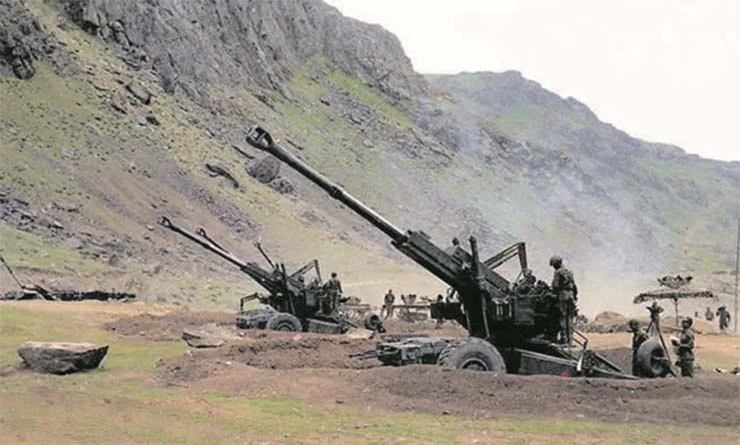
The government sanctioned the use of the Indian Air Force on May 26. Operation Safed Sagar was launched by the IAF with seven combat squadrons and one helicopter squadron. Two fighters and one modified MI17 gunship were lost to enemy fire. Later, Mirage 2000 ruled the sky and inflicted heavy destruction on enemy assets. Five regiments of 155mm Bofors guns reached the war zone and played merry hell on enemy entrenched troops. On June 13, 56 Brigade captured Tololing and Point 4590. At Point 4760, Black Rock, three pimples were captured on June 29. Tiger Hill battle was won on July 4, breaking the spine of the Pakistani Army. Nawaz Sharif rushed to the USA to request the US president to speak to the Indian Prime Minister for an immediate ceasefire. The same day, the Mushkoh and Dras areas were recaptured and cleared.
From July 12 to July 18, the Pakistani troops’ withdrawal was permitted. Zulu Spur was taken by 192 Brigade on July 24. The western Ladakh range was cleared, and sanctity of the LoC was restored. On July 26, 1999, the Indian Prime Minister declared that Operation Vijay was over and India had achieved its objective by recapturing the entire territory.
The cost of victory was high; 22 gallant officers, 21 JCOs and 452 brave soldiers made the supreme sacrifice. Pakistan also suffered heavy casualties and lost almost 1,200 soldiers. Kargil War was over, and the Himalayas witnessed silently how yet another assault on India was repulsed by gallant Indian soldiers.
There are many unsung heroes of the Kargil War. Some valour stories are presented here for the motivation of the young generation.
Captain Vikram Batra (13 JAK) Param Vir Chakra (Posthumous)
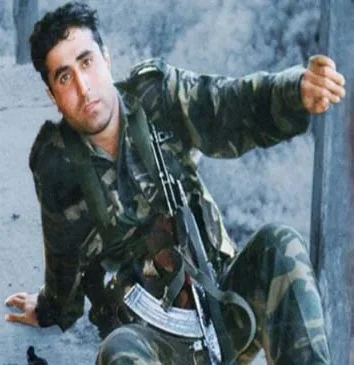 Known as Sher Shah in the Kargil War, Captain Vikram Batra was commissioned into 13 Jammu Kashmir
Rifles on December 6, 1997. The officer was born in Palampur, Himachal Pradesh, on September 9, 1974. His father, Girdhari Lal, was a principal in a government school and his mother, Kamalkanta, was also a teacher. He joined the Indian Military Academy (Manekshaw Battalion) in June 1996 as a Gentleman Cadet and passed out after 18 months of tough training as Lieutenant. On June 5, 1999, 13 JAK Rifles got orders to move to the Dras sector in Western Ladakh for Operation Vijay, the Kargil War.
The Pakistani troops had crossed the LoC in winters and were firmly entrenched on the mountain tops of the Ladakh Range, causing heavy casualties on Indian forward troops and opening heavy artillery fire on Srinagar-Leh National Highway. The Battalion was tasked to regain Point 5140 in the Dras sector. He volunteered to lead the attack on Point 5140, which was heavily defended by a platoon assisted by Medium Machine Guns (MMGs), Rocket Launchers (RLs) and Mortars.
The commanding officer (CO), Lt Col YK Joshi (former Northern Army commander), asked for a success signal; Sher Shah selected ‘Dil Mange More’. His team captured the feature 5140 on June 22, after a fierce battle with some casualties. After reorganisation, he gave the success signal. Later, the unit was moved to Mushkoh sector for another task. There was heavy fire coming from the height Point 4875 on July 6. The CO ordered immediate action as it was another dominant peak on the LoC overlooking NH and had to be captured. Another company was detailed for the task, but Vikram volunteered again.
The CO, who did not want to expose him after the risky ops on 5140, advised him to stand down, but Vikram finally convinced the CO to go again. He led the assault on Target Peak 4875. They cleared 3 sangars, but during the fourth sangar assault his buddy got badly injured. He pulled him behind a boulder safely and continued the assault. Once exposed, he was badly hit by a volley of Light Machine Gun. He crawled to the bunker, profusely bleeding, and lobbed a grenade. The last sangar was silenced and following troops captured Point 4875.
Indian Tricolour was placed on top. LoC had been restored in Dras and Mushkoh sectors. Col Joe renamed Point 4875 as ‘Batra Top’. Capt Vikram Batra was called the Hero of Kargil War and was awarded Param Vir Chakra posthumously for conspicuous bravery, gallant action, resolute leadership, firm determination in the face of the enemy, and supreme sacrifice.
Lt Manoj Pandey (1/11 GR) Param Vir Chakra (Posthumous)
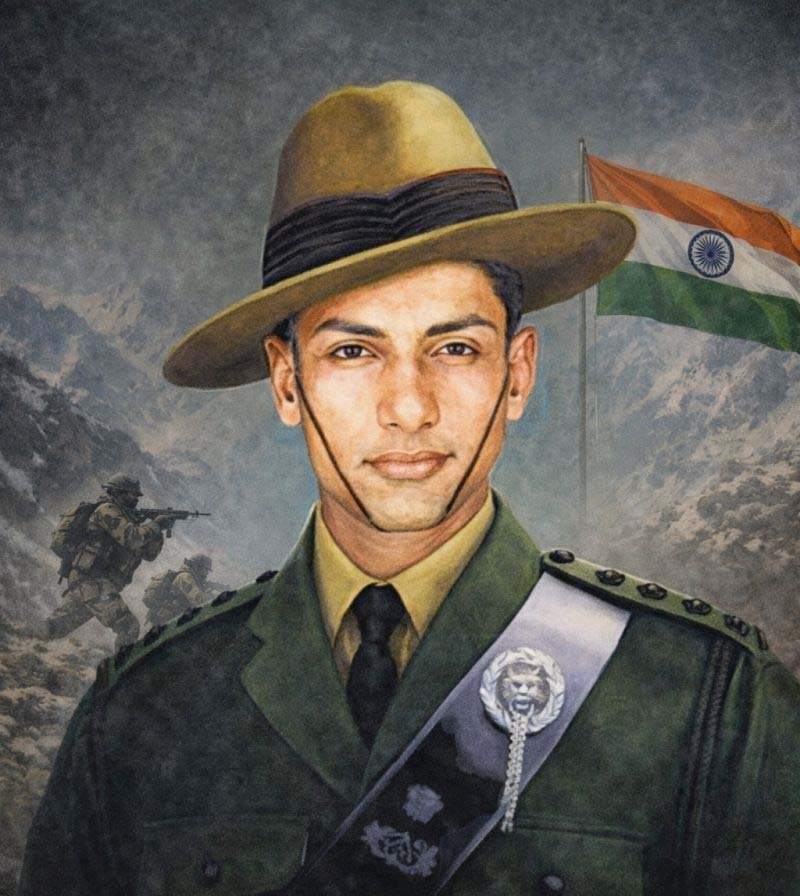 During his Service Selection Board interview, Manoj Pandey was asked by the Presiding Officer why he wanted to join the Army; he firmly replied ‘to win Paramvir Chakra’ and true to his words, he won PVC in the Kargil War but posthumously in the best traditions of the Armed Forces. Lt Manoj Pandey was born in Village Rudha, District Sitapur, UP, on June 25, 1975, in a middle-class family. His father’s name was Gopi Chand Pandey and his mother’s name was Mohini Pandey, a simple housewife. He joined the National Defence Academy and later passed out from IMA. He was commissioned into 1/11 Gorkha Rifles in 1998.
1/11 GR was ordered to move to Western Ladakh in May and was allotted to Yaldar Sector. The enemy was firmly deployed in Kalubar Hill and Jabuar Top and was inflicting heavy casualties on climbing troops. Manoj Pandey was in the leading assault team. There were only a few boulders for cover. No move could take place in the day. The assault was launched after midnight under cover of darkness. Lt Manoj bravely approached a sanger along with his team and killed enemy soldiers with a sharp khukri. They cleared a few flanking sangars also and captured Kalubar hill. Then, while heading for Jabuar top, his column was daylighted and faced heavy volley from Jabuar top post.
Lt Manoj Pandey made the supreme sacrifice for the country and was posthumously awarded the Param Vir Chakra for gallant action and unparalleled bravery in capturing Kalubar Hill and restoring the area up to the LoC
He sustained multiple bullet wounds, but he continued firing and motivating assaulting troops. The Gorkhas beheaded the rest of the enemy troops. The battle was over. Kalubar and Jabuar were captured, but Lt Manoj Pandey made a supreme sacrifice for the integrity of the motherland. Brave never die. For the Gallant action, unparalleled bravery to capture Kalubar Hill and restoration of the area up to LoC, Lt Manoj Pandey was awarded the Paramvir Chakra, the highest gallantry award posthumously.
Grenadier (Hony Captain) Yogender Singh Yadav (18 Gren) Param Vir Chakra
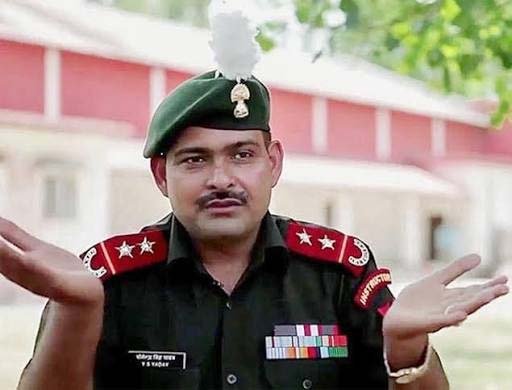 He said in an interview with Doordarshan News, “A soldier has a selfless devotion to the motherland and his regiment and for the integrity of the nation and safety of his fellow soldiers one does not hesitate to risk his life.” You cannot miss these live heroes at the forefront of the Republic Day Parade every year. Gren Yogender Singh was born in Sikandrabad, District Bulandshahr, UP, on May 10, 1980. His proud father, Karan Singh Yadav, is a farmer; his mother’s name is Santara Devi. He was just 19 years old when he was bestowed the highest gallantry award.
18 Grenadiers moved to the Kargil Dras sector in early June 1999. Heavy firing by the enemy sitting on heights was in progress. Pakistani Artillery was taking a heavy toll on convoys on National Highway 1, directed by Ops on Tololing Ridge. The unit was tasked to capture Tololing Top on June 10, 1999. The height was 16,800 feet, with near-zero temperature even in summer. The assault was launched on June 12, and the unit suffered heavy casualties of 2 officers, 2 JCOs, 21 troops, and 30 were severely injured. Later, Tololing Top was captured by 2 Raj Rifles. 18 Gren was moved out for rest and replenishment.
Grenadier Yogender singh Yadav is the youngest Indian soldier, at the age of 19, to be awarded the Param Vir Chakra to date. He survived after being badly injured during the capture of Tiger Hill top. He retired from the Indian Army as Honorary Captain
18 Grenadiers was redeployed and tasked to capture Tiger Hill on July 3. During the battle, the CO tasked the commando platoon to go for reconnaissance of Tiger Hill before the main assault. Gren Yogender Singh Yadav was leading the scout of the commando platoon under Lt Balwan Singh. The commandos took the rear cliff approach. They climbed with the help of a slithering rope. He lobbed the grenade from the rear and killed all in the bunker. While neutralising the second sangar, he was hit by several bullets; he continued crawling to the last active post. The commando platoon was by now reduced to half. There were dead and injured all over. In the last, he killed 4 Pakistani soldiers with another grenade. Although bleeding profusely, he crawled down and informed the CO about all weapons and troops deployment at Tiger Hill, which was attacked successfully by follow-up troops, and Tiger Hill was captured, which sounded the first victory bugle for all Indian forces. LoC was reached in the Tiger Hill area.
Grenadier Yogender Singh Yadav was evacuated by air to Army Hospital, Delhi, and eventually survived. For conspicuous gallantry in the face of the enemy, steel determination, and important role in the capture of Tiger Hill top, he was awarded the PVC. He retired from the Indian Army as Honorary Captain. He is the youngest Indian soldier, at the age of 19, to be awarded the Param Vir Chakra to date.
Rifleman Sanjay Kumar (13 JAK Rif) Paramvir Chakra
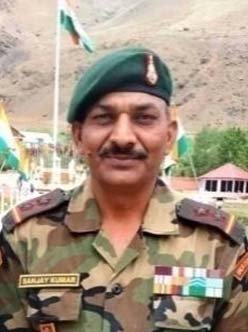 He was enrolled in 13 Jammu Kashmir Rifles in 1996. He was born on March 3, 1976, in Village Kaloi Bakain, Bilaspur district, Himachal Pradesh. His father was Durga Ram, and his mother, Bhag Devi, used to fondly call him Sanju. He was determined to join the Army since school days and was a good long-distance runner.
The battalion under Col Y K Joshi had moved to Ghumri and later to Muskoh sub-sector in Dras area. The forward companies had captured Point 5140 led by Capt Vikram Batra, but Point 4875 was still occupied and taking a heavy toll on troops. On July 5, 1999, as the initial assault had stalled at 4 am, the depth companies were launched. Area Flat Top was interfering with heavy automatic fire from Universal Machine Guns (UMGs) and Grenade launchers.
Rifleman Sanjay Kumar had finished his ammunition, but he picked up an abandoned machine gun and shot dead four enemy soldiers, which helped in the capture of Point 4875. He was awarded the Param Vir Chakra. He retired as Honorary Captain
Rifleman Sanjay Kumar, along with his buddy, were the leading scouts. The first sangar opened up with heavy fire. The assaulting column was pinned down. Sanjay told his buddy to give covering fire and charged at the post. He was hit in the shoulder and fell but continued crawling and entered the sangar from the rear and killed the enemy soldiers in close combat. The fire continued from the depth locality. The company commander advised him to be evacuated as he was bleeding from gunshot wounds. Rifleman Sanjay rushed to the next sangar, which surprised the enemy. They abandoned the Depth UMG post.
By now, Sanjay had finished his ammunition. He picked up an enemy abandoned machine gun and shot dead the fleeing four Northern Light Infantry soldiers. Area Fiat Top was captured, which helped in the capture of Point 4875. For displaying devotion to duty, conspicuous courage and gallant action in the face of the enemy, Sanjay Kumar was honoured by the President with the Param Vir Chakra. He retired from active service as Honorary Captain on February 28, 2026.
Mahavir Chakras: The following heroes received Mahavir Chakras, the second highest gallantry award during the Kargil operations. Major Rajesh Adhikari (P) 18 Gren (Tololing Ops), Lt Balwan Singh, 18 Gren (Tiger Hill Ops), Capt Anuj Nair (P) 17 JAT (Pimple Complex Muskoh), Major Vivek Gupta (P) Tololing, Major P Acharya (P) Knoll, Capt N Kenguruze (P) Knoll, Naik Digendra Kumar, Tololing (All four awardees from 2 Rajputana Rifles), Sepoy Imli Akum Ao, 2 Naga (Muskoh Point 4875), Lt KC Nogrung (P) 12 JAK Light Infantry bn (Point 4812 Yaldar sector).
Squadron Leader Ajay Ahuja of the IAF of Golden Arrow Sqn was awarded Vir Chakra posthumously.
The ten infantry battalions were also awarded battle honours and Special citations from the Chief of Army Staff and were titled ‘Bravest of the Brave’, namely 8 Sikh, 18 Grenadiers, 17 Jat, 18 Garhwal, 2 Rajputana Rifles, 13 Jammu Kashmir Rifles, 1/11 Gorkha Rifles, 2 Naga, 1 Bihar, 12 Jammu Kashmir Rifles. Many unsung soldiers made supreme sacrifices or were severely wounded for the safety and integrity of the nation. The whole country stood united beyond religion, caste, and creed and beyond party lines.
War heroes, especially those who did not come back, will be remembered forever by the grateful nation. To quote General V P Malik, then COAS, as the war began in mid-May 1999, which clearly defined the resilience and determination of Indian resolve: “The enemy has started the fight, but it is we, who will fire the last shot; And the War will only end on our own terms.”
-The writer is an Indian Army veteran and a defence analyst. He has keen interest in Geo-strategic affairs and writes regularly on internal and external affairs issues related to India and neighbours. The views expressed are personal and do not necessarily reflect the views of Raksha Anirveda





