

The government’s intent for promoting defence drone ecosystem in the country has refined considerably. Addressing the National Defence Industries Conclave, Defence Minister Rajnath Singh called for India to become a global hub for drone manufacturing, framing indigenous production as essential to strategic autonomy and defence preparedness. Official figures underline the momentum: 676 startups, MSMEs and innovators now participate in the iDEX ecosystem, with 58 prototypes worth ₹3,853 crore cleared for procurement and 45 contracts worth ₹2,326 crore already signed.
This policy push is translating into real orders. India is preparing what could become its largest-ever military drone acquisition programme, with domestic orders expected to exceed USD 2 billion – over ₹17,000 crore – this year alone.

Operational Capability as the New Differentiator
As the defence ecosystem matures, manufacturers are increasingly judged less on technology alone and more on their ability to manufacture, deliver and support systems at scale.
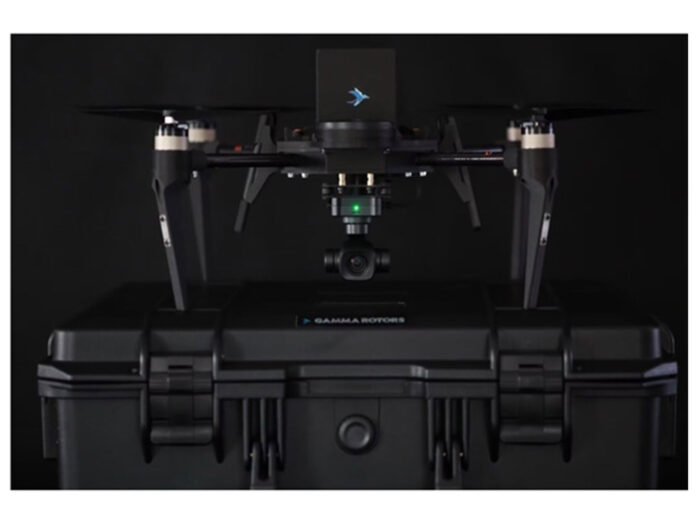
Delhi-based Gamma Rotors exemplifies this shift. The defence UAV maker recently reported an order book exceeding ₹60 crore, alongside projected FY26 revenue of roughly ₹30 crore. Capital raised in January 2024 – ₹27 crore at a post-money valuation of approximately ₹180 crore – has since funded expanded manufacturing capacity, in-house R&D and a more resilient supply chain serving the armed forces, paramilitary units and state police.
Gamma Rotors attributes its growth to operational deployment rather than demonstration contracts. During Operation Sindoor, the company executed urgent deliveries of its Nighthawk, Powersorous and Striker UAV platforms for the Indian Army, using in-house 3D printing and digital manufacturing to compress production timelines.
The company has logged over 10,000 flight hours, delivered more than 650 drones, serviced over 2,000 UAVs – including third-party platforms from ideaForge, Asteria Aerospace, Prox Dynamics and DJI – and trained more than 3,000 defence personnel.

Investor Confidence Builds on Strong Order Books
ideaForge Technology remains among the sector’s largest organised players. For FY26, the company posted its highest-ever annual bookings of approximately ₹530 crore, executing nearly 40 per cent of its open order book in the fourth quarter alone. It has also entered the combat drone segment – including long-range strike drones and loitering munitions – expanding beyond its traditional ISR portfolio.
Market valuations reflect this optimism: ideaForge’s roughly ₹4,268 crore market capitalisation against approximately ₹226 crore in annual revenue implies a price-to-sales multiple near 18x, signalling investor confidence in sustained procurement growth and the rising role of indigenous manufacturers.

Raphe mPhibr is another fast-growing player, having expanded its Noida manufacturing footprint with an additional 11.5-acre site alongside an existing facility representing roughly ₹800 crore in investment. The company has developed indigenous military-grade autopilot systems and drone engines, with platforms deployed during Operation Sindoor.
Manufacturing Depth Will Define What Comes Next
Competition is broadening beyond startups, with larger players such as Tata Advanced Systems, Larsen & Toubro and Adani Defence expanding their unmanned systems capabilities, alongside continuing DRDO-backed programmes spanning surveillance, logistics, loitering munitions and armed platforms.
For emerging manufacturers, competitive advantage is increasingly tied to manufacturing readiness – the ability to fulfil orders rapidly, sustain indigenous supply chains, support lifecycle maintenance and train operators – rather than platform innovation alone.
As India’s procurement pipeline expands under the Aatmanirbhar Bharat framework and the military increasingly favours indigenous systems, companies pairing proven operational performance with scalable manufacturing are best positioned to capture a growing share of this market.






