


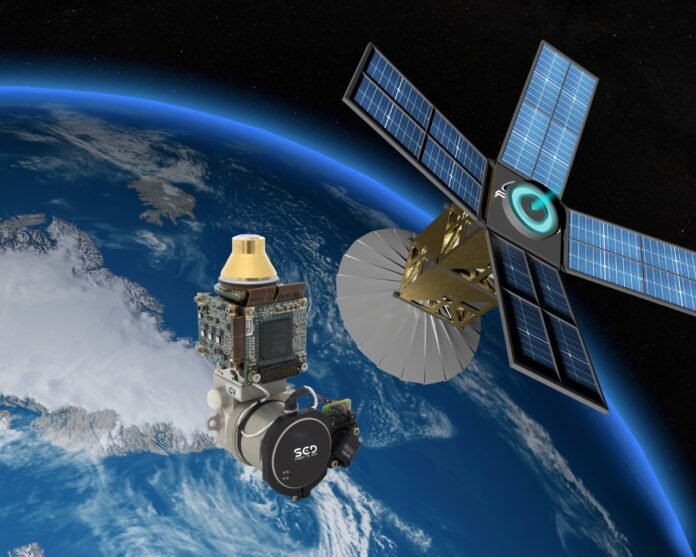
Tel Aviv: Israeli company SCD, has been awarded a multi-million-dollar contract by a leading Asian government space agency to supply space-qualified SWIR (Short-Wave Infrared) and MWIR (Mid-Wave Infrared) detectors for next-generation satellite imaging payloads.
The detectors will be integrated into high-definition imaging systems onboard satellites scheduled for upcoming launches, enabling advanced Earth observation missions that require exceptional image quality, high sensitivity, and dependable performance in the harsh conditions of orbit.

The award marks a key milestone in SCD’s strategy to expand in the space domain – a market the company sees as a major growth engine. Drawing on decades of infrared innovation and a broad portfolio across the spectrum, SCD brings proven performance, rapid customisation, and scalable manufacturing to the fast-evolving space market.
SCD’s value proposition for space programmes combines mature detector technologies with mission-driven optimisation. Its vast portfolio of pixels size, arrays, and enabling sensing technologies supports SWaP-efficient payload design while meeting demanding requirements for image quality, reliability, and scale.
Based on technologies proven in rigorous terrestrial and defence environments, SCD’s SWIR and MWIR solutions deliver high SNR, excellent sensitivity, and robust stability for orbital imaging.
Kobi Zaushnizer, CEO of SCD, said, “Space is becoming a critical operational domain, and infrared sensing is central to the next generation of satellite-based intelligence and Earth observation systems. This award reflects our strategy to extend SCD’s infrared leadership into space with the combination customers need most: advanced performance, low SWaP, rapid customisation, and scalable production. This contract further strengthens SCD’s growing presence in the global space market and builds on its track record of supplying infrared detectors for operational space missions worldwide.”


-The writer is an Israel-based freelance journalist. The views expressed are of the writer and do not necessarily reflect the views of Raksha Anirveda





