


Autonomous navigation is becoming a feature of military vehicle programmes, not just a technology experiment. Recent US Army initiatives show a focus on adapting autonomy software to existing platforms, with logistics, squad support and mobility among the intended applications. The approach could let forces use uncrewed vehicles for some tasks while keeping people in command of missions.
In August 2025, the US Army awarded three agreements, worth approximately $15.5 million in total, to Forterra, Overland AI and Scout AI. The companies were tasked with integrating their commercial autonomy systems onto Infantry Squad Vehicles and delivering prototypes for soldier demonstrations and evaluation in May 2026. The Army said successful capabilities could eventually be transferred to other ground vehicle platforms.

The strategy is significant because it emphasises adaptable technology rather than a single purpose-built robotic vehicle. Software and sensor systems can potentially be installed on vehicles already in service or on platforms designed for multiple roles. At the Association of the United States Army’s 2026 meeting, manufacturers presented vehicles combining autonomous navigation with modular mission equipment, onboard power and conventional vehicle components.
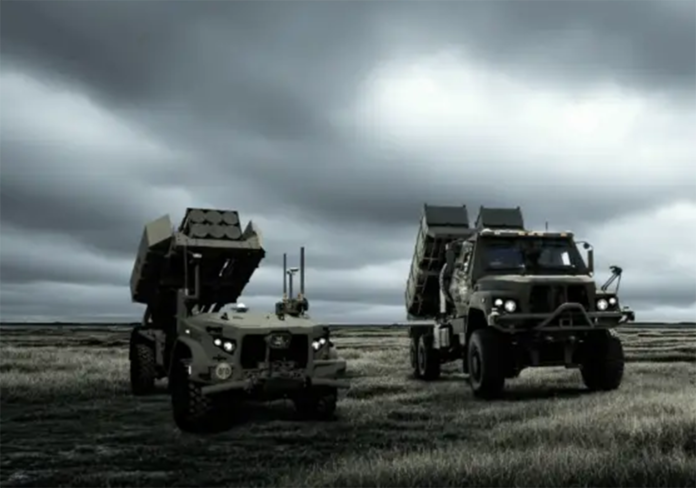
Among the systems highlighted was Overland AI’s IBEX, an autonomous ground vehicle based on the Polaris MRZR chassis. The company says its platform can navigate complex terrain without GPS, prepared roads or continuous teleoperation. The Marine Corps selected IBEX for integration with its Marine Air Defence Integrated System, while other proposed uses include resupply and reconnaissance. Those capabilities remain subject to operational integration and evaluation.
The Army’s interest also extends to moving supplies. A 2026 report described its Autonomous Transport Vehicle System as a central element of a strategy to add autonomy to tactical wheeled fleets. The system is intended to support convoy operations, waypoint navigation and teleoperation, potentially allowing units to move cargo with fewer drivers exposed to hazardous routes. Officials have described autonomy as a way to increase endurance and keep logistics moving, though the technology is still being tested.
For military planners, logistics offers a comparatively practical starting point. A vehicle that follows a route, carries supplies or operates under remote supervision can reduce the number of personnel needed in exposed positions without requiring machines to make independent decisions about the use of force. That distinction is central: “autonomous” can describe navigation or task execution, and does not automatically mean a system selects and attacks targets without human involvement.

The difficult part is reliable operation away from orderly roads. Vehicles must interpret changing terrain, obstacles, weather and uncertain routes. They may also face disrupted communications or degraded access to satellite navigation. Army officials and industry participants have identified off-road autonomy as a major technical hurdle, noting that demonstrations on trails do not prove a system is ready for the full range of battlefield conditions.
That gap between a successful demonstration and dependable deployment is shaping how the Army evaluates new systems. Prototypes need to show not only that they can move, but that soldiers can control, monitor and integrate them into real operations. The Army’s 2025 agreements were designed to test commercial technology in military missions before decisions about wider adoption.

Autonomy also raises questions of accountability and human oversight, particularly when systems are linked to weapons. The current vehicle programmes described in the Army announcements focus on mobility and operational support; they should not be conflated with autonomous weapons. Still, as platforms gain more capabilities, clear limits on what they can decide-and who remains responsible-will be essential.
The direction of travel is clear: autonomy is being treated as an upgrade that can spread across vehicle types, not as a standalone robot category. Whether it can deliver safer, more persistent operations will depend on performance outside controlled trials, dependable communications and maintenance, and soldiers’ ability to trust and supervise the systems. The technology is advancing; proving it under demanding conditions remains the test.






