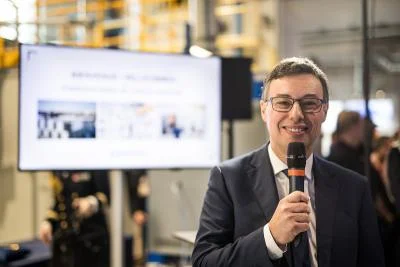
Over the course of two days, about 800 people took part in discussions on the subject of electrification. The program included: plenary sessions and round tables to present the various solutions and innovations developed. While electrification concerns many different sectors, the advances made in the field of aeronautics were at the heart of the discussions.

“We need to find the best energy option for the aviation industry,” explained Stéphane Cueille. Senior Executive VP for R&T and Innovation. “There are specific physical characteristics that are inherent to the aeronautics industry, and in particular constraints relating to mass. All-electric propulsion is not yet on the horizon for large commercial aircraft: for example, if we wanted to use electric motors to power the equivalent of the current generation of single-aisle aircraft, we would have to carry more than 180 tons of batteries, whereas the current aircraft itself only weighs about 80 tons. »
Although all-electric aircraft are not yet a reality, aircraft electrification is moving forward quite quickly. As a major player in this field, Safran is actively involved in developing innovations for small aircraft and VTOLs, as well as hybrid propulsion systems for regional aviation.
Stéphane Cueille also spoke about advances in other equally important areas of innovation: “The industry is working to develop the use of sustainable alternative fuels, which are considered one of the essential means of achieving sustainability in the air transport sector. We must continue to support research projects focusing on bio-fuels, as well as other sustainable synthetic or mixed sources, such as Power to liquid, which consists of synthesizing kerosene using carbon-neutral electricity, water and CO2».
All the players in the aeronautics sector are committed to the same objective of halving their CO2 emission by 2050, even though air traffic is growing by 4% a year.

“The aeronautics industry has set itself ambitious targets,” noted Stéphane Cueille. “To achieve these goals, Safran must take on many stimulating challenges and develop exciting innovations that will undoubtedly transform aircraft architecture. One thing is certain; energy efficiency will remain a key component of the strategy: the next generation of aircraft needs to deliver a reduction in fuel consumption equal to that made by the two previous generations!”»