



The Indian defence sector has gone through a significant transformation, or better call it a seismic shift, over the last ten years. For decades after our independence, the military-industrial complex behaved like a fortress — not against enemies, but against domestic innovation. It was a ‘no-go’ zone for startups, characterised by a monopolistic market where only the Defence Public Sector Undertakings (DPSUs) and the DRDO held the keys, or maybe some major international player. If you were a young engineer with a breakthrough in drone swarms or encrypted communication, your only path was to join an established player and hope your idea survived thirty years of committee reviews.
Kudos to the late Defence Minister Manohar Parrikar for changing the game. He was the man behind the turning point. As Defence Minister, he didn’t just tweak the policy; he hacked the culture. Parrikar understood that a nation cannot be a superpower on ‘borrowed strength’. He introduced the Defence Procurement Procedure (DPP) 2016, which for the first time classified ‘Buy (Indian-IDDM)’ (Indigenous Design, Developed and Manufactured). He stripped away the layers of suspicion that viewed private entrepreneurs as mere ‘middlemen’ and transferred them to strategic partners. His move opened up the way for the launch of iDEX (Innovations for Defence Excellence) in 2018, which finally gave startups a seat at the high table.

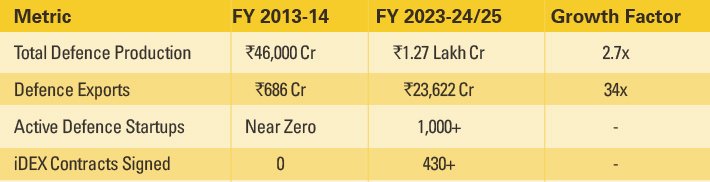
The Growth Story:By the Numbers
The statistical transformation of the last decade is staggering. In 2014, the contribution of the private sector to defence production was negligible, and exports were an afterthought.
Today, nearly 21-23% of India’s total defence production comes from the private sector. We have moved from being the world’s largest importer to a country that exports advanced systems like the BrahMos missile and more to global markets, and this is just a beginning.
The Invisible Enemy: Bureaucracy and the ‘Reply-Less’ Culture
Despite these soaring numbers, a rot remains at the foundation: procedural paralysis. The ‘Game Changer’ policies often hit a wall of ‘File Shufflers’.
In the United States, DARPA (Defence Advanced Research Projects Agency) operates on a ‘fail-fast’ philosophy. Their programme managers are known to respond to technical queries within 48 to 72 hours. I myself have sent them the query and got the reply in 24 hours, that too in detail. They have also aligned me with the department to which I should contact for a particular research fund.

In contrast, an Indian startup founder often faces a wall of silence. Emails to procurement agencies frequently vanish into a digital abyss. The bureaucracy still operates on a compliance-first, outcome-second mindset. A startup giving their 100% in building cutting-edge equipment for warfare cannot survive a 3-4 year ‘Request for Proposal’ (RFP) cycle.
By the time the government signs the contract, the technology will become obsolete, or there will be a new mature technology ready to take its place. While the top leadership speaks of ‘Aatmanirbharta’, the middle-level bureaucracy remains risk-averse, terrified that a quick decision might be flagged by the CAG or CVC years later.

To truly compete, we need a ‘Digital DARPA’ kind of model where the response time is measured in hours, not seasons.
The Brutal Lesson: Ukraine, Russia, the US, Iran, and Israel
The upcoming decade will be defined by the quickly changing geopolitical realities that we are witnessing today. The escalating conflict between Iran and the US-Israel duo has shattered the illusion of ‘reliable allies’.
The recent encounters between Ukraine and Russia, Iran and the US-Israel must have taught us a bitter lesson: In a real war, friends provide ‘prayers and statements’, but only your own industry provides ‘parts and software’.
Priority is National, Not Regional: When the US supports Israel, it does so through the lens of its own domestic politics and global hegemony. When Iran retaliates, it targets regional stability without a second thought for the economic fallout on neutral neighbours like India.
- The Chokepoint Risk: India imports nearly 85% of its crude oil. A conflict in the Strait of Hormuz could weaken our economy in a few weeks.
- Equipment Sovereignty: The conflict showed that even the most advanced platforms (like the F-35 or Iron Dome) can be of minimal to no use. In disparate time, your friends can remove the protection missiles and transfer for their own good cause. As we have seen, the missile stocks have been removed from Japan.
If India does not achieve Strategic Autonomy through local development, we will remain a ‘vassal state’ to foreign supply chains. We cannot afford to have our fighter jets grounded because a sub-component from a ‘friendly’ nation is withheld due to a diplomatic disagreement.
The Road to 2035: Crystal Gazing
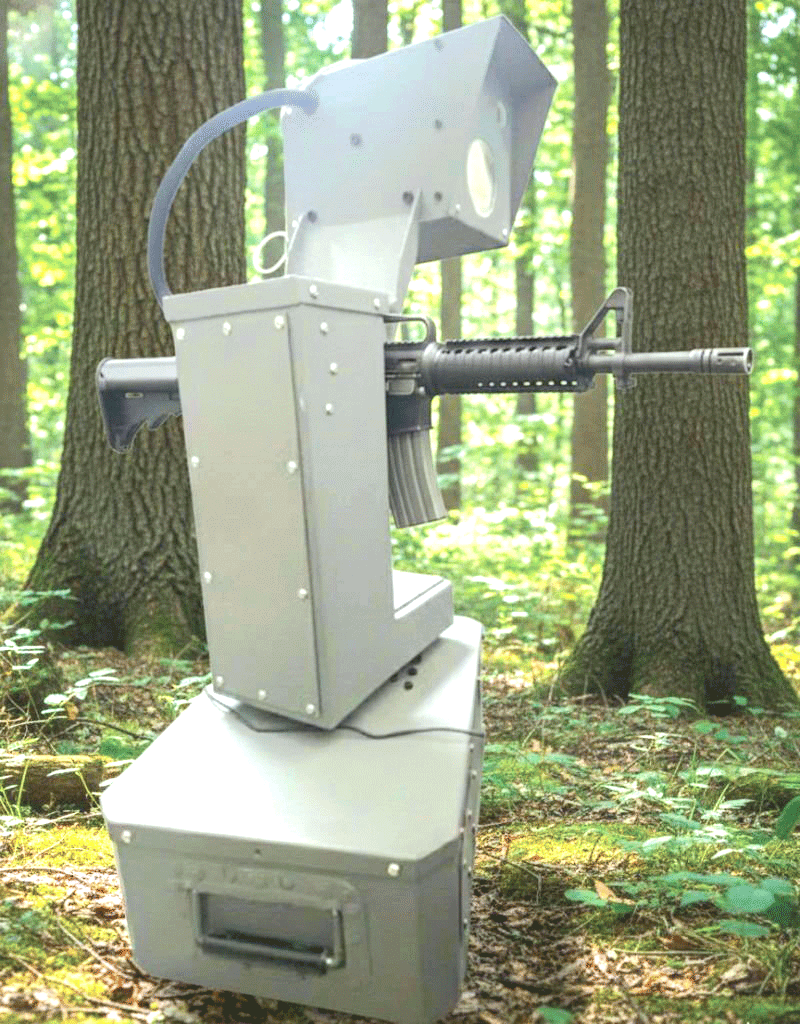
The next decade must be about moving from Assembly to Invention.
- Algorithms over Armour: The wars of 2030 will not be won by the thickest steel, but by the smartest code. We must empower startups in AI, Quantum Computing, and Directed Energy Weapons (DEWs).
- Institutionalised Agility: The Ministry of Defence must create a ‘Fast Track’ lane for startups where the entire lifecycle — from prototype to procurement — is completed in under 18 months.
- The Private Prime: We need an Indian ‘Lockheed Martin’ or ‘SpaceX’. The government must stop treating DPSUs as children and the private sector as outsiders. True self-reliance comes when a local startup can outbid a global giant on pure merit.
The last decade was about opening the door. The next decade must be about owning the house. We have the talent, and we should know how to use it. The only thing standing between India and global defence leadership is the speed of a ‘Reply’ button.

The writer is an Innovator specailising in AI-Powered Weapons & Hard-Kill Robotics, Reverse Engineering, Defence Systems, Real-Time Targeting & Control Systems, R&D, Embedded AI and Sensor Fusion & Mission Autonomy. The views expressed are personal and do not necessarily reflect the views of Raksha Anirveda





