


International politics, according to the realist school of thought, is considered to be the reflection of the competitive impulses of the human nature. This manifests itself in actions taken by states to safeguard their national interests which often run contrary to the letter and spirit of the rules-based international order. In that context, national interests become anchored in martial and strategic policies that end up upending the sense of status quo in a region.
Something of this sort is currently unfolding in the Middle East. One of the most turbulent geopolitical regions for a long time, peace is considered to be a luxury, here. The latest conflict pertains to the concerns in the West over Iran’s nuclear programme and the activities of its formidable proxy forces in the region.

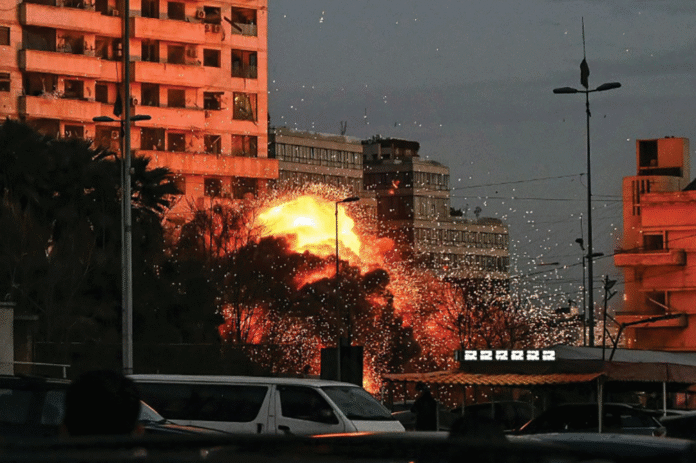
This latest episode of conflict centres around three principal actors—the United States of America, Israel and Iran. On February 28, the US and Israel jointly launched coordinated strikes targeting key figures and strategic installations and locations in Iran under the cover of Operation Epic Fury (USA) and Operation Lion’s Roar (Israel).
The outcome was the outbreak of another conflict that has increasingly assumed proportions of a widening regional conflagration with global implications. In the military operations, the US and Israel killed key Iranian figures, including the powerful Supreme Leader Ayatollah Ali Khamenei; Ali Larjani, security chief of the Supreme National Security Council of Iran; and Gholamreza Soleimani, head of the Basij paramilitary force, among others. Apart from this, the duo targeted Iran’s defence programme as well as Iran’s nuclear facilities such as Fordow, Isfahan and Natanz, causing significant damage to their infrastructure.
The latest episode of conflict in the Middle East centres around three principal actors—the United States of America, Israel, and Iran. On February 28, the US and Israel jointly launched coordinated strikes targeting key figures and strategic installations and locations in Iran under the cover of Operation Epic Fury (US) and Operation Lion’s Roar (Israel)
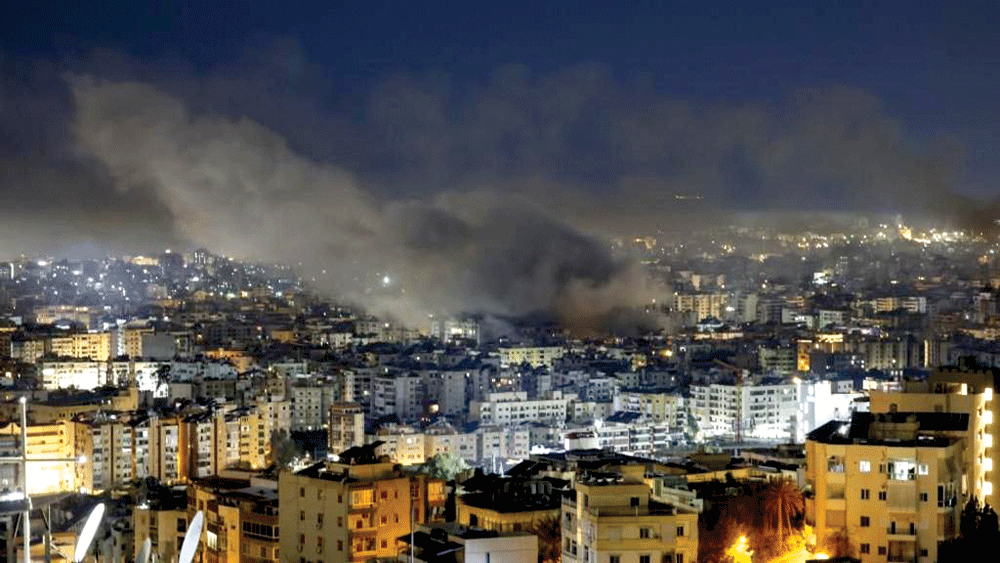
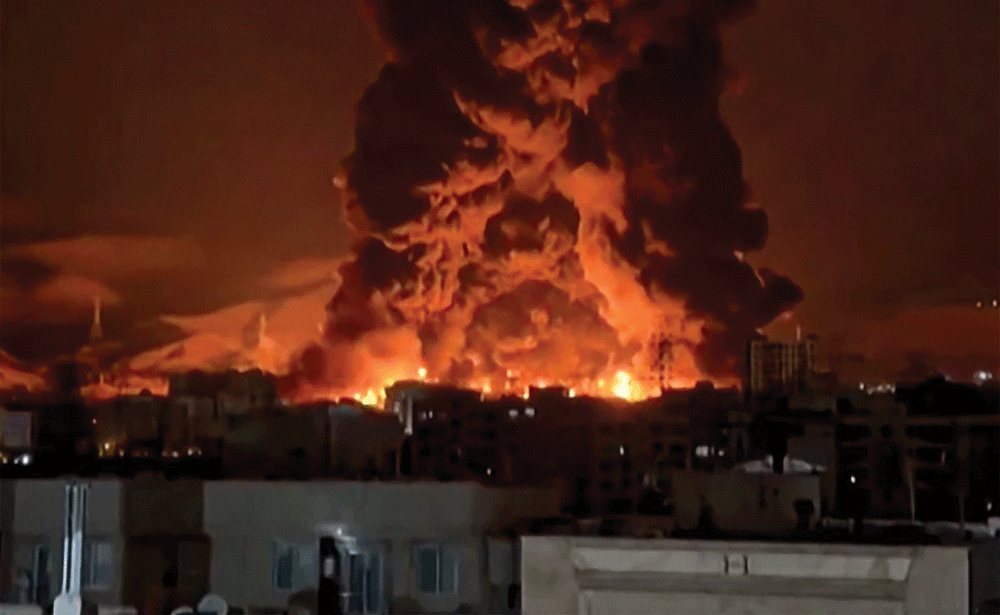
Iran retaliated fiercely, targetting American bases across the nook and cranny of the Middle East using drones and its potent arsenal of ballistic and cruise missiles. In addition, Iran has also targeted oil and natural gas installations of key Gulf countries, threatening to upend global energy supply chains. These tit-for-tat attacks have not only upended life in the region but have also sent global hydrocarbon and financial markets into a tailspin. What’s all the more concerning is that despite Tehran not closing the Strait of Hormuz, it is increasingly targeting vessels linked to the US and Israel, thereby sending global oil and natural gas prices soaring.
One of the countries that have found itself in the greatest of dilemmas is India. A civilisational state that has maintained good ties with almost all the countries in the region, the situation is especially tricky.

To Pick or Not to Pick Sides
The Middle East is a part of New Delhi’s extended neighbourhood. Not only does the Indian diaspora have a sizable presence in the region, but it is a key source as far as India’s extended national interests are concerned. What compounds the matter is the very composition of the actors in the military conflict. Israel is one of India’s most trusted partners, particularly in the realms of defence and technology. It has helped India in trying times; notable instances include the Kargil War and Operation Sindoor. Israel’s foremost ally, the United States is one of our largest bilateral commercial and strategic partners. The Indian American community, in particular, plays a critically important role in shaping the contours of Indo-American policies to a large extent.
On the other hand, we’ve Iran with which we share civilisational ties, dating back to the 6th century BC. In addition to this, Persia is an important energy and strategic partner. It is through the Chabahar Port that India seeks to circumvent Pakistan and gain access to a mineral rich Afghanistan and the strategically important region of Central Asia. Hence, New Delhi finds itself in an impossible situation—to pick or not to pick sides in this conflict.

Energy and Economic Security
The Middle East can be called the energy basket of India. More than 40% of our petroleum and more than 30% of our liquefied natural gas (LNG) is imported from this region via the Strait of Hormuz. These hydrocarbon resources and their uninterrupted and timely arrival are especially consequential for India, which is the world’s third largest oil importing nation. India’s dependence on imported oil stands at over 88%.
In addition to energy, the Indian diaspora that resides and works in the Middle East is a significant source of monetary remittances. Globally, India is the largest recipient of remittances from the Middle East. Among the remittance sending countries, UAE accounts for almost half. These remittances serve as economic lifeline for hundreds of thousands of households, particularly in states like Kerala.
Legal Considerations
Apart from energy and economic issues, New Delhi finds itself in another fix—the legality of US-Israel operations. From a dispassionate legal standpoint, the joint military actions have raised important questions about the theological-strategic legality of their actions. This must be seen from two key ideas of the Just War tradition—jus ad bellum and jus in bello. While the former is concerned with the right to go to war, the latter is concerned with the right conduct in warfare. These traditions are the outcome of a long intellectual tradition traversing civilisational lines. Some of the elements within the Just War tradition that merits attention in this context include recta intentio or Right Intention, justa causa or Just Cause and discrimen or discrimination i.e., exercising careful selection of targets.
These elements find their legal expression through Articles 2(4) and 33 of the United Nations (UN) Charter that correspondingly talks about the need for “states to refrain from using force or threatening the use of force” and “ensure peaceful resolution of disputes”. These legal provisions of the UN charter appear to have been violated in the ongoing conflict. In addition to the above mentioned provisions, Rule 89 of the International Humanitarian Law (IHL) that forbids indulging in violence against non-combatants also appears to be violated. For a country like India, that has always stood by the need to uphold an international order anchored in rules and regulations, this conflict raises troubling questions.
Resolving the Crisis
In this hour of crisis when a lot is at stake for New Delhi, it is imperative that India takes some meaningful steps to not only ensure that its national interests in the extended neighbourhood remain shielded but in the process of protecting its interests, India can bolster its diplomatic capital and goodwill. Some suggestions are:
First, New Delhi must initiate what the late American career diplomat and academic Henry Kissinger called shuttle diplomacy. India must play an active mediatory role between the three key actors in the conflict—Iran, Israel and the United States. Using its diplomatic goodwill on all sides, New Delhi must bring all the parties onto the negotiating table and hold talks with the parties in New Delhi and their respective countries on thorny outstanding issues—Iran’s nuclear programme, Israel, and the US’ allegations regarding Iran’s use of its proxy forces and issue of Palestinian statehood.
India can consider initiating Track 2 diplomacy by exporting her civilisationally rooted idea of “Vasudhaiva Kutumbakam” to the region. This can manifest itself in New Delhi urging all sides in the conflict to make some compromises for the greater economic good of the region. It could be said that the clock for India is ticking
Second, this is where New Delhi’s demographic profile will come in handy. India can contemplate starting Track 2 diplomatic initiatives by making use of influential theological figures present in India’s Shia Islamic community on one hand and the Christian and small but influential Jewish community on the other hand to try and address the outstanding concerns of all the parties to the conflict. Through negotiations, a new social compact can be initiated among the various demographic groups of the actors involved, so as to cement intra-state and inter-state stability.
Third, India can consider initiating Track 2 diplomacy by exporting her civilisationally rooted idea of “Vasudhaiva Kutumbakam” to the region. This can manifest itself in New Delhi urging all sides in the conflict to make some compromises for the greater economic good of the region. India’s emphasis must, in this context, be guided by expanding connectivity via IMEEC or the India-Middle East-Europe Economic Corridor (IMEEC).
Overall, it could be said that the clock for India is ticking. New Delhi must act quickly and sagaciously to try and bring peace in this restive region and emerge as a moral politik’s great power.

The writer is a doctoral candidate in Political Science at Mahatma Gandhi Central University. The views expressed are personal and do not necessarily reflect the views of Raksha Anirveda





