

Once again, within a year, the Nur Khan airbase in Pakistan is back in the news. A year ago, it was battered by the Indian Armed Forces, which brought Pakistan to its knees. Today, it is a symbol of Pakistan’s deep culture of duplicity and double game, now laid bare. Having positioned itself as a peacemaker and frontline ally of the US to keep peacemaker channels open with Iran, it backstabbed the US once again.
Historically, Pakistan has perfected the art of backstabbing. It positioned itself as America’s frontline ally against terrorism while nurturing militant proxies. It accepted Chinese weapons and investments while retaining military links with Washington. It started the Kargil war while peace negotiations (the Lahore Declaration) were underway. That balancing act has once again been globally exposed and is now under unprecedented strain.

The latest controversy surrounding Pakistan’s alleged decision to allow Iranian military aircraft, including an RC-130 reconnaissance platform, to use the strategically critical Nur Khan airbase near Rawalpindi may become a defining moment in that unravelling. Pakistan’s acknowledgement that Iranian aircraft were indeed present, albeit temporarily, while insisting the reports were ‘misleading’, only intensified suspicion in Washington. The key issue remains Pakistan’s duplicity in appeasing both sides, thereby exposing the limits of its credibility.
This matters because Nur Khan is not an ordinary airfield. It is central to the Pakistan Air Force command structure and deeply integrated into Pakistan’s strategic deterrence architecture, given its proximity to the nuclear storage site at Kirana Hills. The base has historically supported operational missions tied to India-facing contingencies, including during Op Sindoor. India’s May 10 air strikes on Nur Khan air base and Kirana Hills caused severe damage and spread panic within Islamabad’s security establishment, which pleaded for a ceasefire.
Senator Graham of the US has openly questioned Pakistan’s credibility and role as a peacemaker, exposing its duplicity. Such criticism is not routine congressional rhetoric. It reflects broader American frustration with Pakistan’s recurring pattern of tactical cooperation that masks deeper strategic divergence.
Pakistan shares a long border with Iran, where instability affects Balochistan. Permitting temporary Iranian access to Pakistani facilities may have appeared to Rawalpindi as a low-risk hedge. It reassured Tehran. It signalled strategic autonomy to Beijing and allowed Pakistan to maintain leverage with the US by presenting itself as the only actor capable of communicating with all sides
Pakistan’s behaviour reflects strategic desperation born of geography and dependency. It is a deep-state culture of “Running with the hare and hunting with the hounds.” It is the same state that sheltered Osama Bin Laden near its military establishment while playing the role of a front-line ally of the US in Afghanistan.

Given its woes, the deep state of Rawalpindi is caught between three conflicting lifelines for its survival.
First, there is a need to strengthen ties with the US, given the fragility of its economy and its dependence on multilateral funding largely influenced by the US, especially through international organisations such as the IMF and FATF.

Second, Pakistan cannot alienate China, which has become the backbone of its military modernisation. SIPRI data shows that China now accounts for roughly 81% of Pakistan’s arms imports.
Third, Pakistan shares a long and sensitive border with Iran, where instability directly affects Balochistan and internal security calculations. It cannot afford another front in its multifront friction dilemma.
In that context, permitting temporary Iranian access to Pakistani facilities may have appeared to Rawalpindi as a low-risk hedge. It reassured Tehran. It signalled strategic autonomy to Beijing. It also allowed Pakistan to maintain leverage with Washington by presenting itself as the only actor capable of communicating with all sides.
For India, the presence of an Iranian RC-130 reconnaissance aircraft at the Nur Khan airbase is particularly significant because ISR platforms are strategic assets and the critical backbone of eyes in the battlespace. They collect data, provide critical surveillance inputs, and capture electronic signatures for the military planners of China and Pakistan
But hedging only works when secrecy survives. Once exposed, it begins to resemble duplicity.
That is where the geopolitical consequences become serious for Pakistan. The US-Pakistan relationship is transactional, given the present dynamics of the Iran War and Pakistan’s strategic location. The trust deficit still exists, yet given the present conflict, the US plays a gamble with Pakistan, which has failed, and Pakistan is exposed. Israel reads it well and remains deeply suspicious of a nuclear Pakistan and its Islamist terror networks across the Middle East.
The implications for India are far more consequential than the Nur Khan controversy. It exposes the emergence of overlapping intelligence and security linkages involving Pakistan, Iran, and China.
The presence of an Iranian RC-130 reconnaissance aircraft is particularly significant because ISR platforms are not symbolic assets. They are strategic assets and the critical backbone of eyes in the battlespace. They collect data, provide critical surveillance inputs, and capture electronic signatures for the military planners of China and Pakistan.
That risk is growing as Pakistan’s military becomes increasingly intertwined with Chinese systems. Beijing already dominates Pakistan’s arms imports and has embedded itself deeply through the China-Pakistan Economic Corridor, which is showing signs of extending to Iran and Central Asia. In strategic terms, every new alignment involving Pakistan now inevitably carries a Chinese dimension.
India, therefore, faces a shifting regional geometry. Traditionally, New Delhi viewed threats through a two-front framework involving Pakistan and China. The Middle East crisis introduces the possibility of a more fluid and interconnected security environment spanning the Gulf to the Himalayas.
The critical vulnerability remains energy security, particularly given the fallout from Iran’s chokepoint strategy at the Hormuz Strait. Iran’s increasingly selective approach to transit through Hormuz risks institutionalising instability in global energy markets. India imports about 85 per cent of its crude oil, much of it passing through vulnerable maritime chokepoints.
In strategic terms, every new alignment of Pakistan involves a Chinese dimension. India faces a shifting regional geometry. Traditionally, New Delhi viewed threats through a two-front framework involving Pakistan and China. The Middle East crisis introduces the possibility of a more fluid and interconnected security environment spanning the Gulf to the Himalayas
The implications for India are at three strategic levels.
First, energy security and maritime deterrence must be at the core of India’s national security. To ensure unhindered commercial shipping and build a reliable framework, India, along with partners such as the United States, Japan, and Australia, needs to secure free passage through chokepoints. The defunct QUAD needs to be revived and strengthened. As the Presidency of BRICS+, India has the added responsibility to steer this course under the 2026 theme “Building for Resilience, Innovation, Cooperation and Sustainability.”
Second, India needs to diversify its energy partnerships. I2U2 (India, Israel, the United Arab Emirates, and the United States) also has potential in renewable energy, hydrogen, logistics, and resilient supply chains. The Gulf crisis has shown that we now live in a world where economic and national security are inseparable.
Thirdly, India must take advantage of the diplomatic opportunity presented by Pakistan’s credibility issue. Islamabad’s reputation as a stabilising broker has been significantly eroded. New Delhi can subtly restate concerns voiced by the international community regarding Pakistan’s dual policies, without appearing confrontational. This must cut off financial aid from international organisations like the IMF and blacklist Pakistan in the FATF.
On the military capability front, India needs to raise the ante. Integrating the S-400 air defence network into a national Air Defence Umbrella structure is no longer a luxury; nor are continuing Rafale upgrades and bolstering surveillance along the western front. These are vital operational steps for a more networked regional threat environment. The maritime front needs much higher priority; a lesson from the Iran war and subcontinental threats.
The leadership of Pakistan may still believe it can pursue a policy of balancing between Washington, Beijing, Tehran and the Gulf. History suggests otherwise. When a state is too ambiguous, it is not trusted by anyone. The Nur Khan episode marks the moment when Pakistan’s storied double-cross boomerangs.
The stakes for Viksit Bharat 2047 are high. India must realise that in a world of diminishing certainties, resilience, partnerships and strategic clarity will be far more important than reactive diplomacy.
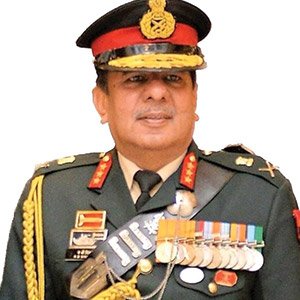
The writer, a PVSM, AVSM, VSM has had an illustrious career spanning nearly four decades. A distinguished Armoured Corps officer, he has served in various prestigious staff and command appointments including Commander Independent Armoured Brigade, ADG PP, GOC Armoured Division and GOC Strike 1. The officer retired as DG Mechanised Forces in December 2017 during which he was the architect to initiate process for reintroduction of Light Tank and Chairman on the study on C5ISR for Indian Army. Subsequently he was Consultant MoD/OFB from 2018 to 2020. He is also a reputed defence analyst, a motivational speaker and prolific writer on matters of military, defence technology and national security. The views expressed are personal and do not necessarily carry the views of Raksha Anirveda





