


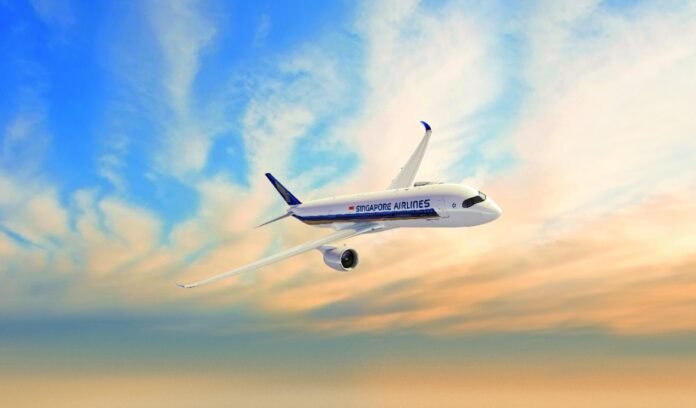
In the high-stakes theater of global aviation, the financial year ending March 31, 2026, will be remembered as the year the Singapore Airlines (SIA) Group proved that resilience is the ultimate luxury. It was a year defined by a relentless surge in travel demand, a massive overhaul of strategic partnerships, and a balance sheet that remains the envy of the industry.
As the world fully embraced the return of long-haul travel, SIA and its low-cost subsidiary, Scoot, carried a staggering 42.4 million passengers. This 7.7% year-on-year increase pushed the SIA Group to a historic revenue milestone of $20,522 million. However, the story of FY2025/26 is not just one of simple growth; it is a complex narrative of soaring operating successes tempered by the gravity of geopolitical realities and strategic investments.

The Profit Engine: Operating at Peak Efficiency
The Group’s operating profit – the purest measure of its ability to fly people profitably – surged by 39% to reach $2,375 million. Several factors fueled this ascent:
- High Load Factors: The Group passenger load factor hit 87.7%, meaning nearly nine out of every ten seats were filled across their global network.
- Yield Resilience: Despite increased competition, passenger yields remained healthy at 10.4 cents per revenue passenger-kilometre.
- Fuel Management: A 5.6% contraction in average fuel prices and savvy hedging gains allowed the Group to lower its net fuel cost by 6.7%, providing a vital cushion against rising non-fuel inflationary pressures.
The Net Profit Paradox
To the casual observer, the 57.4% decline in net profit (falling to $1,184 million) might seem alarming. Yet, this figure hides a story of strategic consolidation. The previous year’s profit was artificially inflated by a massive one-off accounting gain from the Air India-Vistara merger. Furthermore, as a 25.1% stakeholder in the new Air India, SIA accounted for a full year of the Indian carrier’s losses as it undergoes a massive, multi-year transformation. This is a “long game” play, giving SIA a seat at the table in one of the world’s fastest-growing aviation markets.
Strategic Maneuvers: The Network and the Fleet
SIA’s success is built on a “dual-brand” philosophy. While Singapore Airlines provides the premium, full-service experience that has won it countless “World’s Best Airline” awards, Scoot acts as the agile, low-cost explorer, opening up secondary markets and capturing price-sensitive travelers.
Expanding the Footprint
By March 2026, the Group’s network spanned 134 destinations. Scoot led the charge into new territories, launching direct services to Chiang Rai, Palembang, and Medan. Looking ahead to late 2026, the Group is preparing for a massive expansion into Europe and Australia, including daily flights to the new Western Sydney International Airport.

A Fleet for the Future
The Group maintains one of the youngest fleets in the world, with an average age of just seven years and nine months. With 65 aircraft on order, including the latest Airbus A320neo and Boeing 787 families, the Group is investing heavily in fuel efficiency and passenger comfort.
Elevating the Customer Journey: Innovation and Indulgence
SIA knows that in the premium sector, standing still is the same as falling behind. To maintain its leadership, the airline announced a suite of transformative customer experience initiatives:

- Next-Gen Cabins: New long-haul products arriving in late 2026 will redefine luxury in the skies.
- Starlink Connectivity: Starting in 2027, passengers will experience high-speed, low-latency Wi-Fi via SpaceX’s Starlink satellite constellation.
- Refreshed KrisWorld: A complete overhaul of the in-flight entertainment system and catering programmes to ensure that the journey is as memorable as the destination.
The Horizon: Geopolitics and Green Fuel
While the financial results are celebratory, the outlook for FY2026/27 is tempered by the shadow of the Middle East conflict. The war has caused jet fuel prices to more than double, a cost that has yet to be fully reflected in the Group’s financial statements due to lagged pricing and hedging.
“The Group manages cost volatility through its established risk management framework… underpinned by a robust balance sheet and industry-leading digital capabilities, particularly in Generative AI.”
Beyond economics, the Group is doubling down on its commitment to Net Zero by 2050. By signing offtake agreements for thousands of tonnes of Sustainable Aviation Fuel (SAF) and exploring aggregated demand trials at Changi Airport, SIA is attempting to decouple its growth from its carbon footprint.
Rewarding the Shareholders
In a clear sign of confidence in its liquidity and future cash flows, the Board has proposed a generous dividend package. Shareholders are set to receive a total of 37 cents per share for the year. This includes a special dividend—a promise to return capital following the Group’s successful navigation of the post-pandemic era.
A Resilient Ascent
The Singapore Airlines Group concludes FY2025/26 as a leaner, more technologically advanced, and strategically diversified entity. While the “Air India” losses and soaring fuel prices represent significant head-winds, the Group’s $17.3 billion in total equity and $7.9 billion in cash reserves provide a fortress-like defence.
As they prepare to launch the Madrid route and unveil next-generation cabins, the message is clear: SIA is not just participating in the global aviation recovery; it is defining the standard for what a modern, sustainable, and profitable airline group should look like in a volatile world. The “Great Circle” of their success continues, fueled by record revenues and a relentless commitment to the “Singapore Girl” gold standard of service.






