


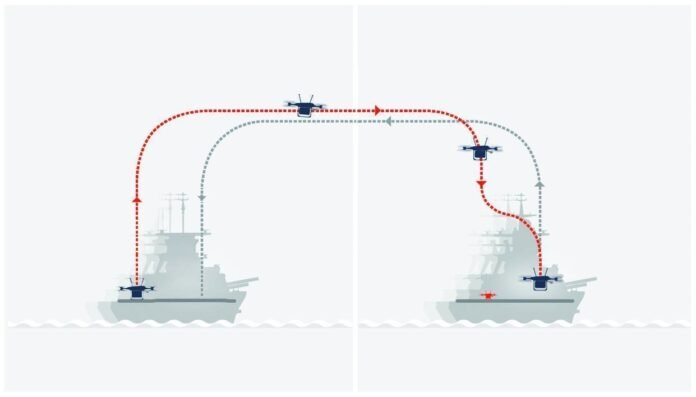
Pittsburgh, PA. The Naval Air Systems Command has awarded Near Earth Autonomy (Near Earth) a contract to develop an aircraft-agnostic autonomy solution for ship-to-shore and shore-to-ship operations through an Other Transaction Agreement (OTA) under the Naval Aviation Systems Consortium (NASC). The work will advance the US Marine Corps’ capabilities for uncrewed logistics missions in contested maritime environments.
Most uncrewed aircraft systems (UAS) operations rely on infrastructure, including GPS and continuous data. When these are unavailable or denied, it becomes more difficult, or outright impossible, to complete missions. Near Earth directly addresses these challenges by enabling UAS to conduct complex maritime logistics, in shore-to-ship, ship-to-ship, and ship-to-shore transfers, without reliance on external infrastructure. This capability significantly increases operational resilience for naval forces.

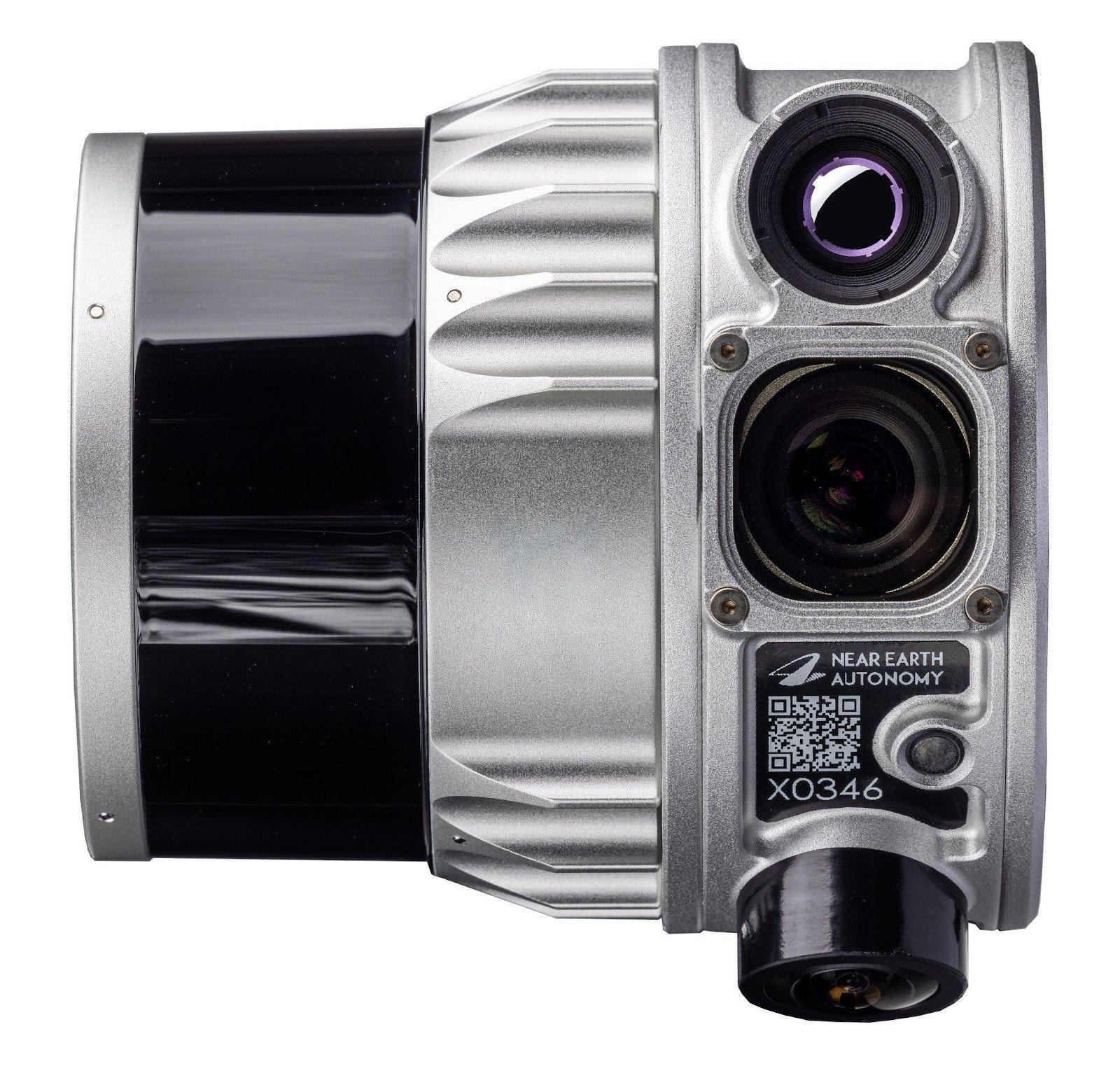
Near Earth’s Firefly compact autonomy system is designed for integration with a wide variety of aircraft. Weighing just 2 pounds, Firefly is light enough to be incorporated into a broad range of Class 3 and Class 4 aircraft, greatly expanding its applicability across the uncrewed aviation ecosystem.
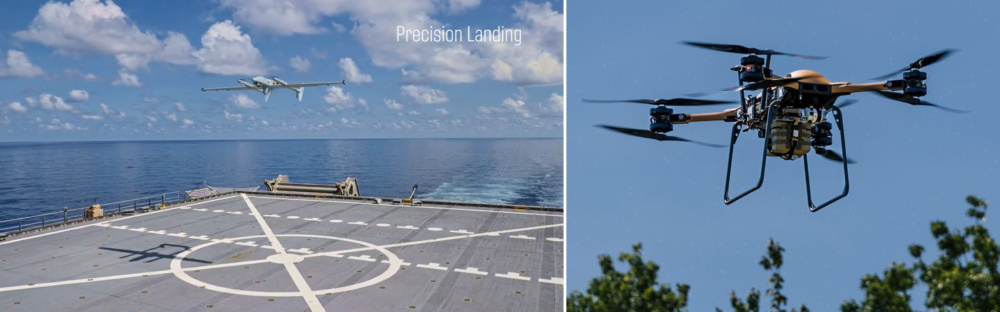
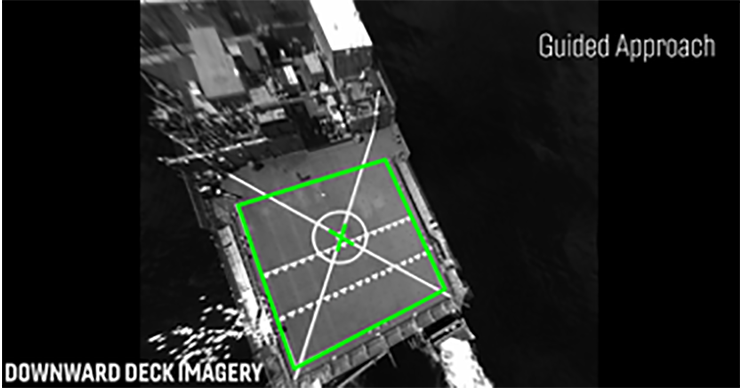
It has been successfully integrated on platforms including BAE, L3 Harris, and Pterodynamics. Multiple capabilities will be matured under the contract, including autonomous confined area operations, ship recovery in emissions-controlled (EMCON) environments, and GPS-free navigation.
“This contract with the Navy is a key next step, maturing our autonomous systems performance for maritime missions,” said Sanjiv Singh, CEO of Near Earth Autonomy. “We will build upon our past work on compact systems for uncrewed aerial logistics. This effort supports the Navy’s ability to perform resilient, reliable maritime operations across aircraft.
This development will build on Near Earth’s 13+ years of innovation for defence programmes. The progression began with Autonomous Aerial Cargo/Utility System (AACUS), which pioneered rotorcraft autonomy for Marine Corps resupply. Building on this, Near Earth miniaturised the Joint Capability Technology Demonstration (JCTD) system for Unmanned Logistics Systems Air (ULS-A), proving autonomy for small UAS in confined areas. NAVAIR selected Near Earth Autonomy for the USMC Aerial Logistics Connector Programme to demonstrate optimised logistics using rotorcraft. The Firefly system represents the latest advancement, enabling small cargo UAS operations for programme’s like the Marine Corps’ Tactical Resupply Unmanned Aircraft System (TRUAS).

This contract will be validated through a series of test events to validate requirements, refine operational procedures, and systematically verify system performance. These tests will culminate in a final demonstration with the Naval Air Systems Command at Patuxent River in September 2026, showcasing a full range of capabilities, including ship searching, deck tracking, night operations, and autonomous flights between moving vessels.






