


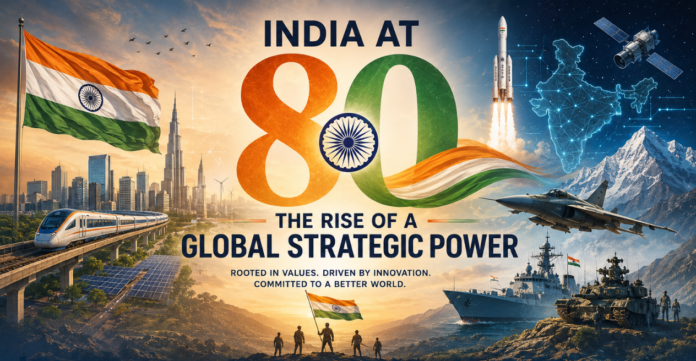
Over the last decade, the country has transitioned from one of the fastest-growing emerging economies to an increasingly consequential global actor. This enhanced standing is visible across economic expansion, military modernisation, leadership in technology, digital governance, defence innovation, climate action and diplomatic engagement. India is no longer merely participating in the global order; it is actively helping to shape it.
This ascent has unfolded against a rapidly changing geopolitical backdrop. The post–Cold War unipolar moment has given way to a multipolar landscape marked by strategic competition, technological rivalry, fragmented supply chains and shifting alignments. Conflicts such as the Russia–Ukraine war, instability across West Asia, heightened strategic competition in the Indo-Pacific and the swift emergence of Artificial Intelligence have recalibrated international relations. In this environment, national power is determined not only by military capability but also by economic resilience, technological leadership, industrial capacity, cyber readiness and diplomatic agility.

Sustained military capability is unsustainable without a robust industrial base, technological innovation and resilient logistics. The COVID-19 pandemic exposed vulnerabilities in global supply chains, particularly in semiconductors, pharmaceuticals and other critical technologies, while the Russia–Ukraine conflict underlined the strategic risks of energy dependence. These disruptions have elevated economic resilience to a core pillar of national power.
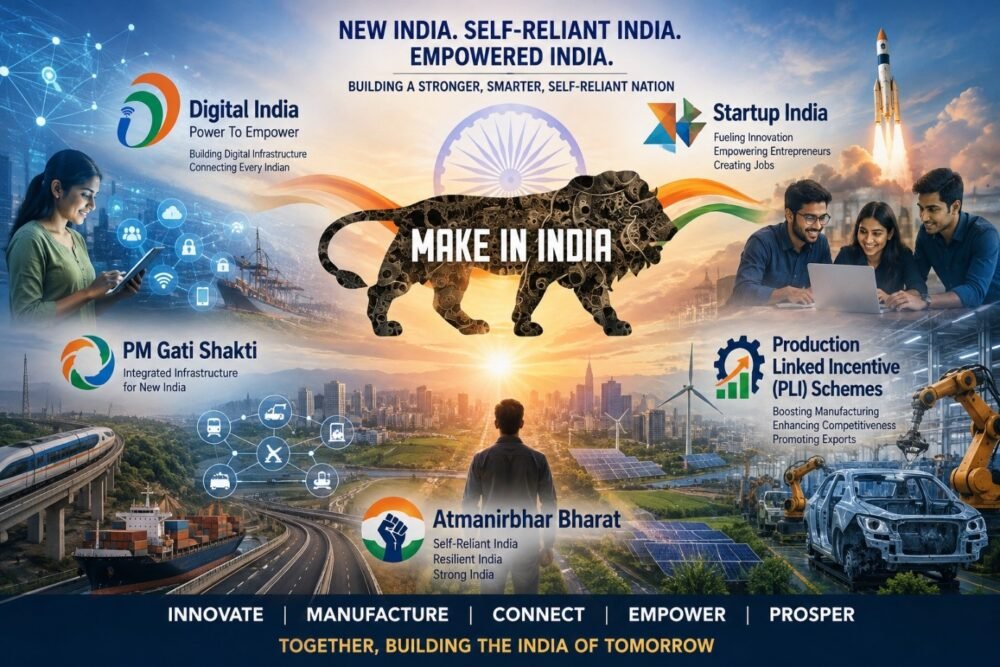
India has responded with ambitious, targeted initiatives: Make in India, Digital India, Startup India, PM Gati Shakti, Production Linked Incentive schemes and Aatmanirbhar Bharat. These programmes seek not only to accelerate growth but also to cultivate indigenous capabilities in defence, electronics, semiconductors, renewable energy and digital infrastructure. Complementary investments in highways, freight corridors, ports, airports and industrial corridors have enhanced both economic competitiveness and military logistics, underscoring the dual-use value of modern infrastructure.
Digital Public Infrastructure has been a standout domain of Indian leadership. Platforms such as Aadhaar, the Unified Payments Interface and DigiLocker have transformed governance, financial inclusion and public service delivery while boosting administrative efficiency. These innovations have emerged as replicable global models for scalable, inclusive digital transformation, strengthening India’s soft power.
Manufacturing has become a strategic priority as the global “China-plus-one” dynamic creates a historic opportunity for India to deepen its role as a trusted manufacturing hub. Beyond job creation, indigenous manufacturing enhances technological sovereignty, reduces supply-chain risk, strengthens defence preparedness and reinforces strategic autonomy.

The defence sector exemplifies this shift. Historically reliant on imports, India is accelerating indigenous defence production through increased participation by private industry, startups, MSMEs and academia. Initiatives such as Innovations for Defence Excellence (iDEX) have catalysed an innovation ecosystem linking the armed forces, research institutions and entrepreneurs. Deep-tech firms working in AI, robotics, autonomous systems, cybersecurity and unmanned platforms are transforming India from a technology acquirer to a technology creator.

Realising the demographic dividend—one of India’s greatest assets—requires sustained investment in education, research, advanced manufacturing and skills development
Innovation is now a decisive axis of geopolitical competitiveness. India hosts one of the world’s largest startup ecosystems and is building capabilities across AI, semiconductors, quantum science, biotech, robotics and space. Realising the demographic dividend—one of India’s greatest assets—requires sustained investment in education, research, advanced manufacturing and skills development. As frontier technologies redefine influence, India’s long-term stature will hinge not just on GDP but on its ability to lead in high-value, strategic technologies. The foundations are in place; the task ahead is to convert economic momentum into lasting technological and strategic leadership.
Technology: The New Currency of National Power
Artificial Intelligence and Sovereign AI: Defining India’s Technological Future
If economic strength was the foundation of global power in the twentieth century, technology has become its defining currency in the twenty-first. Nations now compete not only through economic output or military capability but through leadership in Artificial Intelligence (AI), semiconductors, quantum technologies, cybersecurity, space, digital infrastructure and innovation. Technological superiority increasingly shapes economic competitiveness, military effectiveness, diplomatic influence and national resilience. Recognising this shift, India has placed technology at the heart of its development and national security strategy, viewing investments in AI, robotics, autonomous systems, advanced communications and data analytics as strategic imperatives for technological sovereignty and long-term self-reliance.
Nowhere is this transformation more evident than in defence. Modern warfare is driven by information dominance, network-centric operations and rapid decision-making. Future battlefields will generate vast volumes of data from satellites, drones, radar, cyber networks, electronic warfare systems and battlefield sensors. Processing this information manually is impossible at operational speeds. AI enables real-time fusion of these diverse data streams, enhancing intelligence analysis, target recognition, predictive logistics, equipment health monitoring and mission planning. By significantly compressing the Observe–Orient–Decide–Act (OODA) loop, AI delivers faster, more informed decisions, providing a decisive advantage across land, maritime, air, cyber and space domains. In the battlespace of tomorrow, algorithms will be as decisive as ammunition.
Recognising AI as a strategic enabler, India has significantly expanded its capabilities through the IndiaAI Mission, investments in high-performance computing, digital infrastructure, AI research and one of the world’s fastest-growing startup ecosystems. Equally important has been India’s emergence as a global voice for inclusive, trusted and responsible AI. Co-chairing the AI Action Summit in Paris alongside France marked a major diplomatic milestone, positioning India at the forefront of international AI governance. The summit successfully advanced global dialogue on balancing innovation with ethics, safety, transparency and equitable access, while highlighting the concerns of both developed and developing nations. Building on this momentum, India hosted the India AI Impact Summit, reinforcing its commitment to translating responsible AI principles into practical applications for governance, industry and society. Together, these initiatives underscore India’s transition from a technology adopter to a nation helping shape the global AI agenda.
India has significantly expanded its capabilities through the IndiaAI Mission, investments in high-performance computing, digital infrastructure, AI research and one of the world’s fastest-growing startup ecosystems
An equally important dimension of this transformation is the emergence of Sovereign AI. As Generative AI and Large Language Models increasingly process classified military information, government records and critical national infrastructure, dependence on foreign cloud platforms presents risks to data sovereignty, cybersecurity and operational continuity. For defence and strategic sectors, AI systems must operate entirely within secure national networks, including air-gapped environments, ensuring complete ownership, control and protection of sensitive data.
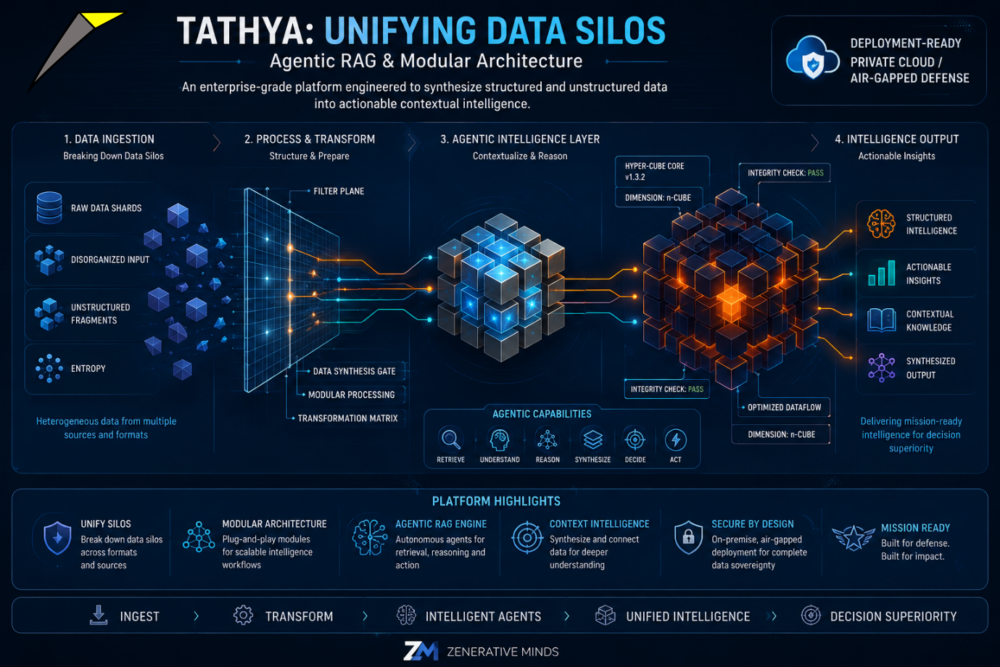
This need has accelerated the development of indigenous enterprise AI platforms. A notable example is Samvaad AI, developed by Zenerative Minds under the Ministry of Defence’s iDEX programme on the Tathya Agentic AI Platform. Designed as a fully on-premises, multimodal, agentic Generative AI solution, it delivers secure knowledge management and intelligent decision support while ensuring complete data sovereignty. Such architectures represent the future of defence AI, where intelligence processing occurs at the tactical edge through secure edge-computing infrastructure rather than remote cloud services.
Sovereign Generative AI can become the catalyst that transforms India’s defence industry ecosystem—integrating secure knowledge management, intelligent design, production, quality assurance and lifecycle support while safeguarding critical technologies and reinforcing India’s technological sovereignty.
Semiconductors, Space, Cyber and Autonomous Systems: Pillars of Future Power
Semiconductors form the backbone of every modern technology, from AI, autonomous systems and advanced communications to satellites, missiles and defence platforms. The global chip shortage during the COVID-19 pandemic exposed the strategic risks of concentrated supply chains, highlighting that access to semiconductors is a national security imperative. Recognising this, India is building a comprehensive semiconductor ecosystem encompassing chip design, fabrication, packaging and testing to reduce external dependence and strengthen technological sovereignty. As AI, quantum computing, 5G/6G and advanced defence systems become increasingly chip-intensive, semiconductor capability will be a key determinant of economic and military power.
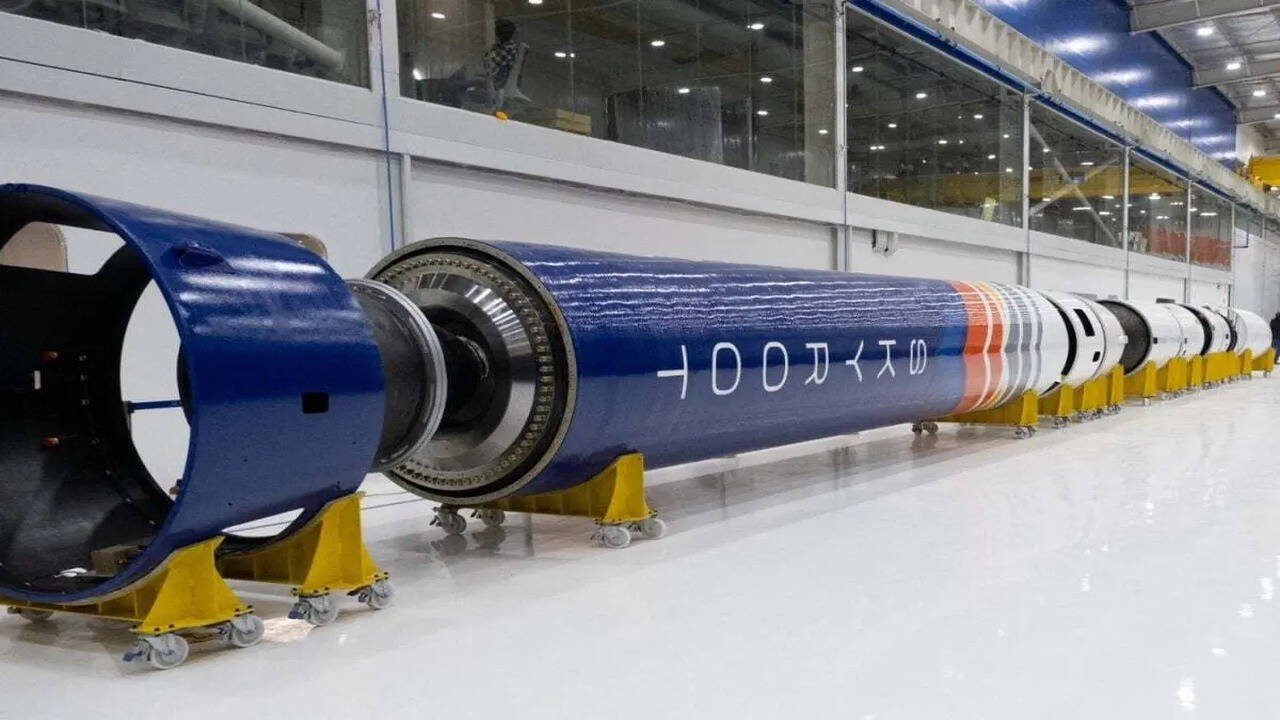
National security today also extends beyond land, sea and air into space and cyberspace. Satellites enable navigation, communications, intelligence and precision operations, while cyber infrastructure underpins governance, finance, energy and defence networks. India’s expanding space capabilities, exemplified by Skyroot Aerospace’s Vikram-1 launch in 2026, alongside continued investments in cybersecurity and secure digital infrastructure, reflect its commitment to these critical domains.
Equally transformative is the rise of autonomous systems. Recent conflicts have demonstrated how drones and AI-enabled platforms have become force multipliers for surveillance, precision strikes, logistics and electronic warfare. Through initiatives such as iDEX and a vibrant defence startup ecosystem, India is accelerating indigenous development of unmanned systems, robotics and AI-driven solutions. The future battlespace will increasingly be defined by human-machine teaming, intelligent sensor networks and autonomous platforms, making these technologies central to India’s military preparedness and strategic advantage.
Zenerative Minds, on the Tathya Agentic AI Platform, has been designed as a fully on-premises, multimodal, agentic Generative AI solution. It delivers secure knowledge management and intelligent decision support while ensuring complete data sovereignty
Operation Sindoor: Technology Meets Strategic Resolve
The practical impact of India’s technological advancements was clearly demonstrated during Operation Sindoor, which marked a significant evolution in the country’s approach to national security. Beyond its political and military dimensions, the operation underscored the growing role of advanced technologies in shaping modern military doctrine and operational effectiveness. Its successful execution highlighted the seamless integration of multi-source intelligence, persistent surveillance, precision targeting, secure communications, and network-centric command-and-control systems. The ability to identify targets accurately, synchronise joint operations across multiple domains, and achieve strategic objectives with minimal collateral damage reflected the maturity of India’s intelligence architecture and its increasing reliance on indigenous and technology-driven capabilities.
Equally significant was the information dimension of the operation. In today’s interconnected world, military success is measured not only by battlefield achievements but also by the ability to shape global narratives through timely, transparent and credible communication. Strategic messaging accompanying Operation Sindoor reinforced India’s position as a responsible power exercising restraint while demonstrating the resolve to safeguard its national security interests. More importantly, the operation signalled a doctrinal shift from reactive responses towards intelligence-led, technology-enabled, precision-based and politically calibrated military operations, setting a benchmark for India’s future approach to conflict in an era increasingly defined by information dominance and technological superiority.
Strategic Leadership in a Multipolar World
The world is evolving towards a multipolar order. While the United States remains a leading military and technological power and China continues to expand its economic and strategic influence, Europe seeks greater strategic autonomy, and emerging powers are assuming larger regional and global roles. In this environment, India has successfully pursued strategic autonomy, engaging constructively with all major powers while preserving independent decision-making. Unlike the earlier concept of non-alignment, strategic autonomy enables India to collaborate wherever national interests converge without compromising sovereign choices.
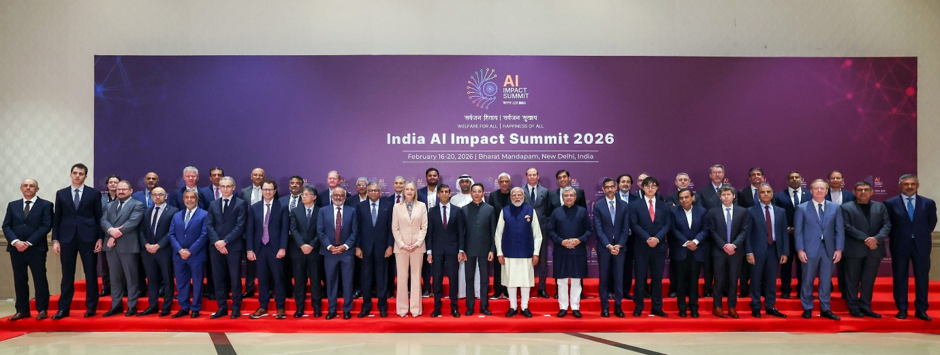
A defining feature of this approach has been India’s ability to strengthen partnerships with competing global powers simultaneously. India today enjoys comprehensive strategic relationships with the United States, France, Japan, Australia, the European Union, the UAE, Saudi Arabia and Israel, while maintaining longstanding defence, energy and nuclear cooperation with Russia and deepening engagement with the Global South. Its balanced approach during the Russia–Ukraine conflict demonstrated that partnerships with one major power need not come at the expense of another, enhancing India’s credibility as an independent and trusted strategic actor.
India has emerged as a leading voice of the Global South by drawing on its own developmental experience to champion digital inclusion, affordable healthcare, climate resilience, food security and technology access for developing nations
India has emerged as a leading voice of the Global South by drawing on its own developmental experience to champion digital inclusion, affordable healthcare, climate resilience, food security and technology access for developing nations. Through Digital Public Infrastructure, capacity building and development partnerships, India has positioned itself as a trusted bridge between developed and developing economies. Its G20 Presidency elevated the priorities of the Global South on the international agenda, while its expanding engagement across Africa, Southeast Asia, the Indian Ocean Region and Latin America reflects a diplomacy anchored in partnership and shared prosperity.
India’s Defining Decade
The decade from 2016 to 2026 may well be remembered as the period when India fundamentally redefined its strategic trajectory—from an emerging economy to a nation increasingly shaping global conversations on technology, security, innovation and development. The real measure of success will not lie in economic indicators alone, but in India’s ability to convert technological leadership into strategic capability, strategic capability into national resilience, and national resilience into responsible global leadership.
As the Tricolour flies proudly on the 80th Independence Day, it symbolises both the sacrifices of the past and the promise of the future. The next chapter of India’s rise will be written through innovation, self-reliance and strategic vision.

The writer is a visionary Military Veteran, Technology Leader and Scaling Entrepreneur. An iDEX winner and alumnus of NDA, IIT Kanpur and IIM Indore, he works at the intersection of Sovereign AI, Drones, Robotics and Defence innovation, and is a strategic consultant, thought leader, columnist and speaker. The views expressed are of the writer and do not necessarily reflect the views of Raksha Anirveda





