


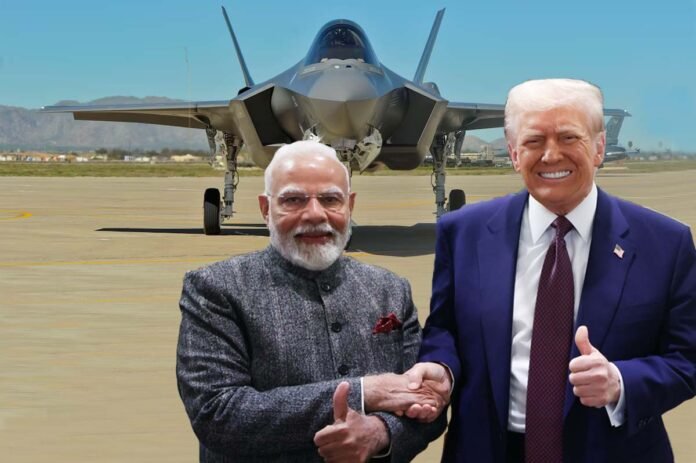
New Delhi: The Modi government’s decisive rejection of US F-35 stealth fighter jets represents a pivotal moment in India’s defence strategy, emphasising strategic autonomy over external pressure while demonstrating calibrated diplomatic restraint amid escalating trade tensions with the Trump administration, according to a report.
Despite explicit offers from President Trump during Prime Minister Modi’s February 2025 White House visit, India has categorically informed Washington that it is not interested in acquiring the F-35 stealth fighter jets. This decision comes even as Trump threatened additional penalties on India over its continued purchases of Russian oil and weapons, marking a significant departure from traditional defence procurement patterns.

Indian officials have conveyed that the country remains committed to its long-term goal of building defence self-reliance under the “Make in India” initiative, prioritising co-development and domestic manufacturing over expensive foreign acquisitions. The Modi government’s position reflects a strategic preference for joint design and manufacturing partnerships rather than purchasing high-end American warplanes outright.
The Modi government has chosen restraint over retaliation in response to Trump’s unexpected announcement of a 25 percent tariff on Indian imports, effective August 1, 2025. While expressing disappointment over the move, senior officials in New Delhi affirmed that India will not be provoked into hasty countermeasures and will instead pursue constructive economic engagement.
Commerce Minister Piyush Goyal addressed Parliament with measured resolve, stating that “the implications of the recent developments are being examined” and affirming that the government will take “all necessary steps to secure and advance our national interest”. His response demonstrated diplomatic maturity while protecting India’s core interests, particularly in agriculture, dairy, and micro, small and medium enterprises.
Trump’s rhetoric has escalated significantly, describing India and Russia as “dead economies” and declaring he “doesn’t care what India does with Russia”. His inflammatory remarks calling India’s economy “dead” drew sharp political reactions domestically, with opposition leader Rahul Gandhi controversially backing Trump’s assessment while questioning the government’s economic management.

However, the Modi government’s response has been notably restrained and fact-based. Rather than engaging in rhetorical exchanges, officials have focused on substantive policy positions and economic realities. Piyush Goyal’s parliamentary address served as a data-driven counter to Trump’s assertions, highlighting India’s trajectory to become the world’s third-largest economy and emphasising the country’s commitment to mutually beneficial trade relationships.






