


India has been insisting that ongoing conflicts in Ukraine and Iran must end. It refused to take sides, reiterating that these wars can only conclude through dialogue. In Kyiv, answering questions on why India continues to procure Russian oil, Foreign Minister S Jaishankar said, “It (the war) will not be stopped by someone not buying oil. It will end with diplomacy.” While India has refused to negotiate in any conflict, it maintains close ties with all sides.
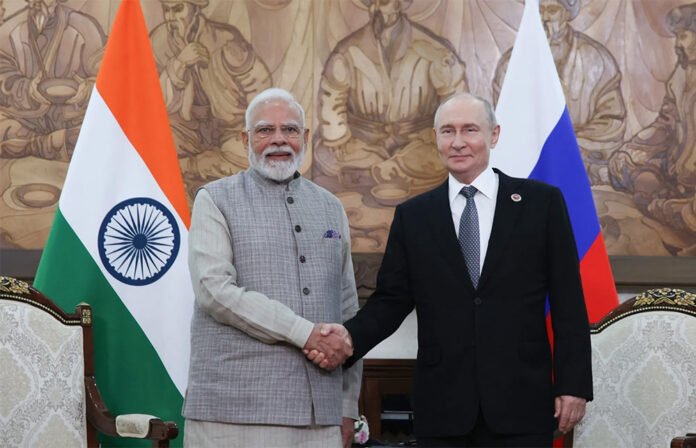
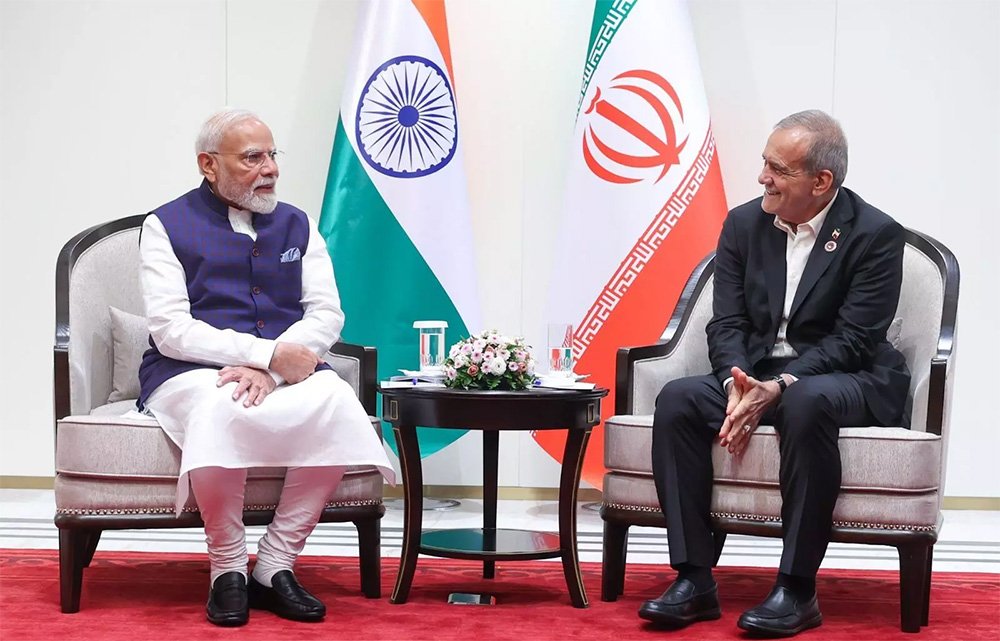
Prime Minister Narendra Modi met Russian President Vladimir Putin and Iranian President Masoud Pezeshkian on the sidelines of the SCO summit in Bishkek, Kyrgyzstan. He met them again during the BRICS summit in New Delhi, conveying a message of India’s global outreach. In both meetings, apart from discussing trade and the current state of the conflict, he reiterated the importance of dialogue and diplomacy as a means of conflict resolution.

Immediately after Prime Minister Modi met with Putin in Bishkek, Jaishankar visited Moscow and Kyiv. When he visited Kyiv, he mentioned, “In consonance with Prime Minister Modi’s call for an end to war, my visit has a focus on the prospects of dialogue and diplomacy. I will be taking back views and positions shared today by the Ukrainian side.”
Soon after this visit, US negotiators Steve Witkoff and Jared Kushner visited Moscow and Kyiv, seeking a solution for ending the conflict. Not much emerged from the US team’s visit, though President Trump and President Putin held a one-hour conversation. Putin would have discussed the same with PM Modi during their meeting. Despite the US threat of sanctions, India continues procuring oil from Russia. Its oil imports touched 2.6 million barrels a day in August, up from 1 million barrels in February.
Prime Minister Narendra Modi met Russian President Vladimir Putin and Iranian President Masoud Pezeshkian on the sidelines of the SCO summit in Bishkek, Kyrgyzstan. He met them again during the BRICS summit in New Delhi, conveying a message of India’s global outreach
The Russian ambassador to Delhi, Denis Alipov, said India procures oil for itself, not to help Russia. The Indian military also remains dependent on Russian military hardware. Talks between the two leaders in Delhi included discussions on SU-57 fighter jets and nuclear power plants, apart from other subjects. India has already demanded five additional S-400 Triumf air defence systems, to which Russia has submitted a proposal. This is despite threats of CAATSA (Countering America’s Adversaries Through Sanctions Act).
India has invested heavily in Iran’s Chabahar port, work on which is stalled due to the ongoing conflict. It would also begin to procure oil from Iran once the conflict ends. In his meeting with the Iranian President, PM Modi discussed expanding and diversifying economic cooperation, continuing progress on the Chabahar port, and managing maritime and transportation ties despite the pressure of sanctions.

India has refused to take sides in either conflict, notwithstanding pressures from Europe and the US. It has been seeking to maintain relations with multiple camps, many of which remain at loggerheads. India is enhancing its economic and defence ties with Europe, while continuing to maintain relations, and also procuring oil and weapons from Russia. It concurrently engages with Ukraine.
Russia’s ambassador to Delhi, Denis Alipov, said India procures oil for itself, not to help Russia. The Indian military also remains dependent on Russian military hardware. India has demanded five additional S-400 Triumf air defence systems, to which Russia has submitted a proposal. This is despite threats of CAATSA (Countering America’s Adversaries Through Sanctions Act)
India also welcomed the Iranian President to India, while procuring weapon systems from the US and is also close to inking a trade deal with it. New Delhi is also interested in expanding its Chabahar port to enhance trade with Central Asian nations, bypassing Pakistan. India remains wary of the current US leadership but is well aware that Trump will not be in the chair beyond January 2029. It can bide its time, aware that its economy and global standing will continue to push closer US-India relations beyond that phase.

India also has close ties with Israel, an arch-enemy of Iran. India-Israel relations span economics and defence. In 2025, India backed down from endorsing the SCO joint statement, which accused Israel of “aggressive actions against civilian targets, including energy and transport infrastructure, which resulted in civilian casualties, are a gross violation of international law and the United Nations Charter.”
It did sign the statement at the end of the SCO summit and did not name the US or Israel. Even the statement at the end of the BRICS summit did not mention Israel or the US. India cannot let its relations with one country impact the other.
The BRICS summit hosted by India over the weekend had one member involved in both conflicts: Russia and Iran. Its interactions with both, while continuing engagements with their adversaries, indicated New Delhi’s ability to insist on dialogue as the only solution. While India remains an active member of SCO and BRICS, both of which include China and Russia, it is also involved with the QUAD, which is assumed to be anti-China, and is a regular invitee to the G7, which is currently anti-Russia. It procures weapons from Europe, the US and Russia, and also oil from Russia and the US. It adheres to sanctions, which impact it, while keeping diplomatic doors open.
India is a member of SCO and BRICS, both of which include China and Russia, and is involved with the QUAD, which is assumed to be anti-China, and is a regular invitee to the G7, which is currently anti-Russia. It procures weapons from Europe, the US and Russia, and also oil from Russia and the US. It adheres to sanctions while keeping diplomatic doors open
India is well suited to negotiate between warring sides in both conflicts but has avoided doing so, as it believes that it would only get involved if both sides request it. Without a desire by both sides to end the conflict, negotiations would be in the phase they currently are, on and off, with no end in sight. New Delhi has its own interests in ensuring the safety of its diaspora, oil imports, and shipping.
While some term it as ‘strategic autonomy’, the reality is that India’s interests lie with multiple sides. India is a growing economy, hungry for resources, investments and technology. It also has its security concerns. Taking sides would harm its development. It has, therefore, resisted global pressure to support one party to the conflict. This was initially questioned by the nations concerned, but its position now appears to have been validated and respected.
The writer is a strategic analyst and a motivator. He can be reached at @kakar_harsha. The views expressed are of the writer and do not necessarily reflect the views of Raksha Anirveda





