


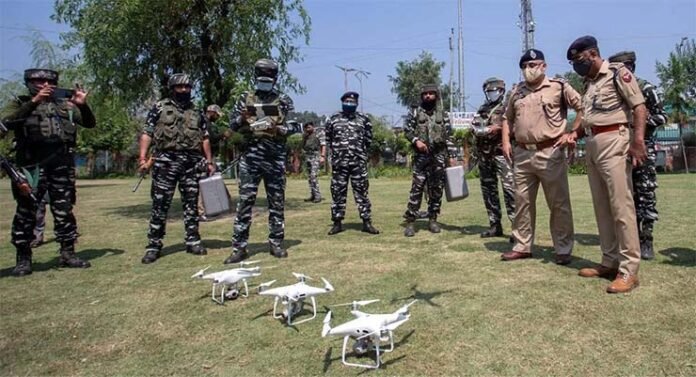
New Delhi: The Indian Army is set to induct approximately 30,000 drones to monitor and neutralise flying objects within a 35-kilometre radius of India’s borders with China and Pakistan. This ambitious plan addresses the escalating threat of enemy drone intrusions along the western and northern frontiers.
These drones will patrol up to 35 kilometres from the border, aiming to curb infiltration attempts by hostile unmanned aerial vehicles. The Army has assumed primary responsibility for tracking airborne objects within this 35-kilometre land envelope and up to an altitude of three kilometres.

Currently, the Army handles 97 per cent of drone and anti-drone operations in this designated zone. To bolster these efforts, air command and control centres are being established along the borders with both China and Pakistan. These centres will monitor cross-border drone activity, deploy Indian drones, and eliminate hostile platforms.
Area Corps Commanders will work in close coordination with Indian Air Force commanders and other agencies to ensure seamless operations. The Army aims to acquire capacity for around 10,000 drones in the western theatre opposite Pakistan and over 20,000 along the 3,488-kilometre Line of Actual Control with China.
This expanded monitoring regime stems directly from recent conflicts. Pakistan deployed Turkish and Chinese-origin armed drones targeting Indian Army and Air Force units during Operation Sindoor. Similarly, China’s People’s Liberation Army employs drones extensively across the eastern theatre to surveil Indian positions along the LAC.
In response, the Army has already raised two rocket force units, two combined arms brigades known as Rudra brigades, and 21 Bhairav battalions. Artillery brigades’ effective range has been extended dramatically from 150 kilometres to 1,000 kilometres across borders.

The creation of rocket forces was prompted by China’s deployment of rocket regiments in eastern Ladakh following its transgressions in May 2020. Pakistan’s use of Fatah-1 and Fatah-2 rockets during Operation Sindoor further necessitated these measures.
Operation Sindoor commenced in the early hours of May 7, with India striking terror and military installations in Pakistan and Pakistan-occupied Kashmir. A ceasefire took effect on May 10, after four days of intense exchanges involving fighter jets, missiles, armed drones, and heavy artillery duels.

India-China bilateral ties plummeted after the deadly Galwan Valley clash in 2020. The prolonged standoff concluded with disengagement at the final friction points of Demchok and Depsang, formalised in an agreement on October 21, 2024.
Bhairav battalions are designed to handle tactical roles along the borders, freeing Indian Special Forces for strategic deep-strike operations using armed drones, surveillance drones, and loitering munitions.
These deployment shifts and weaponry enhancements come amid Pakistan’s post-Operation Sindoor acquisitions of armed drones, radars, missiles, and rockets. The Indian Army’s drone induction and border fortifications reflect a proactive stance against evolving aerial threats from both adversaries.






