


Chennai: The transition towards autonomous and remotely operated vessels is forcing a rethink of how ships are designed – not simply at the level of autonomy software, but across propulsion, machinery, power, control and digital systems. It is this technology gap that IIT Madras-incubated deep-tech company AstraYAN Private Limited is seeking to address.
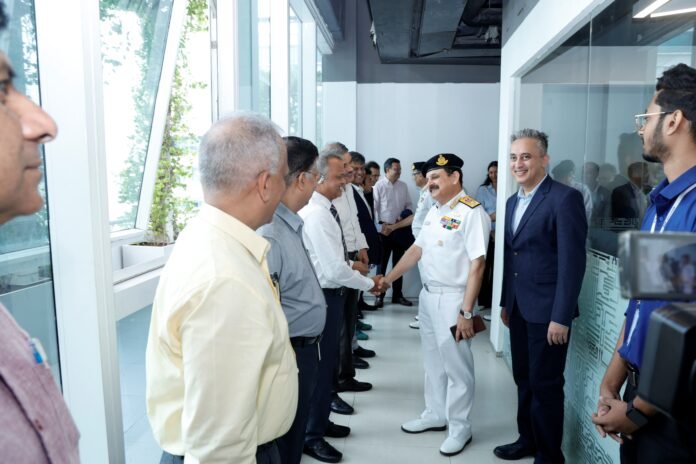
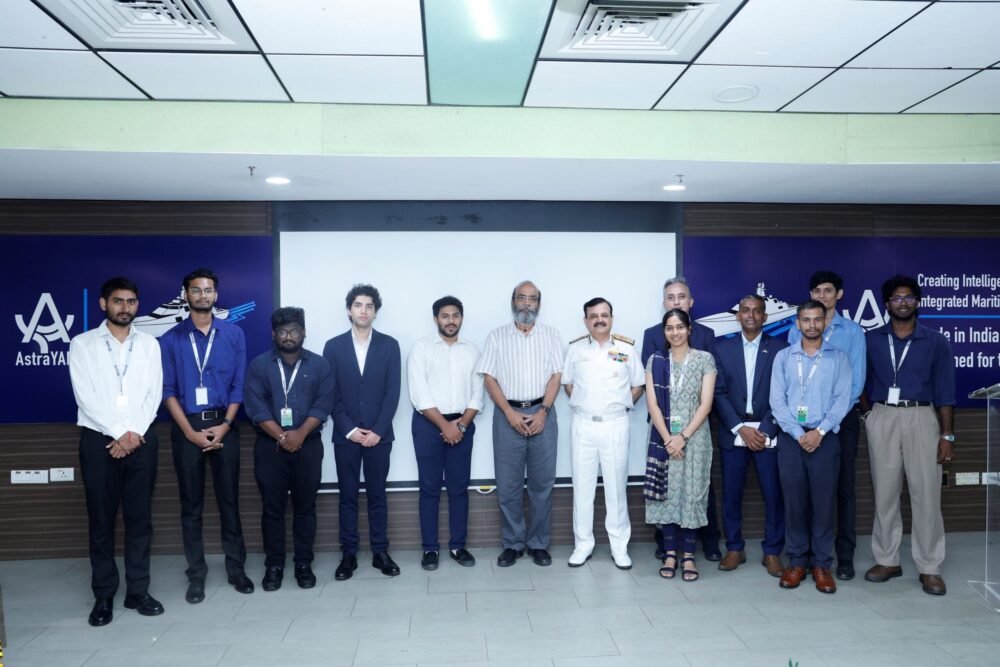
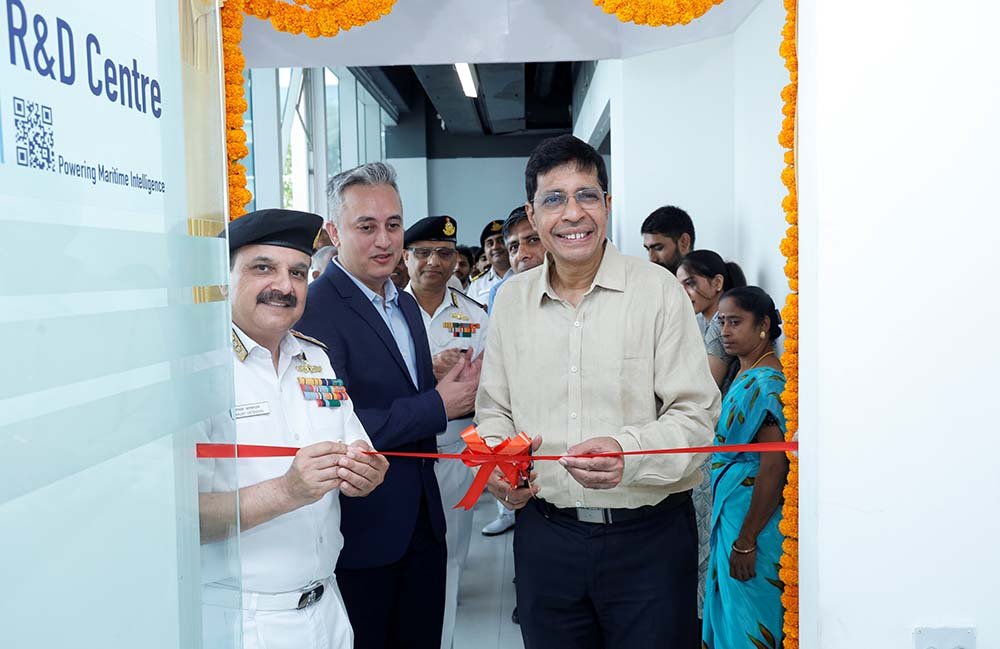
The company inaugurated its new Research & Development Centre at IIT Madras Research Park, Chennai, with the facility formally inaugurated by Prof V Kamakoti, Director, IIT Madras in the presence of Vice Admiral Sanjay Vatsyan, PVSM, AVSM, VSM, Flag Officer Commanding-in-Chief, Western Naval Command and senior representatives from academia, industry, government and the wider maritime and defence ecosystem.

For AstraYAN, the new centre represents more than an expansion of its R&D footprint. It is intended to provide the engineering environment for developing the digital and systems architecture required for the next generation of smart, remotely controlled and autonomous vessels.
Beyond the Autonomy Stack
AstraYAN’s proposition is based on a relatively simple premise: autonomy cannot be bolted onto a conventional ship as an additional software layer. For an autonomous vessel to operate reliably, the autonomy architecture has to interact seamlessly with the ship’s propulsion, machinery, power, navigation and control systems. AstraYAN is therefore developing an integrated architecture that brings these traditionally separate technology layers together.
The company’s product ecosystem spans IntegARK, SmartARK, RemoteARK and AutonomARK, supported by VyomARK, a middleware platform designed for unmanned systems and fast, reliable communication through a distributed control architecture. The architecture is being designed primarily with large, complex vessels in mind, while retaining the ability to scale down to smaller autonomous platforms.
This is significant because the next phase of maritime autonomy is expected to move beyond small autonomous boats towards larger platforms capable of carrying substantial payloads and undertaking extended missions. AstraYAN’s focus includes autonomous naval vessels in the 40–60 metre range, with the potential to carry high payloads and sustain missions of 60–90 days.

Bringing Avionics Thinking to the Sea
At the heart of the company’s technology approach is ARKionics, which AstraYAN describes as a maritime adaptation of modern avionics principles. The philosophy is centred on integrating machinery controls with the digital and autonomy layers, supported by Model-Based Systems Engineering (MBSE). The objective is to build systems that are reliable, redundant, survivable and modular.
Another important aspect is the company’s OEM-agnostic architecture. Rather than locking a shipyard into a proprietary machinery ecosystem, AstraYAN’s approach is intended to give shipbuilders greater flexibility in selecting machinery and subsystem suppliers while maintaining a common digital and autonomy architecture. For complex naval platforms, this could become an important consideration as ship systems become increasingly software-defined and interconnected.

Dr Amit Batra, Founder, AstraYAN, said, “Autonomy is not something that can simply be added to a conventional ship design. It has to be built from the ground up starting from the machinery systems layer with an integrated foundation in which propulsion, machinery, control and digital systems are designed to work together. The new R&D Centre gives us the environment to develop and mature these technologies as we work towards the vessels of the future.”
He added that AstraYAN also sees a responsibility in addressing foundational technologies in areas where India continues to rely heavily on imports. The company has worked closely with the Indian Navy and GRSE and has become the first Indian company to be included in the suppliers list for Propulsion System Integration for complex naval platforms. It is also developing Integrated Electronic Controllers for marine gas turbines and smart Integrated Platform Management Systems for naval platforms, using its VyomARK middleware.
From Naval Systems to Foundational Technology
AstraYAN’s ambitions extend beyond autonomy itself. The company’s work illustrates a broader shift in naval technology—from developing individual systems to creating integrated architectures in which propulsion, machinery, control and digital technologies work together.
For an Indian deep-tech company, the significance lies in developing capabilities at what are often less visible—but critical—layers of a complex platform. The digital architecture sitting between machinery and the higher-level autonomy system can ultimately determine how effectively a vessel can integrate different subsystems, operate with reduced crew and transition towards higher levels of autonomy.
A Gradual Path to Autonomy
AstraYAN does not envisage the maritime sector moving overnight from conventionally operated ships to completely unmanned vessels. Instead, the company’s roadmap follows a progression—from systems integration to middleware, intelligent vessel platform systems and remote-operation capabilities, ultimately leading towards fully autonomous systems.
This progression mirrors the broader reality of maritime operations, where different vessel types and missions will require different levels of human involvement. The immediate opportunity may therefore lie not only in fully unmanned vessels, but also in smart ships with leaner crews, higher levels of automation and the ability to be remotely monitored or operated when required.
Industry Support will be Critical
The development of such technologies also requires sustained access to projects, testing environments and capital.
Speaking at the inauguration, Vice Admiral Sanjay Vatsyan, Commanding-in-Chief, Western Naval Command, emphasised the need to give startups both project access and funding support. He pointed to Ministry of Defence initiatives such as iDEX as a model and spoke of further projects, re-engagement opportunities and funding for emerging startups. He also referred to anticipated investment of ₹8 lakh crore in the defence sector over the next five years and the opportunity to strengthen India’s position as a defence exporter.
For companies operating at the intersection of deep technology and defence platforms, such industry–startup linkages can be particularly important. Technology development needs to be closely connected to real operational requirements, platform integration and eventual deployment.
Prof. V. Kamakoti, Director, IIT Madras, captured the importance of moving from development to execution: “Signing a project is a beginning. Delivering it is the achievement. Celebrate the achievement.”
From India to the Global Maritime Market
AstraYAN’s immediate experience is rooted in naval systems, but its longer-term ambition extends to the commercial maritime sector and international markets.
Cdr Navneet Kaushik, Jamwant Ventures, said, “AstraYAN is addressing an important technology gap at a time when maritime systems are moving towards greater digitalisation, remote operation and autonomy. What stands out is its integrated approach to propulsion, machinery control and digital platforms, creating a pathway from today’s smart vessels to the autonomous platforms of tomorrow. The establishment of its R&D Centre at IIT Madras Research Park is an important step in building and scaling these capabilities from India for both domestic and global markets.”
That transition could create opportunities well beyond defence. Commercial shipping, offshore operations and other complex maritime platforms are also likely to demand higher levels of automation, remote monitoring and intelligent machinery management.
The larger opportunity is equally clear: as ships become increasingly software-defined, the companies capable of integrating the physical machinery of a vessel with its digital intelligence could play an important role in defining the next generation of maritime platforms.
Ajay Sharma, President, Edelweiss Financial Services, said, “The maritime industry is likely to evolve progressively towards vessels with greater intelligence, remote operability and autonomy, rather than move directly from conventional ships to fully autonomous vessels. We see this as a gradual journey from systems integration and intelligent vessel platforms to remote operations and, ultimately, higher levels of autonomy. AstraYAN is building its technology roadmap around this progression, with the aim of enabling that transition across both naval and commercial maritime applications.”
AstraYAN Private Limited is an IIT Madras-incubated deep-tech company developing digital platform systems for smart, remotely controlled and autonomous maritime vessels.
Its technology ecosystem includes IntegARK, SmartARK, RemoteARK, AutonomARK and the VyomARK development framework, covering ship machinery integration, digital platform systems, remote operations and autonomous vessel technologies.
Its technology approach is guided by ARKionics, a maritime adaptation of modern avionics principles, with an emphasis on integrated systems architecture and Model-Based Systems Engineering for reliable, modular and scalable digital platforms.






