


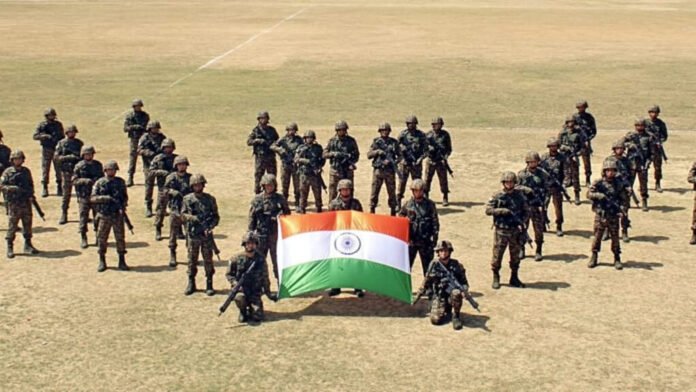
The essence of warfare and international engagement has undergone a fundamental transformation in the 21st century. Traditional notions of conflict, centred on kinetic operations, have given way to a broader spectrum where influence, perception, and strategic positioning play decisive roles. Military power is no longer employed solely for warfighting; it is increasingly leveraged as a tool of diplomacy. India’s strategic environment is characterised by complex challenges: an assertive China, a volatile Pakistan, instability in the Indian Ocean Region (IOR), and emerging non-traditional threats such as cyber warfare and terrorism. In such an environment, proactive military diplomacy becomes essential for shaping the strategic landscape in India’s favour.
Historically, India has engaged in military diplomacy through joint exercises, training assistance, and humanitarian missions. However, these efforts have largely been episodic and reactive rather than doctrinally driven. There is a pressing need to institutionalise military diplomacy as a core component of India’s national security strategy.

Conceptual Framework of Military Diplomacy
Military diplomacy refers to the use of defence-related activities—short of war—to achieve foreign policy objectives. It encompasses a wide range of engagements, including:
- Joint military exercises
- Defence cooperation agreements
- Training and capacity building
- High-level military exchanges
- Arms exports and defence industrial collaboration
- Humanitarian Assistance and Disaster Relief (HADR) operations
Unlike coercive diplomacy, military diplomacy operates primarily through engagement, reassurance, and capacity building. Its objectives include:
- Building strategic partnerships
- Enhancing interoperability
- Shaping regional security architectures
- Deterring adversaries through presence and partnerships
For India, military diplomacy must be viewed as an extension of its broader foreign policy doctrine, integrating seamlessly with political, economic, and cultural instruments of power.
Evolution of Indian Military Diplomacy
India’s military diplomacy has evolved in phases:

Post-Independence Era (1947–1990): India adopted a non-aligned posture, focusing on sovereignty and strategic autonomy. Military diplomacy was limited and cautious, primarily involving training exchanges and UN peacekeeping.
Post-Cold War Era (1991–2010): Economic liberalisation and geopolitical shifts led to increased engagement with global powers. India began participating in multinational exercises and expanded defence cooperation.

Contemporary Phase (2010–Present): India has significantly expanded its military diplomacy footprint through initiatives such as:
- Act East Policy
- Indo-Pacific engagement
- Defence agreements with major powers
- Increased HADR operations
Despite these advancements, the absence of a formal doctrine limits the effectiveness and coherence of these efforts.
Strategic Imperatives for Proactive Military Diplomacy
Managing the Rise of China: China’s expanding military presence in the Indo-Pacific necessitates a counterbalancing strategy. Proactive military diplomacy enables India to build partnerships and enhance regional resilience.
Stabilising the Indian Ocean Region: The IOR is critical to India’s economic and security interests. Military diplomacy helps secure sea lines of communication and strengthen maritime partnerships.
Countering Terrorism and Hybrid Threats: Engagement with partner nations enhances intelligence sharing and capacity building, which are crucial for addressing non-traditional threats.
Enhancing Strategic Autonomy: By diversifying partnerships, India reduces dependence on any single power bloc while maintaining its strategic independence.
Military power is no longer employed solely for warfighting; it is increasingly leveraged as a tool of diplomacy. India’s strategic environment is characterised by complex challenges: an assertive China, a volatile Pakistan, instability in the Indian Ocean Region (IOR), and emerging non-traditional threats such as cyber warfare and terrorism. In such an environment, proactive military diplomacy becomes essential for shaping the strategic landscape in India’s favour
Doctrinal Foundations for Indian Military Diplomacy
A robust doctrinal strategy must rest on the following principles:
Proactivity: India must anticipate geopolitical developments and engage early rather than react to crises.
Jointness: Integration across the Army, Navy, and Air Force is essential for coherent engagement.
Credible Capability: Diplomacy backed by credible military capability enhances deterrence and influence.
Multi-Domain Integration: Military diplomacy must extend across land, sea, air, cyber, and space domains.
Whole-of-Government Approach: Coordination between the Ministry of Defence, Ministry of External Affairs, and other agencies is critical.
Institutional Architecture
Role of the Chief of Defence Staff (CDS): The CDS must serve as the central authority for coordinating military diplomacy efforts, ensuring alignment with national strategy.
Integrated Theatre Commands: Theatre commands provide a unified operational structure, enabling region-specific military engagement strategies.
Defence Attaché Network: India’s defence attachés must be empowered with greater authority and resources to act as frontline diplomats.
Indian Joint Special Operations Command (IJSOC): Special operations forces can play a key role in strategic engagements, training, and capacity building.
Instruments of Proactive Military Diplomacy
Joint Military Exercises: Exercises enhance interoperability and signal strategic intent.
Training and Capacity Building: India’s military training institutions can serve as hubs for international cooperation.
Defence Exports and Industrial Collaboration: Expanding defence exports strengthens partnerships and enhances India’s global standing.
Humanitarian Assistance and Disaster Relief (HADR): HADR operations build goodwill and demonstrate India’s commitment to regional stability.
Maritime Security Initiatives: Naval diplomacy plays a crucial role in securing the Indo-Pacific.
Regional Focus Areas
South Asia: India must reinforce its leadership role through capacity building and security cooperation.
Southeast Asia: Engagement under the Act East Policy should be deepened through defence partnerships.
Indian Ocean Region: India must position itself as the primary security provider in the region.
Africa and West Asia: Expanding military diplomacy in these regions enhances India’s global footprint.
Integration with Foreign Policy
Military diplomacy must be aligned with India’s broader foreign policy objectives, including:
- Strategic partnerships
- Economic cooperation
- Multilateral engagement
Coordination between diplomatic and military institutions is essential for coherence.
Challenges and Constraints
Bureaucratic Silos: Lack of coordination between ministries hampers effectiveness.
Resource Constraints: Limited budgets and infrastructure restrict outreach.
Absence of Doctrine: Without a formal doctrine, efforts remain fragmented.
Geopolitical Sensitivities: Balancing relations with competing powers requires careful calibration.
Recommendations
Formulation of a National Military Diplomacy Doctrine: A comprehensive doctrine should define objectives, roles, and mechanisms.
Strengthening Joint Structures: Enhancing jointness through theatre commands and integrated planning.
Capacity Building: Investing in training, infrastructure, and the defence industry.
Digital and Cyber Diplomacy: Leveraging emerging technologies for strategic engagement.
Institutional Reforms: Streamlining coordination between defence and foreign policy institutions.
Conceptual Model for Proactive Military Diplomacy
A proposed model includes:
- Strategic Layer: National objectives and policy direction
- Operational Layer: Joint planning and execution
- Tactical Layer: Field-level engagements and activities
This layered approach ensures coherence and effectiveness.
Case Studies
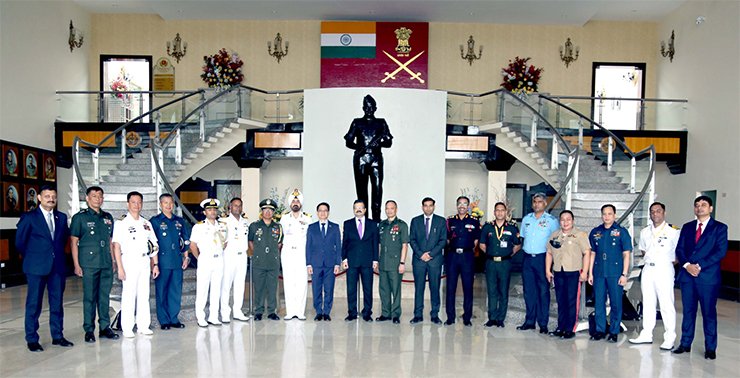
HADR Operations in the Indian Ocean: India’s rapid response to natural disasters has enhanced its regional reputation.
Joint Exercises with Major Powers: Exercises with global partners demonstrate India’s growing strategic relevance.
Capacity Building in Neighbouring Countries: Training programmes have strengthened regional partnerships.
As an emerging major power, India stands at a strategic ‘inflection point’ where proactive military diplomacy must be institutionalised as a ‘sine qua non’ within its doctrinal framework. While scrutinising the concept, inevitability and broad architecture of proactive military diplomacy, institutional mechanisms, doctrinal tenets, and policy imperatives the country is required to align military diplomacy with national strategic objectives
Future Trajectory
The future of military diplomacy will be shaped by:
- Technological advancements
- Multipolar geopolitics
- Emerging security domains
India must adapt its doctrinal approach to remain relevant and effective.
Takeaways
India stands at a critical moment in its strategic evolution. As the global order becomes increasingly complex and competitive, the ability to shape outcomes without resorting to conflict will define national success. Proactive military diplomacy offers India a powerful instrument to achieve this objective. However, without a coherent doctrinal framework, institutional integration, and strategic clarity, India risks underutilising its military potential in the diplomatic domain. The transition from reactive engagement to proactive strategy is not merely desirable—it is imperative.
As an emerging major power, India stands at a strategic ‘inflection point’ where proactive military diplomacy must be institutionalised as a ‘sine qua non’ within its doctrinal framework. While scrutinising the concept, inevitability and broad architecture of proactive military diplomacy, institutional mechanisms, doctrinal tenets, and policy imperatives the country is required to align military diplomacy with national strategic objectives. By institutionalising military diplomacy within its doctrinal architecture, India can enhance its strategic influence, strengthen partnerships, and secure its national interests in an increasingly uncertain world.
Lt Gen S K Gadeock is a distinguished military leader, global strategist, and scholar who served as the Commandant of the Defence Services Staff College. A decorated veteran and former Logistics Advisor to the Botswana Defence Force, he has held numerous high-ranking appointments including Director General of the Amity Institute of Defence & Strategic Studies. Serving on the Advisory Board of Raksha Anirveda, he is a prolific writer and motivational speaker.





