


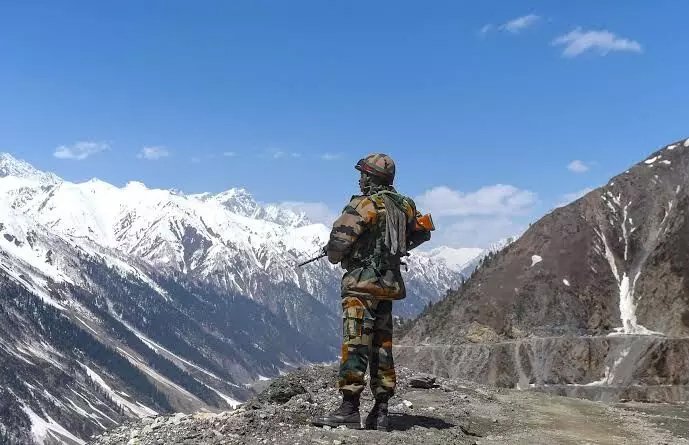
New Delhi: The Indian Army has successfully resumed patrolling in the Depsang area of eastern Ladakh, marking a significant development in the ongoing efforts to ease tensions along the Line of Actual Control (LAC) with China. This patrol, conducted on November 4, 2024, is the first full-fledged operation in Depsang since the military standoff began in May 2020.
The resumption of patrols follows a consensus reached between India and China regarding disengagement in both Depsang and Demchok, two critical friction points that have been contentious since the beginning of the standoff. The agreement was formalised on October 21, 2024, allowing both nations to restore their military presence to pre-April 2020 conditions. This was a crucial step after years of negotiations aimed at reducing border tensions and restoring peace along the LAC.

The Indian Army’s patrol involved approximately 15 soldiers who accessed one of the designated patrolling points (PP) in Depsang. While specific details about which point was accessed were initially vague, later reports confirmed that Patrolling Point 10 was included in this operation. The patrol was conducted with prior notification to the People’s Liberation Army (PLA), adhering to the agreed-upon protocols to prevent any potential clashes.
This operation is part of a broader strategy to systematically resume patrols at all five designated points in Depsang, which had been blocked by Chinese forces for nearly five years. The Indian Army aims to ensure that these patrols are conducted smoothly, despite the challenging terrain and impending winter conditions.
The successful conduct of this patrol is viewed as a positive step toward maintaining peace and stability in the region. It not only signifies a return to normalcy but also reflects ongoing diplomatic efforts between India and China to manage their border disputes amicably. Both sides have reportedly engaged in verification processes using aerial surveillance and ground assessments to confirm compliance with disengagement agreements.
Furthermore, this development comes amid broader diplomatic engagements between Indian Prime Minister Narendra Modi and Chinese President Xi Jinping, where both leaders expressed commitment to resolving outstanding issues along the LAC during their recent meetings.

The Indian Army’s successful patrolling in Depsang represents a critical milestone in de-escalating tensions with China and restoring operational normalcy along one of the most sensitive borders in Asia.

Raksha Anirveda's editorial desk team brings in the collective experience of creative professionals - a fine mix of senior copy editors, writers, proofreaders and designers. Working as a team, they continuously create, manage, and curate content to sustain the magazine's profile and reputation in line with market trends and achieve magazine's goal.






