


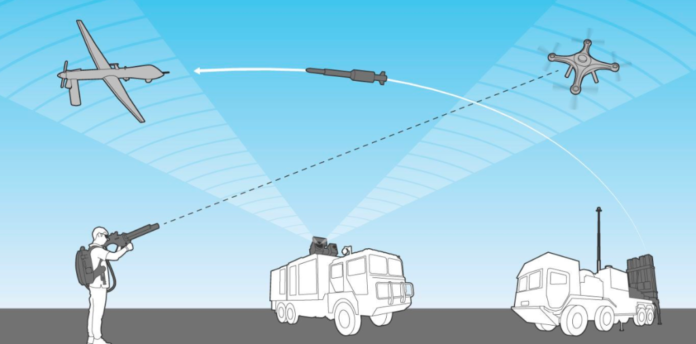
The next attack on an Indian military formation may not begin with an aircraft crossing the border or a conventional missile approaching a defended installation. It could start with a few inexpensive drones. One may be sent to locate a radar, another could observe troop movement, and a third might force an air defence unit to reveal its position or expend an expensive interceptor.
The immediate damage may be limited. The operational consequences need not be.

A commander forced to divert attention, relocate equipment or repeatedly activate defensive systems is already dealing with a problem beyond the physical threat posed by the drone. His ability to maintain operational tempo, protect his formation and make timely decisions is being tested.
This is why India’s first Indian Air Force Dronathon, held at Pokhran from September 14 to 16, 2026, deserves attention. More than 20 defence companies, start-ups, MSMEs, public-sector enterprises and innovators participated. The exercise examined unmanned and counter-unmanned technologies, including surveillance, reconnaissance, autonomous operations, swarm technologies and electronic warfare. The IAF also released its Unmanned Aircraft Systems Roadmap to provide industry with greater clarity on future requirements.
The significance lies not in the number of systems demonstrated. It lies in the opportunity to bring military users and technology developers closer to the operational problem.
More than 20 defence companies, start-ups, MSMEs, public-sector enterprises and innovators participated in Dronathon, held at Pokhran in September. The exercise examined unmanned and counter-unmanned technologies, including surveillance, reconnaissance, autonomous operations, swarm technologies, and electronic warfare
But a demonstration is only a beginning. The real test comes when the equipment has to work under battlefield conditions.

The Drone Has Changed the Economics of Warfare
Recent conflicts have made one point difficult to ignore: an inexpensive unmanned platform can impose a disproportionate burden on a much more expensive military system.
The Russia–Ukraine war has shown how drones are being used for surveillance, target acquisition, artillery correction and direct attack. Developments in West Asia have exposed another dimension. Large numbers of relatively inexpensive aerial threats can force defenders to employ sophisticated detection and interception systems repeatedly.

The attacker does not always need to destroy a target. Sometimes, compelling the defender to reveal a radar location, disrupt an operation or consume limited ammunition is enough to produce an advantage.
India cannot treat this as a distant battlefield lesson. Its security environment includes sensitive military installations, forward logistics areas, airbases and border infrastructure that may be exposed to hostile unmanned systems. Operation Sindoor in May 2025 also brought indigenous unmanned and counter-unmanned capabilities into sharper focus.
The problem is not confined to one type of drone. A small surveillance platform, a loitering munition, a remotely piloted aircraft and a coordinated swarm present different detection and engagement challenges. Some may be disrupted electronically. Others may require kinetic interception. Decoys can complicate identification and force defensive systems to expend resources unnecessarily.
The Russia-Ukraine war has shown how drones are being used for surveillance, target acquisition, artillery correction, and direct attack. Developments in West Asia have exposed another dimension. Large numbers of inexpensive aerial threats can force defenders to employ sophisticated detection and interception systems
There is no single counter-drone weapon that can deal with every threat.
India needs a layered architecture that brings together detection, identification, tracking, electronic attack, kinetic interception and command-and-control systems. These layers must communicate with one another. A sophisticated radar that cannot pass timely information to the appropriate engagement unit is of limited value. Equally, an interceptor is of little use if the threat is detected too late.
The issue, therefore, is not simply acquiring counter-drone equipment. It is making the entire defensive arrangement work as one system.
Pokhran Must Become the Beginning, Not the Finish Line
Dronathon offers a useful model of military–industry engagement. The Services understand the operational problem; industry brings engineering, software, manufacturing and innovation. Bringing the two together early can reduce the distance between what the military needs and what a developer believes it should build.
India’s security environment includes sensitive military installations, forward logistics areas, airbases and border infrastructure that may be exposed to hostile unmanned systems. Operation Sindoor also brought indigenous unmanned and counter-unmanned capabilities into focus
That relationship needs continuity.
A prototype may perform well in a controlled demonstration. The same system may struggle in extreme heat, dust, electromagnetic interference or terrain that affects communications. Software updates may introduce new vulnerabilities. A sensor may identify a target correctly during a trial but generate too many false alarms in a crowded operational environment.
These are not minor technical details. They determine whether a system can be trusted.
Military users should therefore participate from the earliest stages of development. They must help define the operational requirement, identify realistic performance parameters and assess how the proposed system will work alongside existing equipment.
Industry must also understand the military’s requirements beyond the demonstration stage. Reliability, maintainability, cyber security, supply-chain assurance, software support and the availability of spares are part of operational capability.
The IAF’s subsequent industry outreach on October 21, 2026, building on its UAS Roadmap, is a useful continuation of the Pokhran initiative. The important question now is whether such engagement can develop into a regular process of experimentation, evaluation and induction.
India should consider permanent counter-UAS experimentation arrangements involving the Services, research institutions, testing agencies and industry. These should not become another exhibition circuit. Their purpose should be to test, identify weaknesses, modify equipment and test again.
A system that fails during evaluation should still contribute to institutional learning. Failure becomes wasteful only when the reasons are not recorded or acted upon.
Dronathon offers a model of military-industry engagement. The military understands the operational problem; industry brings engineering, software, manufacturing, and innovation. Bringing the two together early can reduce the gap between the military’s needs and a developer’s belief
The Economics of Interception
Consider a simple situation. An inexpensive hostile drone approaches a defended installation. The defender destroys it with a costly missile. The immediate threat is eliminated, but the attacker may have gained an economic advantage.
Repeat that exchange over several days and the defender faces a different problem: ammunition expenditure, replacement stocks, supply-chain pressure and the need to maintain readiness for more serious threats.
This does not make advanced interceptors unnecessary. They remain essential against threats that justify their use. It does, however, make the choice of response important.
A counter-drone architecture should provide commanders with a range of options. Electronic countermeasures, suitable guns, missiles, passive protection and conventional air defence systems must complement one another. The engagement decision should reflect the nature of the threat; the asset being protected and the consequences of allowing the drone to reach its target.
The objective is not to destroy every unidentified object with the most expensive weapon available. It is to defeat hostile activity at an acceptable operational cost.
That requires accurate threat classification and a common operating picture. It also requires trained personnel who understand when to disrupt, when to engage and when another defensive measure is more appropriate.
This is where the counter-drone problem moves beyond technology. It becomes a command-and-control challenge.
A counter-drone architecture should provide commanders with a range of options. Electronic countermeasures, suitable guns, missiles, passive protection and conventional air defence systems must complement one another
Who Owns the Counter-drone Battle?
The question deserves a direct answer. Is counter-drone warfare the responsibility of the Army, Air Force, Navy or a joint organisation?
A rigid division will not work. Each Service has distinct operational requirements, but the threat crosses organisational boundaries. A drone may approach an airbase, a forward formation, a naval installation or critical infrastructure. The sensors, communications and procedures protecting these assets cannot operate as disconnected arrangements.
India’s evolving joint-war-fighting framework must take this into account.
There is a case for common standards, interoperable equipment, shared threat information and clearly defined engagement procedures. At the same time, a forward commander cannot always wait for a distant headquarters to authorise every defensive action. Operational authority must be clearly delegated within an integrated air-defence framework.
Counter-UAS capability should be treated as an integral part of force protection and air defence, not as a specialist addition purchased after a new threat emerges.
The way India measures performance must also change. The number of drones destroyed during an exercise is an incomplete indicator. Can the system distinguish hostile activity from legitimate civilian or friendly operations? Can it function when communications are degraded? Can personnel repair and maintain it in the field? Does it protect the formation without disrupting its own operations?
These questions are more revealing than the demonstration statistics.
Defence procurement cannot operate without safeguards. Public money, competition, transparency and technical scrutiny matter. But unmanned technology is evolving rapidly. A system that takes years to move from a successful trial to induction may already be behind the threat it was designed to counter
Procurement Must Keep Pace Without Sacrificing Accountability
Defence procurement cannot operate without safeguards. Public money, competition, transparency and technical scrutiny matter. But unmanned technology is evolving rapidly. A system that takes years to move from a successful trial to induction may already be behind the threat it was designed to counter.
The answer is not to bypass scrutiny. It is to make the process more responsive.
Time-bound evaluation, staged procurement, defined trial conditions and incremental upgrades should be considered wherever operationally appropriate. Smaller initial orders can allow military users to evaluate equipment in service before larger commitments are made.
Multiple suppliers should also be encouraged. Excessive dependence on one vendor can create difficulties when components become unavailable or a new threat demands rapid modification.
For start-ups and MSMEs, predictable demand and access to military testing facilities are important. Defence engineering requires sustained investment. A company cannot retain skilled teams indefinitely on the possibility of a future order.
For start-ups and MSMEs, predictable demand and access to military testing facilities are important. Defence engineering requires sustained investment. A company cannot retain skilled teams indefinitely on the possibility of a future order
But indigenous development must also meet demanding standards. Innovation and domestic manufacture are valuable only when they deliver equipment that works reliably.
The Institutional Test
Every programme needs an identifiable authority, a defined operational requirement, evaluation milestones, integration plans and a mechanism to incorporate feedback from field use. Responsibilities relating to intellectual property, software updates, data security and vendor support must be settled before induction, not after a problem arises.
India has an opportunity to build a more responsive counter-drone ecosystem. Dronathon provides a starting point. The IAF’s roadmap offers industry a direction. The next phase must demonstrate that the Services can turn these initiatives into dependable equipment, integrated procedures and trained personnel.
The drone has changed the economics of warfare. It is also forcing militaries to reconsider force protection, training, procurement and the organisation of combat power.
Dronathon will have served its purpose when an Indian commander can rely on the systems developed through this process to protect his formation under operational pressure.

The writer is an Independent Director, Strategic Governance commentator, and leadership practitioner. He writes on geopolitics, corporate governance, sustainability, and the intersection of national strategy, boardroom leadership, and sports, bridging the battlefield, the boardroom, and the sports fields. He can be contacted on: 5cg9220rg@gmail.com. The views expressed are personal and do not necessarily carry the views of Raksha Anirveda






