


The operational landscape confronting modern armed forces is characterised by rapidly evolving threats, dispersed areas of operation, and a continuous requirement for persistent situational awareness. In response, military forces are placing growing emphasis on manned–unmanned teaming (MUM‑T) – the coordination of crewed helicopters and unmanned aerial systems (UAS) to enhance intelligence, surveillance, and reconnaissance (ISR) capabilities.
Context and rationale
Helicopters retain a central role in ISR by virtue of their agility, flexibility, and speed of deployment. However, endurance limitations, crew fatigue and exposure to elevated threat levels are significant factors that should also be considered.

By contrast, unmanned platforms can carry out reconnaissance missions in high-risk areas without endangering personnel and can be launched from ships, forward operating bases, or mobile platforms. Integration of both manned and unmanned platforms leverages the strengths of each, resulting in an operational effect, greater than the sum of their individual capabilities.
The operational landscape confronting modern armed forces is characterised by rapidly evolving threats, dispersed areas of operation, and a continuous requirement for persistent situational awareness. In response, military forces are placing growing emphasis on manned–unmanned teaming (MUM‑T) – the coordination of crewed helicopters and unmanned aerial systems (UAS) to enhance intelligence, surveillance, and reconnaissance (ISR) capabilities
The three‑phase operational model
MUM‑T can bring tactical value in the field across three principal phases:
Pre‑mission reconnaissance
UAS assets can be deployed ahead of crewed flights to survey terrain, map the operational area and identify potential threats. The resulting intelligence reduces uncertainty and improves mission safety for aircrews.
In-mission collaboration
During the live phase of operations, helicopter crews can control UAS directly from the cockpit, receiving real‑time video, imagery, and telemetry data feeds. This extends the helicopter’s situational reach and allows it to maintain a safe standoff from hostile areas.

Post-mission exploitation
Intelligence collected by unmanned platforms can support after‑action reviews, inform future mission planning, and reinforce a continuous feedback cycle in tactical development and training.
Unmanned platforms can carry out reconnaissance missions in high-risk areas without endangering personnel and can be launched from ships, forward operating bases, or mobile platforms. Integration of both manned and unmanned platforms leverages the strengths of each, resulting in an operational effect, greater than the sum of their individual capabilities
Technological enablers
Effective manned–unmanned integration rests on several technological pillars:

- Interoperability standards such as NATO STANAG, enabling secure and reliable data exchange between manned and unmanned platforms.
- Lightweight, high‑performance payloads — EO/IR sensors, communications relays, and precision navigation systems are now readily available on sub‑25 kg airframes.
- Secure, low‑latency communications to preserve command and control integrity in contested, and often GNSS-denied conditions.
- Onboard autonomy and collision‑avoidance protocols to ensure safe joint operations without overburdening the manned helicopter crew.
Platforms currently in service
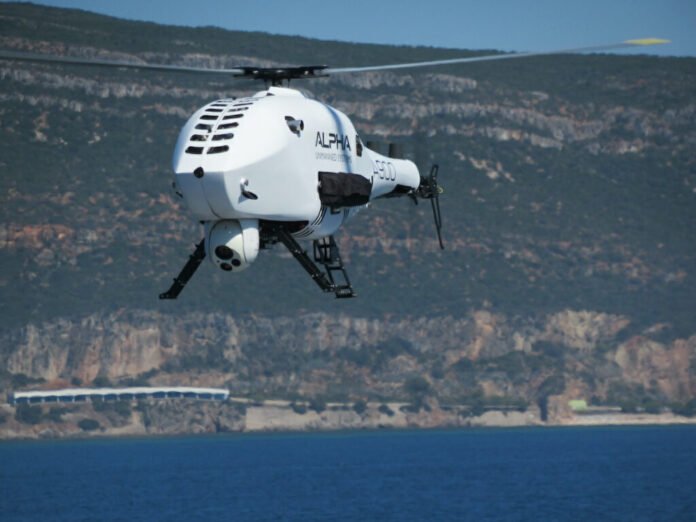
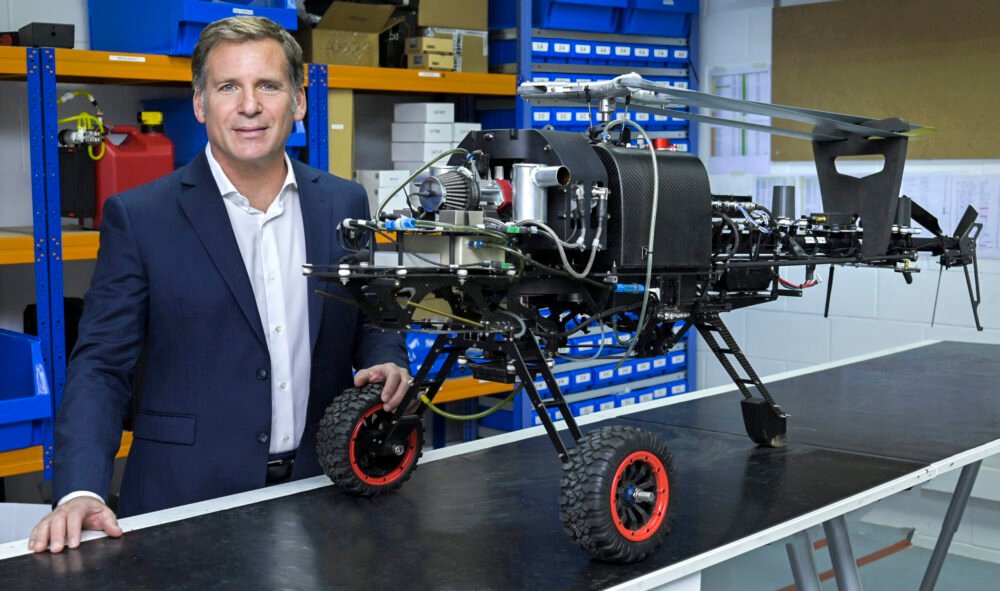
Operational MUM‑T deployments use a mix of modified civilian‑derived UAVs and systems designed specifically for military applications. An example of the latter is the Alpha A900, which exemplifies the trend towards purpose‑built, rotary‑wing platforms in the sub‑25 kg category that conform to NATO STANAG 4738 requirements. It offers multi‑hour endurance, secure network integration and payload flexibility for both land and maritime ISR roles. The A900, deployed in more than 12 countries, illustrates how compact unmanned platforms are now delivering capabilities once associated only with larger and more resource‑intensive UAVs.
Further advances in AI‑driven mission management, sophisticated onboard sensors and resilient data architectures are likely to accelerate the normalisation of MUM‑T for tactical ISR. Increasingly, the concept is moving from experimental utility to a standard operational option — with platforms such as the Alpha A900 demonstrating the performance levels that are now achievable in compact UAV airframes
Risk management and operational continuity
An important operational advantage of MUM‑T lies in its capacity to sustain ISR presence during helicopter downtime. While a crewed platform refuels, redeploys, or supports another task, the unmanned component maintains surveillance. This uninterrupted coverage is particularly valuable for extended reconnaissance missions, coastal or border patrols, and convoy escort in areas of elevated threat.
Resource efficiency
By extending mission endurance and distributing tasks between manned and unmanned elements, MUM‑T can reduce reliance on multiple crewed sorties while maintaining operational reach. This optimises the employment of scarce rotary assets, especially in intensive or resource‑constrained theatres.
Looking ahead
Further advances in AI‑driven mission management, sophisticated onboard sensors and resilient data architectures are likely to accelerate the normalisation of MUM‑T for tactical ISR. Increasingly, the concept is moving from experimental utility to a standard operational option — with platforms such as the Alpha A900 demonstrating the performance levels that are now achievable in compact UAV airframes.

The writer is Founder and CEO of Alpha Unmanned Systems





