

Every few years, a fresh estimate of India’s nuclear arsenal emerges, and the debate follows a familiar pattern. Commentators compare stockpiles, television studios display graphics, and analysts begin calculating who has more warheads than whom.
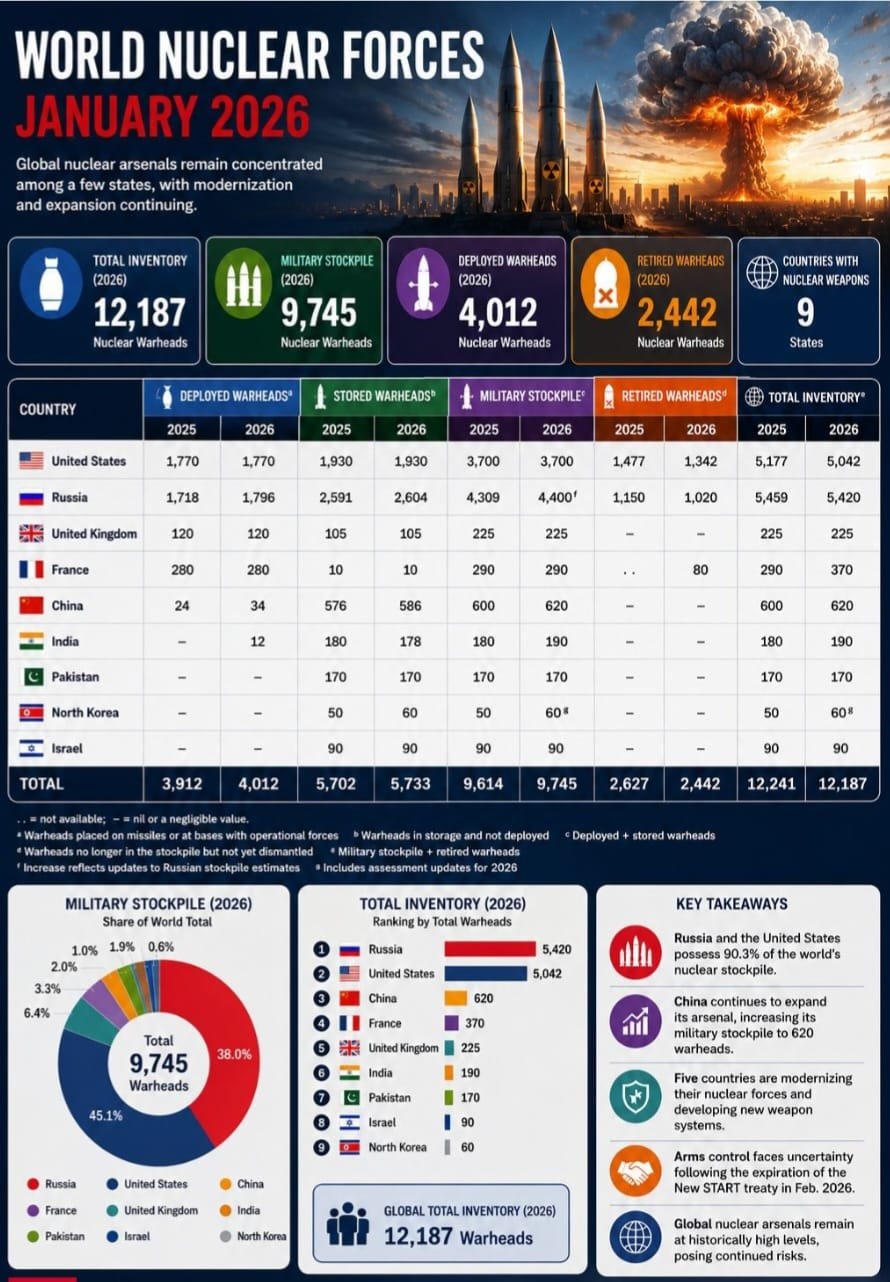
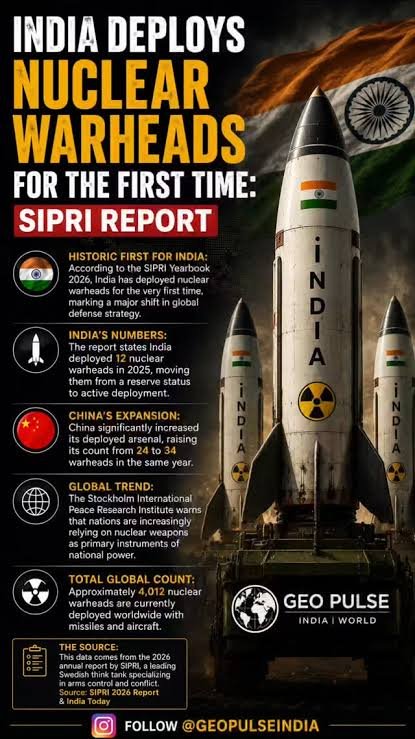
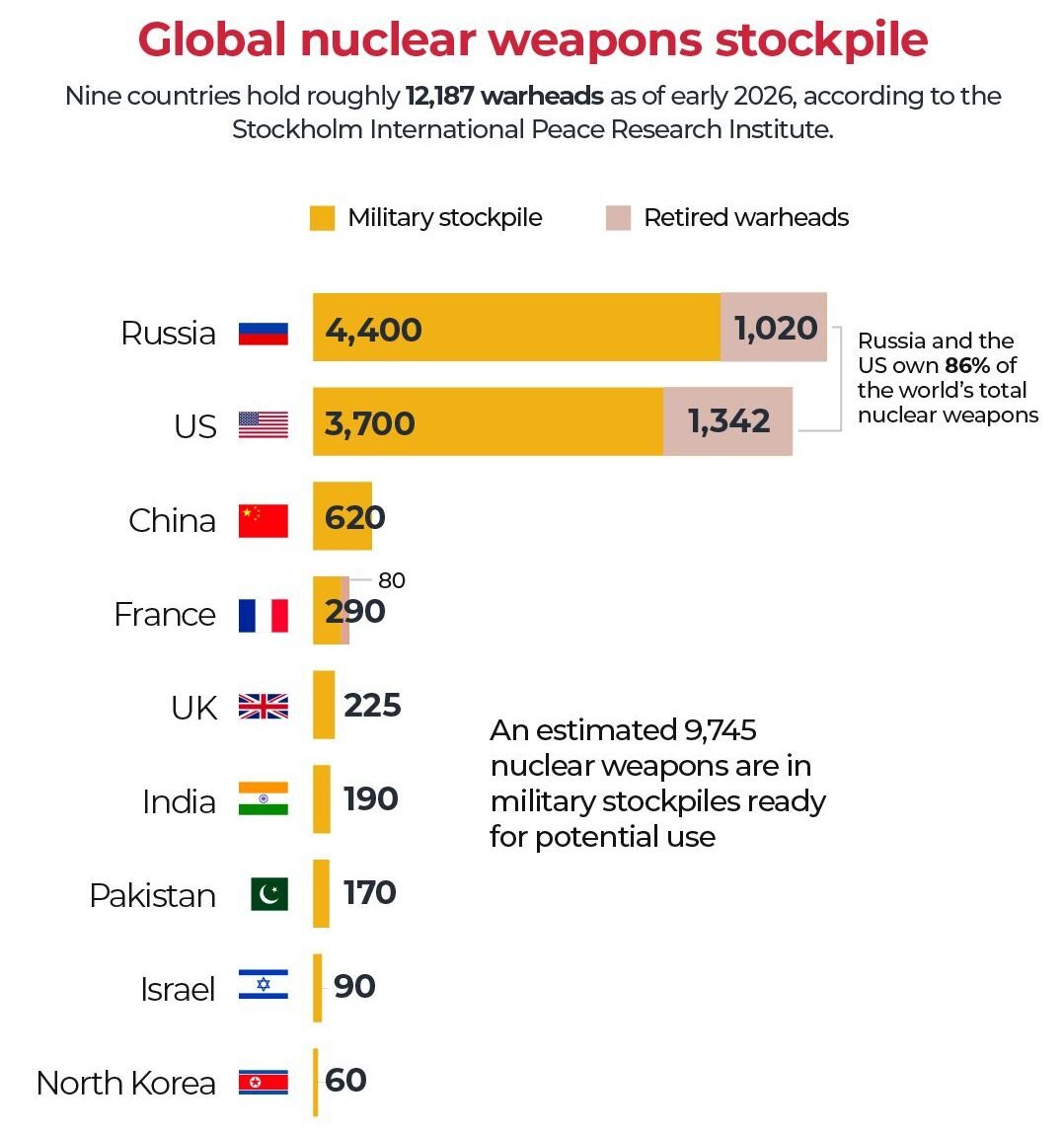
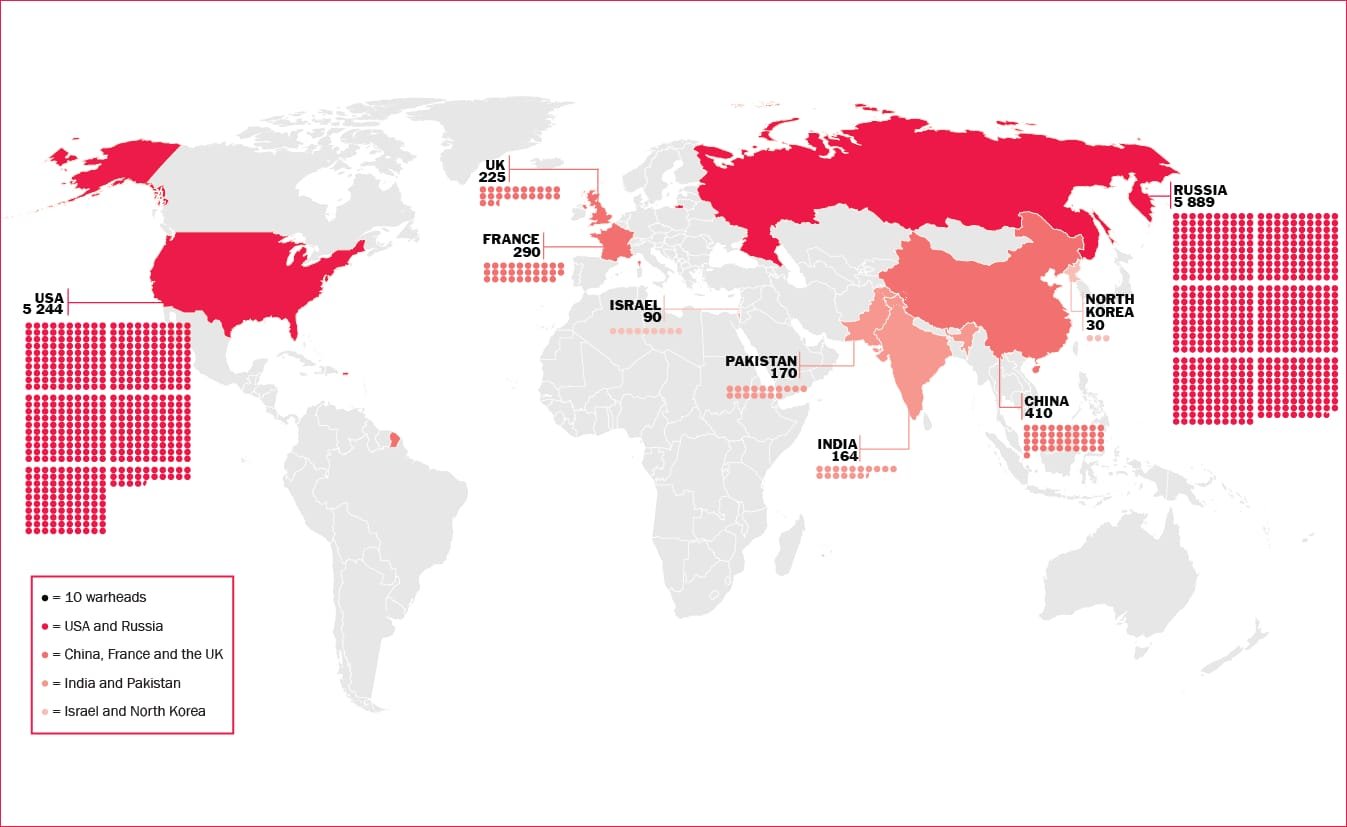
The latest estimate, placing India’s arsenal at around 190 warheads, with a few deployed in a peacetime environment for rapid assured second-strike capability, has triggered the same reaction.

Yet, the obsession with numbers risks obscuring the larger story. The more important question is not whether India possesses 180, 190 or 200 warheads. It is why New Delhi appears increasingly focused on ensuring that its deterrent remains credible in a strategic environment that has become markedly more dangerous than the one that shaped India’s nuclear doctrine a generation ago.
The obsession with numbers risks obscuring the larger story. It is why New Delhi appears increasingly focused on ensuring that its deterrent remains credible in a strategic environment that has become markedly more dangerous than the one that shaped India’s nuclear doctrine a generation ago
For most of the period following Pokhran II, India’s nuclear policy stood out for its restraint. While several nuclear powers pursued security through accumulation, India chose a different course.
It sought neither numerical parity nor prestige through stockpiles. Instead, it embraced the principles of credible minimum deterrence, no first use, assured massive retaliation, and civil-political control, maintaining only those capabilities necessary to convince potential adversaries that any nuclear aggression would invite consequences severe enough to outweigh any conceivable gain.

That philosophy remains intact. What has changed is the strategic environment surrounding India.
When India’s nuclear doctrine was formulated, China had not yet emerged as the dominant military power it is today. The Indo-Pacific was not the principal theatre of geopolitical competition.

Cyber warfare, artificial intelligence and space-based military capabilities had not assumed the central role they occupy in contemporary strategic planning. The assumptions that underpinned deterrence in the late 1990s belonged to a different era.
Today’s reality is considerably harsher. Across the Himalayas stands a China that has spent two decades transforming every dimension of national power.
India never sought neither numerical parity nor prestige through stockpiles. Instead, it embraced the principles of credible minimum deterrence, no first use, assured massive retaliation, and civil-political control, maintaining only those capabilities necessary to convince potential adversaries that any nuclear aggression would invite consequences severe enough to outweigh any conceivable gain
Its military modernisation extends well beyond larger missile inventories or a growing nuclear arsenal. Beijing has steadily integrated conventional, nuclear, cyber, space and surveillance capabilities into a far more sophisticated strategic architecture.
 The challenge for India is therefore not simply the number of Chinese warheads but the growing range of options available to Chinese decision-makers during a crisis.
For New Delhi, allowing doubts to emerge about the credibility of its deterrent would create precisely the kind of strategic uncertainty that can encourage risk-taking by adversaries.
This explains why reports suggesting that a limited number of Indian warheads may now be deployed during peacetime deserve careful attention. Such reports should not be interpreted as evidence of a more aggressive nuclear posture.
Rather, they reflect a recognition that deterrence derives its strength not from weapons sitting in storage facilities but from an adversary’s confidence that retaliation is certain under all circumstances. Once that confidence weakens, deterrence itself begins to erode.
India’s challenge is particularly complex because it must simultaneously deter two nuclear-armed adversaries, each posing distinct strategic problems.
China is a larger, increasingly capable peer competitor. Pakistan continues to use nuclear signalling as a shield to pursue destabilising policies and asymmetric strategies. Both have a collusive focus on stymying India’s rise. Few countries face such challenges at the same time.
There is also a broader reality that cannot be ignored. India today occupies a very different position in the international system than it did in 1998. It is among the world’s largest economies, an increasingly influential technology power and a pivotal actor in the Indo-Pacific
Viewed through that lens, greater emphasis on survivability and readiness appears less like escalation and more like prudent adaptation.
 This is particularly evident in the gradual maturation of India’s sea-based deterrent. Public debate often gravitates towards fighter aircraft acquisitions, missile tests or defence budgets, while the significance of ballistic missile submarines receives comparatively little attention.
Yet, the sea-based leg of the nuclear triad may ultimately prove the most consequential component of India’s deterrent architecture.
There is also a broader reality that cannot be ignored. India today occupies a very different position in the international system than it did in 1998. It is among the world’s largest economies, an increasingly influential technology power and a pivotal actor in the Indo-Pacific.
As national interests expand, so too does the responsibility to protect them. History repeatedly demonstrates that diplomatic influence and economic weight are most effective when supported by credible national power.
The wider international environment only reinforces this conclusion. Wars in Europe and the Middle East, sharpening competition among major powers and the gradual erosion of long-standing arms-control arrangements all point towards a world becoming more contested rather than less.
The significance of a limited peacetime deployment also lies elsewhere. It reflects a maturing nuclear triad, growing confidence in command-and-control systems, and a stronger emphasis on readiness to ensure an assured second-strike capability
The expectation that economic interdependence alone would guarantee stability has given way to a renewed appreciation of deterrence, preparedness and military capability.
 None of this suggests that India is abandoning the restraint that has long characterised its nuclear policy. There has been no rush towards Cold War-style arsenals, no embrace of nuclear excess and no indication that New Delhi seeks strategic dominance.
What is visible instead is a measured effort to ensure that deterrence keeps pace with a changing reality. That distinction matters because credible deterrence and strategic stability are not opposing concepts. More often than not, they are mutually reinforcing.
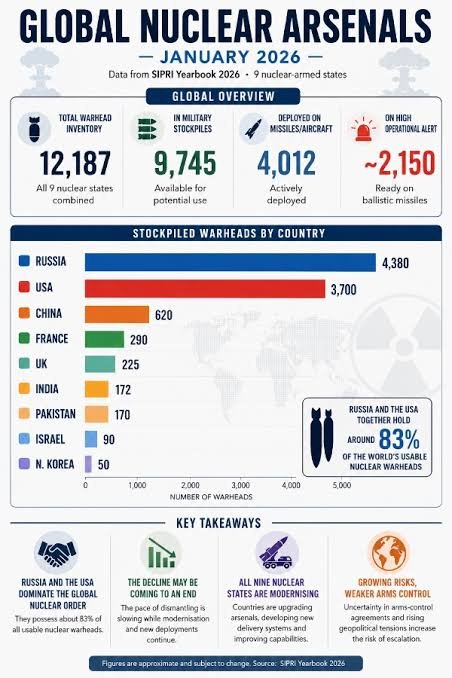 History has repeatedly shown that uncertainty invites miscalculation, whereas a credible deterrent reduces the temptation to test limits. Seen in that light, the significance of India’s expanding arsenal lies not in the number 190. The more important message is that India has recognised the world for what it has become: more competitive, more dangerous and less predictable than many anticipated.
The significance of a limited peacetime deployment also lies elsewhere. It reflects a maturing nuclear triad, growing confidence in command-and-control systems, and a stronger emphasis on readiness to ensure an assured second-strike capability.
Above all, it signals that India’s deterrent is becoming more survivable, more responsive, and therefore more credible. This is not a new global phenomenon. Several nations, including the USA, Russia, China, North Korea, and many others, have enhanced their peacetime readiness since the advent of nuclear weapons.
The message is measured but unmistakable. India’s tradition of strategic restraint remains firmly intact. What has disappeared is any willingness to confuse restraint with complacency.

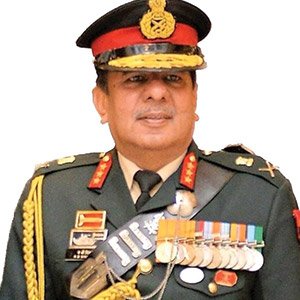
The writer, a PVSM, AVSM, VSM has had an illustrious career spanning nearly four decades. A distinguished Armoured Corps officer, he has served in various prestigious staff and command appointments including Commander Independent Armoured Brigade, ADG PP, GOC Armoured Division and GOC Strike 1. The officer retired as DG Mechanised Forces in December 2017 during which he was the architect to initiate process for reintroduction of Light Tank and Chairman on the study on C5ISR for Indian Army. Subsequently he was Consultant MoD/OFB from 2018 to 2020. He is also a reputed defence analyst, a motivational speaker and prolific writer on matters of military, defence technology and national security. The views expressed are personal and do not necessarily carry the views of Raksha Anirveda





