


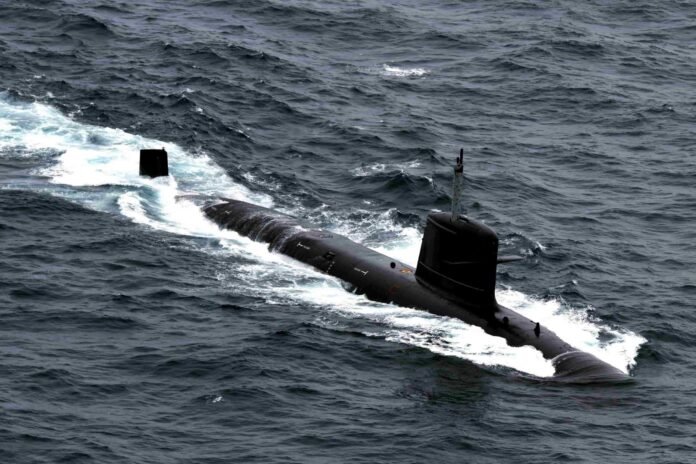
India has begun the second “Setting to Work” phase for the energy module of its home-grown air-independent propulsion system, a milestone in efforts to extend the underwater endurance of conventional submarines. The activity was inaugurated on October 24 at Larsen & Toubro’s AM Naik Heavy Engineering Complex in Hazira, Gujarat, according to the Defence Ministry.
The system is being developed by the Naval Materials Research Laboratory, part of the Defence Research and Development Organisation, with industry partners including L&T. In the next stage, the module is to be energised to generate power and put through rigorous testing under Indian Navy protocols. If it clears those evaluations, it is due to be handed to Mazagon Dock Shipbuilders Limited for integration into a Kalvari-class submarine, with the stated target of early 2027.

The milestone marks progress, not completion. The module still has to demonstrate reliable power production and meet demanding safety and performance requirements before it can be installed and accepted for service. Defence Secretary Rajesh Kumar Singh, who also holds additional charge as DRDO chairman, stressed that the programme must stay aligned with Navy induction timelines while maintaining strict safety practices for hydrogen and fuel-cell equipment. Vice Admiral B Sivakumar, the Navy’s Chief of Materiel, and DRDO Director General R Balamuralikrishnan attended the Hazira event.
AIP systems allow diesel-electric submarines to generate power underwater without relying on atmospheric oxygen. Conventional boats use diesel engines to recharge their batteries, but those engines need air; the submarine must therefore surface or use a snorkel periodically. An AIP unit supplements battery power and can reduce the need to do so, helping a submarine remain submerged longer. It does not make a conventional submarine equivalent to a nuclear-powered boat, nor does it remove all operational limits.
India’s system uses fuel-cell technology, with hydrogen generated onboard-an approach the Defence Ministry identified as a distinctive feature when a land-based prototype passed user-specific endurance and maximum-power tests in March 2021. DRDO then said that the technology had been developed with support from L&T and Thermax and had reached maturity for fitment into target vessels. The current phase is a further step toward that fitment, rather than evidence that the system is already operational at sea.
The integration work also involves the Kalvari boats’ original design. In January 2023, Naval Group said it had agreed to cooperate with DRDO on detailed design and certification for installing the indigenous system in the Scorpène-derived class. That arrangement separates two related tasks: Indian organisations developed the propulsion technology, while the French submarine designer’s expertise supports its safe integration into the platform.

The Kalvari-class fleet comprises six submarines built at Mazagon Dock under Project 75, based on the Scorpène design. Fitting AIP requires more than delivering an energy module: the submarine must accommodate the system, complete integration and safety checks, and undergo trials. In 2023 that the plan was to install AIP during scheduled refits, which could mean a phased upgrade rather than an immediate fleet-wide change.
That makes the early-2027 target significant, but it remains a schedule, not a confirmed commissioning date. The next test results will indicate whether the energy module is ready to move from shore-based trials toward submarine integration. For India, successful qualification would be a practical demonstration of domestic defence research and industrial cooperation; the system’s operational value will ultimately depend on safe integration, reliable performance and the Navy’s evaluation at sea.







