


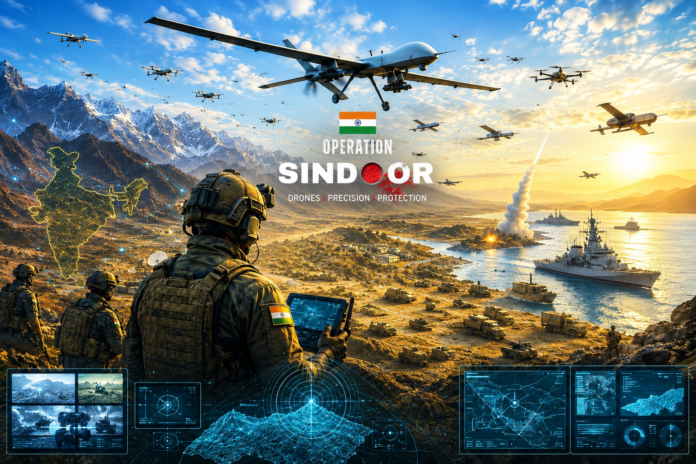
The Drone Revolution: Nagorno-Karabakh to Op Sindoor: In 2020, the world witnessed a war between Azerbaijan and Armenia, which marked a turning point in military history. Azerbaijan’s extensive use of Turkish Bayraktar TB2 drones and Israeli loitering munitions systematically destroyed Armenian tanks, artillery, radar systems, and logistics infrastructure, exposing the vulnerability of traditional battlefield formations against low-cost unmanned systems.
If Nagorno-Karabakh announced the arrival of drone warfare, the Russia-Ukraine conflict institutionalised it as the defining face of modern warfare. FPV suicide drones, swarm attacks, maritime drones, and AI-assisted targeting transformed warfare into a transparent and highly attritional battlefield where concealment became increasingly difficult. Simultaneously, conflicts involving Iran, Israel, and regional proxy militia groups demonstrated how drones could become tools of asymmetric warfare and strategic coercion. These wars collectively proved that future military superiority will depend not only on expensive platforms like tanks and fighter aircraft, but increasingly on the ability to mass-produce intelligent, expendable, and networked unmanned systems, rapidly and at scale.

India’s understanding of drone warfare has undergone a dramatic transformation in recent years, particularly after Operation Sindoor demonstrated that drones are no longer auxiliary support systems but decisive battlefield assets.
India’s Drone Awakening and the Future Battlefield
Modern drone warfare now encompasses an entire ecosystem of technologies, including ISR platforms for surveillance and reconnaissance, FPV attack drones for precision strikes, loitering munitions capable of autonomous targeting, swarm drones designed to overwhelm defences, and AI-enabled systems integrated with electronic warfare networks.
For India, this evolution carries immense strategic significance. Facing persistent border tensions, hybrid warfare threats, infiltration challenges, and rapidly evolving battlefield technologies, India can no longer rely solely upon conventional military structures designed around tanks, artillery, and fighter aircraft. Instead, future warfare will increasingly depend on interconnected networks that combine drones, satellites, artificial intelligence, sensors, cyber capabilities, and electronic warfare into a single integrated combat architecture. India has, therefore, begun moving towards drone-equipped formations, indigenous unmanned systems, and enhanced surveillance capabilities across critical sectors. However, the real challenge lies not merely in acquiring drones but in building a comprehensive unmanned warfare ecosystem encompassing doctrine, manufacturing, command integration, electronic resilience, and rapid innovation that can continuously adapt to future battlefield realities.
India’s strategic objective is clear: reducing dependence on foreign drone ecosystems and achieving self-reliance in unmanned warfare capability. Yet, a major challenge remains. India still imports many critical components, including semiconductors, sensors, batteries, thermal imaging systems, and advanced communication modules
India’s Drone Manufacturing Revolution
One of the most important strategic shifts underway in India today is the transition from a state-dominated defence production model towards a faster and innovation-driven drone ecosystem led increasingly by the private sector. Traditional ordnance factories and Defence Public Sector Undertakings (DPSUs) were designed for conventional industrial-age warfare. Their production cycles suited tanks, artillery guns, and ammunition systems developed over decades. Drone warfare, however, evolves at an extraordinary speed. Software, navigation systems, communication links, sensors, and battlefield applications can become outdated within months.

The government’s ‘Make in India’ approach for drones increasingly relies upon a Public-Private Partnership model. DPSUs such as BEL and HAL continue to play important roles in radar integration, electronic warfare systems, and larger unmanned platforms. However, the rapid manufacturing of FPV drones, loitering munitions, ISR systems, and swarm technologies is increasingly shifting towards start-ups, MSMEs, and private defence firms.
Companies such as ideaForge, Garuda Aerospace, Raphe mPhibr, NewSpace Research and Technologies and Adani Defence & Aerospace are emerging as major contributors to India’s unmanned ecosystem. Government policies have also accelerated this shift:

- Restrictions on drone imports.
- Production Linked Incentive (PLI) schemes.
- The iDEX initiative.
- Fast-track procurement after Operation Sindoor.
- Expanded support for defence startups.
India’s strategic objective is clear: reducing dependence on foreign drone ecosystems and achieving self-reliance in unmanned warfare capability. Yet, a major challenge remains. India still imports many critical components, including semiconductors, sensors, batteries, thermal imaging systems, and advanced communication modules. True strategic autonomy in drone warfare will remain incomplete without indigenous electronics manufacturing.
The future of military power may ultimately depend not on possessing a few sophisticated platforms, but on the ability to rapidly mass-produce thousands of intelligent, expendable systems during wartime
The future of military power may ultimately depend not on possessing a few sophisticated platforms, but on the ability to rapidly mass-produce thousands of intelligent, expendable systems during wartime.
Why India Needs a National Military Drone Doctrine
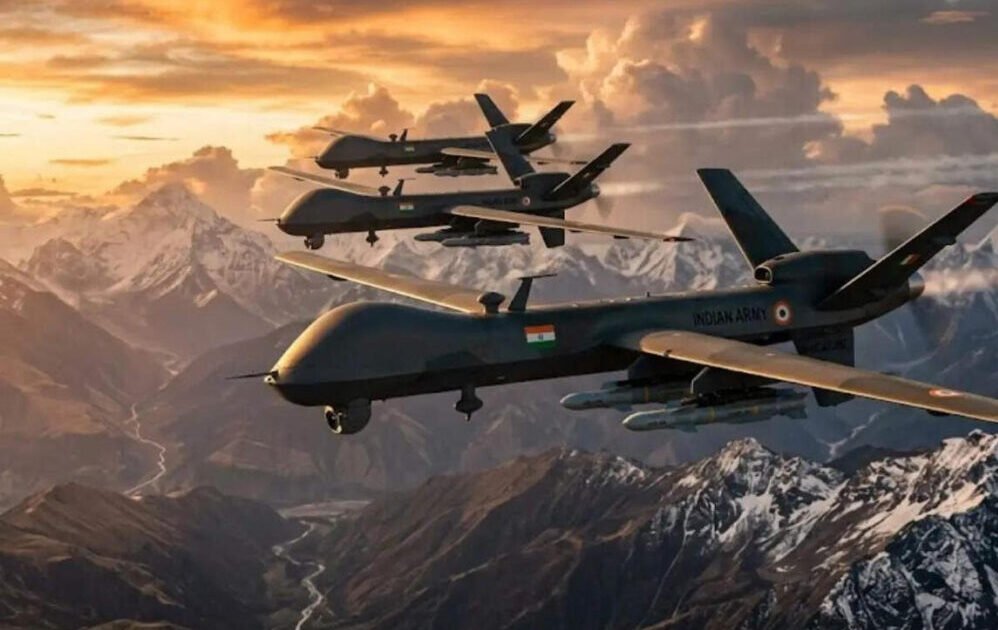
India’s drone capability today remains fragmented across different services and agencies. While individual procurements are increasing, there is still no fully integrated national doctrine defining how drones should shape future warfare. This gap is increasingly dangerous.
Drones cannot remain auxiliary tools attached to conventional forces. They must become integral components of operational planning, battlefield management, intelligence gathering, logistics, and deterrence strategy. Therefore, India requires a comprehensive National Military Drone Doctrine.
Dedicated Drone Command. India requires a tri-service Drone Command integrated into the evolving theatre command structure. Drone warfare today cuts across land, air, maritime, cyber, space, and electronic warfare domains, making fragmented control increasingly inefficient. Such a command would help unify doctrine, procurement, operational planning, AI integration, electronic warfare capability, and counter-drone architecture under one coordinated framework.
However, drones must not remain confined to a centralised structure alone. Future warfare will demand organic drone capability embedded directly with infantry, artillery, armour, special forces, naval units, and air defence formations. In many ways, unmanned systems are becoming as essential to modern warfare as artillery and armour were in the twentieth century.
India requires a tri-service Drone Command integrated into the evolving theatre command structure. Drone warfare today cuts across land, air, maritime, cyber, space, and electronic warfare domains. The command must bring doctrine, procurement, operational planning, AI integration and counter-drone architecture under a coordinated framework
In future wars, drones may become as integral to military formations as artillery and armour are today; the question is no longer whether militaries need a drone command, but how rapidly they can integrate unmanned warfare into every level of combat.
Organic Drone Units. Every infantry battalion deployed in sensitive sectors should possess dedicated drone platoons for:
- Reconnaissance.
- Surveillance.
- Targeting.
- FPV strike missions.
At higher formations such as corps headquarters, India may eventually require specialised unmanned warfare brigades equipped with swarm drones, loitering munitions, and electronic warfare capabilities.
Integrated Counter-Drone Architecture. Future wars will involve large-scale drone attacks against military and civilian infrastructure. India, therefore, requires a layered national counter-drone shield combining:
- Radar systems.
- Jamming technologies.
- Directed-energy weapons.
- AI-assisted tracking.
- Interceptor drones.
In future, drones may become as integral to military formations as artillery and armour are today; the question is no longer whether militaries need a drone command, but how rapidly they can integrate unmanned warfare into every level of combat
Air defence doctrine itself must evolve from focusing solely on aircraft and missiles to addressing mass, low-cost aerial threats.
AI and Electronic Warfare Integration. Future drone warfare will increasingly depend upon electronic warfare rather than purely kinetic destruction. Jamming enemy navigation systems, disrupting communication networks, and protecting friendly drones from cyber intrusion will become essential battlefield capabilities. Artificial intelligence will further transform operations through:
- Autonomous target recognition.
- Swarm coordination.
- Predictive battlefield analytics.
- Machine-speed decision-making.
The nation that masters the fusion of AI, drones, and electronic warfare will dominate future battlefields.
India’s Challenges in the Drone Era
Despite rapid progress, India faces several structural challenges in becoming a major drone power.
- Foreign Component Dependence. A large portion of India’s drone electronics ecosystem still relies on imports. Any wartime supply disruption could critically affect production capability.
- Slow Procurement Systems. Traditional defence acquisition systems are often too slow for technologies evolving at battlefield speed. Procurement procedures designed for conventional platforms cannot effectively support rapidly changing drone ecosystems.
- Limited Battlefield Testing. India requires dedicated combat-testing corridors where manufacturers, soldiers, and technologists can continuously refine systems based on operational feedback.
- Electronic Vulnerability. Drones remain vulnerable to jamming, spoofing, and cyber-attacks. Building resilient and encrypted communication systems is therefore strategically essential.
- Ethical and Legal Questions. AI-enabled autonomous weapons raise profound ethical questions regarding accountability and escalation control. Future conflicts may increasingly involve machines making lethal decisions faster than humans can intervene.
India must therefore prepare not only technologically, but institutionally and doctrinally for this new era of warfare.
Drone warfare will depend on electronic warfare rather than purely kinetic destruction. Jamming enemy navigation systems, disrupting communication networks, and protecting friendly drones from cyber intrusion will become essential battlefield capabilities. Artificial intelligence will transform operations
India’s Strategic Opportunity
Despite these challenges, India possesses a historic opportunity to emerge as a global drone manufacturing and innovation hub. The country already enjoys major advantages:
- A strong start-up ecosystem.
- Globally competitive software talent.
- Growing AI capability.
- Expanding electronics manufacturing.
- Vast operational experience across mountains, deserts, jungles, and maritime zones.
If integrated properly, these strengths can position India as a major exporter of affordable military drones to friendly countries across Africa, Southeast Asia, and the Indian Ocean Region. India now needs:
- A National Drone Mission.
- Defence innovation corridors.
- Stronger military–start-up partnerships.
- Semiconductor self-reliance.
- Civil-military integration in robotics and AI.
The twenty-first century may ultimately be remembered as the century in which warfare moved from men and machines to algorithms and autonomous systems — and India must prepare now to lead, not follow, this transformation
Future wars will not merely be fought by industrial giants alone. They will be won by nations capable of combining technological innovation, manufacturing agility, and battlefield adaptation faster than their adversaries.
Preparing for the Unmanned Century
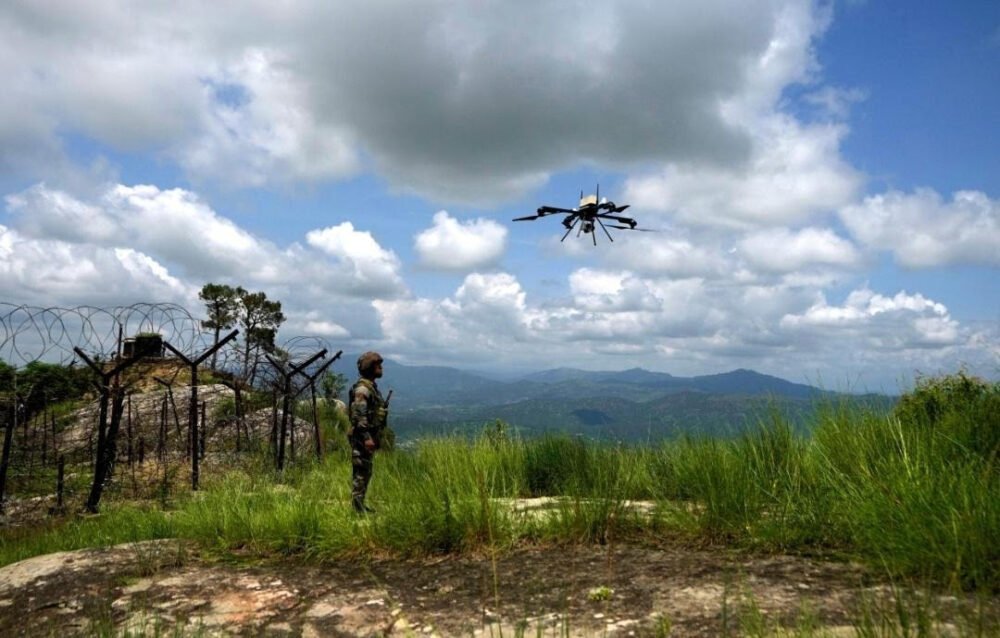
The wars of the future have already begun to reveal themselves — in Nagorno-Karabakh, Ukraine, and the Middle East. These conflicts have demonstrated that drones are no longer supporting technologies; they are becoming the central instruments of surveillance, precision strike, psychological warfare, and strategic deterrence.
For India, the implications are profound. Facing simultaneous continental and hybrid threats, India cannot afford to remain dependent upon outdated doctrines or slow-moving procurement systems. It must rapidly build an integrated unmanned warfare ecosystem combining:
- Indigenous manufacturing.
- Artificial intelligence.
- Electronic warfare.
- Resilient supply chains.
- Unified military doctrine.
The future battlefield will not belong merely to nations possessing large armies or expensive weapon platforms. It will belong to nations capable of innovating continuously, producing intelligent unmanned systems at scale, and adapting faster than their adversaries.
The twenty-first century may ultimately be remembered as the century in which warfare moved from men and machines to algorithms and autonomous systems — and India must prepare now to lead, not follow, this transformation.

Lt Gen Rajeev Chaudhry (Retd) writes on contemporary national and international issues, strategic implications of infrastructure development towards national power, geo-moral dimension of international relations, and leadership nuances in a changing social construct. The views expressed are of the author and do not necessarily reflect the views of Raksha Anirveda





