


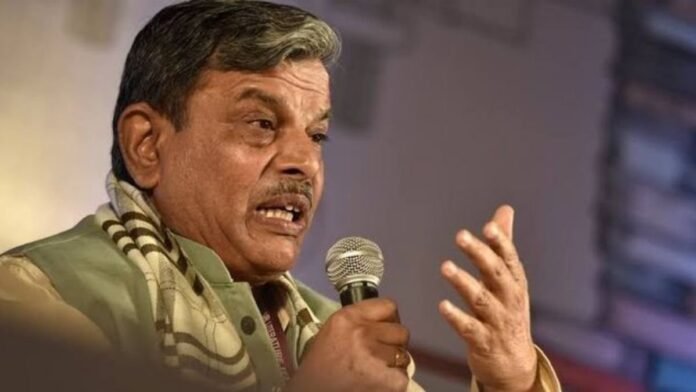
In a recent interview with PTI, RSS General Secretary, Dattatreya Hosabale, mentioned, “If Pakistan is like a pinprick trying to create incidents like Pulwama, etc., we have to answer appropriately according to the situation because the security and self-respect of a country have to be protected, and the government of the day should take note of it and take care of it. But at the same time, we should not close doors. We should always be ready to engage in dialogue.” He was suggesting that India must keep the backchannel dialogue with Pakistan on, while firmly responding to any misadventures.
A couple of days later, former army chief General MM Naravane agreed with Hosabale and mentioned, “The common man has nothing to do with politics. When there is friendship between the two people, there will also be friendship between the two nations.” Kashmir leaders Farooq Abdullah and Mehbooba Mufti also backed the commencement of dialogue. Abdullah said, “It’s the right time for the Government of India to consider this advice.” He has always been an advocate for talks with Pakistan, claiming that terrorism can only end with dialogue.

Pakistan, which was facing an Indian boycott of dialogue, pausing of Operation Sindoor, holding the Indus Water Treaty (IWT) in abeyance, while senior armed forces functionaries continue threatening it with further strikes in case it continued to back terrorism, welcomed the move. Pakistan’s foreign office spokesperson mentioned, “The voices within India calling for dialogue are obviously a positive development.” Pakistan’s political leadership has on numerous occasions suggested dialogue, which has been rejected because “talks and terrorism cannot go together.”
If dialogue is considered, the question is with whom should India talk? All conversations thus far have been with Pakistan’s political authority (India does not engage with the Pakistani army). These are handled solely by the Pakistani army, which refuses to be subservient to the polity. They are only impacted by Indian military strikes, which their narratives may hide, but not reality
Discussions with Pakistan have happened before, including composite dialogue, at multiple levels, at times even resulting in the signing of peace agreements, only to be broken by a terrorist strike or a major incident. Since India began countering Pakistan’s strikes by military action, the gap between terrorist attacks, beyond the Indian threshold of tolerance, has increased. Pakistan army chief’s attempt at one terrorist strike in their tenure, get a boot and subsequently curtail terrorist activities to save face, while continuing their rhetoric.
It is also possible that two nearly similar statements advocating for dialogue from two important personalities are the government testing the waters on what should be its policy towards Pakistan. Within India, those calling for dialogue are accused by opposition politicians of acting under US pressure.
Trust between the two nations is currently at an ebb. Calls for talks were met with anger across social media, with most disagreeing with suggestions for dialogue. Currently, it is Pakistan that is under pressure and may have passed messages on opening dialogue through backchannels, as well as lifting restrictions on the flow of water. Simultaneously, the anti-India rhetoric within Pakistan continues.

Addressing a gathering marking one year of Operation Sindoor (Operation Bunyan-um-Marsoos in Pakistan), Field Marshal Munir mentioned, “Our enemies should know that if any attempt is made in the future to carry out a misadventure against Pakistan, then the impact of war would not be limited, but extremely widespread, dangerous, far-reaching and painful.” He added, “No story of Pakistan is complete without Kashmir.” His nuclear rhetoric has been ignored and will continue to be ignored. Pakistan’s so-called defence minister, in reality only a media spokesperson, Khawaja Asif, continues spewing venom against India.
Pakistan school textbooks from an early age have lessons projecting India as an enemy state which seeks to break Pakistan. India is painted as an existential, permanent threat. The books also advocate that it is only the Pakistani army which stands between Indian intent and the security of Pakistan. Similar brainwashing is conducted in Madrassas
Simultaneously, Pakistan begs the US to negotiate peace with India, including the restoration of the IWT, as it faces multiple threats, and the last thing that its economy can absorb is a war. Its Western provinces are in the midst of a growing insurgency which cannot be easily contained, while borders with Iran are tense. If its eastern border with India flares up, it would be compelled to reduce force levels in its Western provinces, risking the security of the country. Trump, while claiming to have stopped Sindoor, has not attempted to intervene in Indo-Pakistan ties, aware that it would be unacceptable to New Delhi.

Within India, even if dialogue is to be considered, the question is with whom should India talk? All conversations thus far have been with Pakistan’s political authority (India does not engage with the Pakistani army), which in reality has no control over their army’s support to terrorism, as well as issues of the LoC. These are handled solely by the Pakistani army, which refuses to be subservient to the polity. They are only impacted by Indian military strikes, which their narratives may hide, but not reality.
Indian military response fears that all they can do is claim Kashmir and threaten to target Indian dams built on rivers allocated to them under the IWT, basically to play to domestic audiences. Beyond threats, they will never attempt any misadventures. Their DGISPR mentioned ‘Nobody should dare stop the water of Pakistan,’ but has done nothing about it, despite the water levels reducing in some regions. India rejected the decision of the Court of Arbitration on the IWT, over which there has been no major reaction by Pakistan, other than the expected howling.
The other aspect is that the Pakistani army draws its power, budget and military strength only because of enmity with India. It can never let the same erode, as it would no longer be able to control the state as it currently does. Thus, talks with the Pakistani government are unlikely to succeed. Even if they do reach an agreement, the Pakistani army will break it, hence a waste of time and effort.
The other aspect is that the Pakistani army draws its power, budget and military strength only because of enmity with India. It can never let the same erode, as it would no longer be able to control the state as it currently does. Thus, talks with the Pakistani government are unlikely to succeed. The Pakistani army will break the talks before they reach an agreement
Pakistan has funded, equipped and provided all facilities to terrorist groups and their leaders, most of whom are globally sanctioned, but roaming freely within the country. Reining them in or asking them to curb supporting anti-India activities would imply stopping their fund collection drives, which would be unacceptable. To continue surviving, these groups could turn inwards, biting the very hand that feeds them. In fact, terrorists are the first line of defence of Pakistan, which they cannot ignore.
Some believe that the Pakistani public desires peace with India, and people-to-people contact can change relations. Nothing could be further from the truth. Pakistan school textbooks from an early age have lessons projecting India as an enemy state which seeks to break Pakistan. India is painted as an existential, permanent threat. The books also advocate that it is only the Pakistani army which stands between Indian intent and the security of Pakistan. Similar brainwashing is conducted in Madrassas controlled by terrorist groups. Expecting their public to reject what has been ingrained in them since childhood is a fantasy.
Pakistan has also begun believing that its proximity to the US and security agreement with Saudi Arabia would provide it with economic and military power to challenge Indian military might. This is unlikely. Neither nation would get involved, other than calling for dialogue and peace.
While India does not seek conflict, talks with Pakistan in the current construct are meaningless. Talks, even if held, are unlikely to produce any long-term results. They can only be effective once an Indian military strike leads to a loss of face for the Pakistani army, resulting in public anger and demands for accountability and change in governance. The other scenario is when its economy comes close to collapse, and global financial institutions put firm conditions for bailouts, including severely curtailing its defence budget. Till then, India will have to continue managing a terrorist state issuing regular threats of retaliation and nuclear strikes.
The writer is a strategic analyst and a motivator. He can be reached at @kakar_harsha. The views expressed are of the writer and do not necessarily reflect the views of Raksha Anirveda





