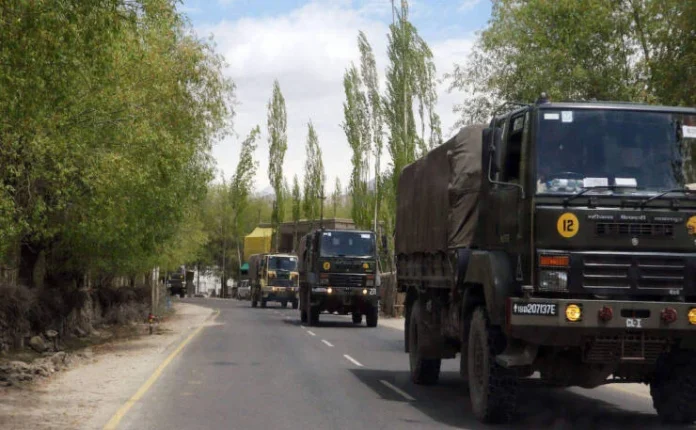
NEW DELHI: The Ladakh sector and other areas along the Line of Actual Control (LAC) now has developed infrastructure and the capability to accommodate a large number of troops in the habitats, courtesy Indian Army’s efforts. The Indian Army is engaged in a military stand-off with the Chinese army for more than a year.
These habitats would allow the troops to function efficiently even during the harsh winters experienced in Ladakh and sustain them through temperatures which sometimes go down to minus 45 degrees.

“Due to the military stand-off with China, the Indian Army has been able to complete the work planned in next five years in the last 12 months itself. The number of troops which can be easily accommodated and stationed in the Ladakh sector alone in the newly constructed habitats would be more than double the number of troops presents there,” official sources said.
According to estimates, both India and China have deployed more than 50,000 troops in the Eastern Ladakh sector opposite each other despite the limited disengagement in the Pangong lake sector by both sides earlier this year.
The sources said that the Corps of Engineers are still working all along the LAC to erect structures for the troops to operate there and accommodate additional forces if the need arises.
India has also been working to develop the road infrastructure in all the sectors along the LAC and has speeded up work on the Nimu-Padam-Darcha axis which is going to help troops move to Ladakh from other parts of the country round the year.

The defence ministry is also set to soon clear a proposal to allow the BRO to construct a 4.5 km-long tunnel for connectivity on the new road. The road connectivity to all the forward locations has also been made available much before the due dates by the Army engineers.
The military standoff between the two sides had started in the month of April-May last year when the Chinese used a summer military exercise to divert troops for aggression along the Indian territory in the eastern Ladakh areas while they built up troops along the Sikkim sector and other locations in the northeast to pressurize India.