


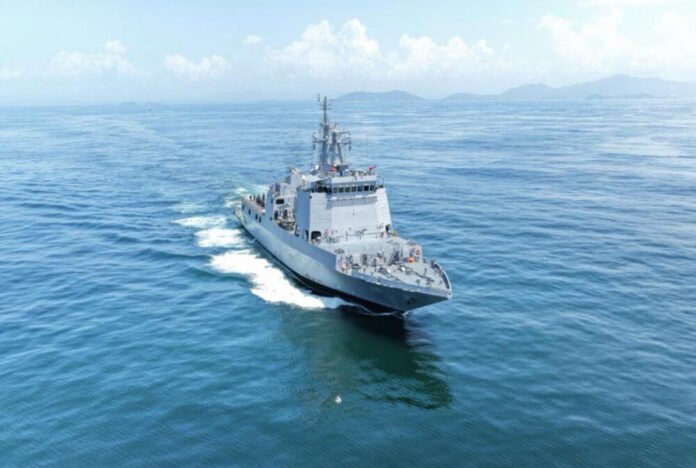
The Cabinet Committee on Security, chaired by Prime Minister Narendra Modi, cleared the project at a meeting on Wednesday, October 28, according to reports citing government officials. Contracts are expected to be signed in the coming days with Garden Reach Shipbuilders & Engineers (GRSE), based in Kolkata, and Goa Shipyard Limited (GSL). The first vessel is targeted for delivery by 2030.
The approval brings the programme closer to execution after more than four years of procurement work. The Defence Acquisition Council granted Acceptance of Necessity in June 2022, when the estimated cost was ₹ 36,000 crore. The Defence Ministry opened commercial bids for the eight vessels in May 2025, with GRSE emerging as the lowest bidder.

GRSE is expected to build five corvettes, while GSL will construct the remaining three. The division is expected to provide both public-sector shipyards with substantial orders and keep construction within India. Formal contracts have not yet been signed, and the delivery date remains a target rather than a confirmed schedule.
The vessels are described as high-speed surface combatants of around 2,000 tonnes, capable of speeds of approximately 30 knots. The Indian Navy’s in-house design is intended to provide stealth features and support multiple roles. The Ministry of Defence has said the corvettes are planned for surveillance, escort duties, deterrence, coastal defence, Surface Action Group operations and search-and-attack missions.
Corvettes are smaller than major surface combatants such as frigates and destroyers, but their speed and versatility can make them useful for patrol, coastal security and other operations. The new ships are intended to add flexibility to the Navy’s surface fleet, including its ability to monitor maritime activity and respond across the Indian Ocean region.
The project also reflects a broader push to source more defence equipment from Indian industry. Both shipyards are state-owned, and the vessels will be built to a design developed by the Navy. The procurement aligns with the government’s Aatmanirbhar Bharat drive for domestic manufacturing and its SAGAR vision-Security and Growth for All in the Region-which focuses on maritime security and cooperation.

The scale of the investment is a notable increase from the programme’s initial estimate of ₹ 36,000 crore in 2022. That earlier approval formed part of a wider ₹ 76,390-crore package of defence procurement proposals. The project then advanced through bidding and negotiations before reaching the CCS, the government’s highest security decision-making body.
With CCS approval secured, attention now shifts to contract signing, construction schedules and the shipyards’ ability to meet the first-delivery target. Officials have said the yards are examining ways to accelerate construction, but the final timetable will depend on the agreements and execution of the programme.







