


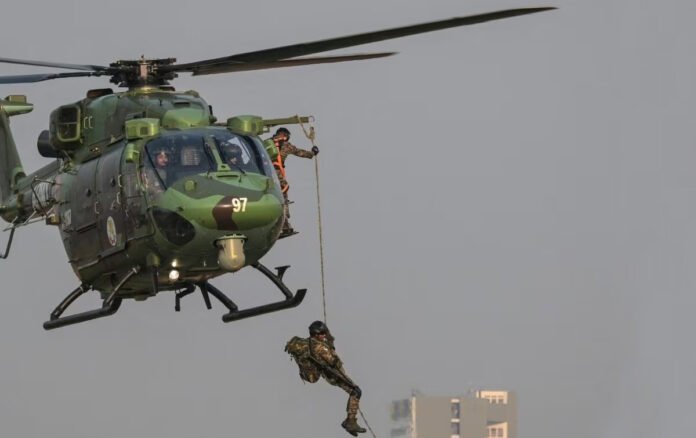
New Delhi: The Indian Air Force (IAF) is advancing plans to transform its attack helicopters into specialised drone hunters, equipping them with micro-missiles, AI-powered radars, GPS and radio-frequency jammers, and advanced fragmentation warheads.
This initiative, highlighted at the IAF-SIDM seminar SANKALP 2026 and tested during Exercise Rotor Clapp-III in Rajasthan, reflects India’s urgent push to counter the growing drone threat in modern warfare.

India is preparing its attack helicopters for a new role in contemporary battlefields. The Indian Air Force is set to equip its fleet with specialised micro-missiles designed to intercept and destroy hostile drones. These compact weapons are tailored for slow-moving, low-altitude aerial targets, ensuring precision against small unmanned systems that evade traditional defences.
Artificial intelligence-powered target identification systems will form the backbone of this upgrade. These systems will allow helicopters to detect, classify, and lock onto drones with high accuracy, reducing pilot workload and increasing engagement speed. The integration of AI reflects a broader trend in military aviation where machine learning is being harnessed to counter asymmetric threats.
Complementing these systems are radio-frequency and GPS jammers. These electronic warfare tools will disrupt enemy drone communications and navigation signals, effectively neutralising hostile UAVs before they can strike. By combining kinetic and non-kinetic measures, the Air Force is creating a layered counter-drone shield.
Advanced fragmentation warheads are also being introduced. These warheads, designed with steel-pallet configurations, maximise kill probability by creating a lethal mid-air burst radius. Such munitions are particularly effective against swarming drones, which present a complex challenge to conventional air defence systems.

The proposal follows discussions at the IAF-SIDM seminar, SANKALP 2026, where the Air Force outlined its capability challenges to domestic defence manufacturers. This initiative is part of India’s broader program to indigenise defence technologies and reduce reliance on imports, aligning with the Aatmanirbhar Bharat vision.
Exercise Rotor Clapp-III in Rajasthan has provided a testing ground for these concepts. During the exercise, helicopters practised drone interception tactics, validating the effectiveness of micro-missiles and electronic warfare systems in realistic scenarios. The drills demonstrated how attack helicopters could complement ground-based air defence networks by addressing terrain masking and line-of-sight blind spots.

India’s combat helicopter fleet, including the AH-64 Apache and the indigenous LCH Prachand, is expected to be the first to receive these upgrades. Traditionally used for close air support and anti-armour roles, these platforms are now being reimagined as agile counter-UAS systems capable of rapid interception.
The move reflects lessons learned from recent conflicts in West Asia and Ukraine, where drones have been used for reconnaissance, Kamikaze strikes, and swarm attacks. These conflicts exposed vulnerabilities in conventional air defence systems, underscoring the need for airborne solutions.
By equipping helicopters with micro-missiles, AI-driven radars, and electronic warfare pods, the Indian Air Force is positioning itself at the forefront of counter-drone warfare. This transformation signals a proactive approach to securing India’s airspace against evolving unmanned threats.






