


“The primary cardinal attributes of LEADERSHIP are PROFESSIONAL KNOWLEDGE AND COMPETENCE.” — Field Marshal SHFJ Manekshaw, 1971 Indo-Pak War
Militaries have used wargames to rehearse operational procedures, cultivate judgment, enhance adaptability, improve predictability, and augment decision-making for a better cutting-edge advantage. Thereby, they expand the qualitative professional military core competencies of officers by placing them inside realistic environments where they can make competitive decisions. As long as wargames authentically synthesise such environments—with appropriate information, psychological pressure, and a paucity of time complementing the genuine behaviour of the simulated forces—participants gain significant lessons.

The greater complexity of post-modern warfare—with increasing numbers and types of forces, operations in multiple domains, flatter information exchange structures leading to information overload, and closer involvement of civilian populations and resources—has increased the relevance of wargaming in the education of military forces. This necessitates that traditional techniques for wargaming keep up with new developments and be tailored to the specific requirements of diverse users, sponsors, and stakeholders.
There are seldom single or universal wargames. Wargames must be completely customised to their primary purpose (training or analysis), specific types of forces (such as air defence planning, beachhead operations, or logistics), or specialised operations and roles (amphibious operations and follow-on-support roles). Militaries also feel that it is absolutely imperative to customise wargames in conformity with the doctrinal ideologies of the Armed Forces for the training of staff, either at their respective staff colleges or at headquarters, as part of their Professional Military Education (PME). There is no space for ‘error’ in such wargames, which, besides being an embarrassment, would be counterproductive.
From a strategic perspective, the Strait of Hormuz is a geopolitical weapon that could affect the future balance of power, international markets, and the outcome of conflicts. Hormuz is a narrow waterway capable of holding the world hostage, to be followed likely by the Bab El Mandeb. Acute battle fatigue, combat casualties, the incertitude of war-holocaust conditions, and the near economic collapse of nations have led to speculative dilemmas regarding a temporary ceasefire in the case of the US, Israel, and Iran. These nations could hopefully agree to a temporary ceasefire extension, possibly opening the Strait of Hormuz and lifting the US-Israel blockade, leaving the rest of the terms to cautionary talks, though a fragile truce remains susceptible to accidental triggers.
The shifting of the economic centre of gravity affects nations, traditional security alliances, and, most of all, sensitive populations. Therefore, strategic resolve dictates that to find a panacea to obviate economic downfall and financial crises, a nation’s economic department or finance ministry has to be ‘thinking on its feet’ at all times. Russia, to surmount the Western sanctions passed against it, ensured that one of its options was to increase its dependence on China manifold, successfully flattening the trajectory of an impending economic catastrophe.

For the USA, President Trump needs a “JCPOA plus” to justify the war, American losses against Iranian hostilities, and the massive spending to preserve national security. Preventing the infliction of destruction on American bases, besides the colossal warfighting bills, has cumulatively aggregated into trillions of dollars. He is now, therefore, looking critically at the 440 kg of enriched uranium possessed by Iran; however, there is a very remote possibility of achieving a strategic resolution between the countries on this highly delicate and sensitive issue. Consequently, Trump is trying his very best through allies to attract more countries into the Abraham Accords, which, truth be told, have very little to do with the war, the opening of the Strait of Hormuz, providing relief to the world oil trade, or the corresponding improvement of related economies.
The faculty and students must be aware that approximately half of India’s crude oil imports and an acute 90% of its imported LNG transit through the volatile, narrow Hormuz Strait. Any disruptions would trigger immediate shipping freight and insurance spikes, despite the Strategic Petroleum Reserve (SPR) being at 5.33 MMT. Therefore, the ‘Whole-of-Nation Approach’ here would be to protect macroeconomic resilience. This would translate into every Indian citizen stepping up as a disciplined fiscal soldier on the domestic front by adopting fuel conservation habits, optimising public transport, and rationalising non-essential capital outgoes (like speculative gold purchases and luxury foreign travel). We must defend the Rupee denomination and secure our economic sovereignty. In difficult times, the nation requires strong leadership and the citizenry to imbibe a resilient spirit, galvanising market forces toward desired prosperity levels with astuteness and patience, while executing well-planned diplomatic initiatives to defend the economic trajectory.

Modern battlefields extend beyond land, sea, and air into the cyber, information, and cognitive domains. Wargaming helps military professionals understand and respond to these increasingly interconnected challenges
While students are mature and conversant with social media, they still need to comprehend the rationale and symbiotic civil-military logic. They should be guided to consolidate meaningful gains in the correct perspective, in sync with new dynamic policy formulations conforming to national interests in a war scenario. India faces a critical strategic paradox: our blistering pace of growth is precisely what drives an insatiable, non-negotiable appetite for primary energy, leaving us highly vulnerable to external energy and supply chain shocks. Presently, India has achieved a 7.8% GDP growth. Let our wargame planners apply pervasive economic wisdom to such geopolitical issues for the growth of a vibrant nation, building a realistic dimension to exemplify the ongoing rivalries in a fragmented world.
The contemporary paradigmatic wargaming ideology is relevant to staff training, nurturing education across multiple domains. It necessitates a specific design approach toward animated wargaming as a training tool for operational judgment, coordination, planning, and decision-making as part of PME for staff officers. The approach also serves as an analytical tool for making staff estimates of planning, force structuring, posturing, and capability building.
Fundamental Forms of Wargaming
Wargames can be classified by various types of criteria: purpose, method, type of playing, players, and modelling approach. By the method of playing, the four primary forms are seminar, matrix, board or tabletop, and computer-based or computer-assisted wargames. Each of these has different techniques and varying abilities to meet different educational objectives. Optimising wargames mandates a high degree of adaptation and the flexibility to incorporate new organisations, along with their corresponding tenets and principles of employment, formidable firepower, strengths, and vulnerabilities.
Important Types of Wargames
- Seminar Games: These involve a guided examination of situations, often using a sand model or map as a visual tool. They are flexible, easy to set up, and inexpensive to run, without relying heavily upon detailed rules or the expertise of the director. However, unless expertly run, they tend to degenerate into uncontrolled discussions dominated by seniority or the strength of individual personalities, though several important lessons are still learnt.
- Matrix Wargaming: This is a preferred, structured approach that uses specific parameters to define game states and progresses through a combination of discussions and participative decision-making procedures. As such games have carefully defined variables and rules, they remain more anchored to the designated game states, making it easier to track progress. However, matrix gaming requires high facilitator expertise and experience to design and seamlessly conduct the games.
- Board and Tabletop Games: These use counters or miniatures to represent forces, which are then manoeuvred over vivid terrain models and maps according to defined rules. They require a degree of abstraction, yet well-modelled rules are easily understandable by users. However, due to their manual nature, only small scenarios with a limited number of forces and parameters can be handled.
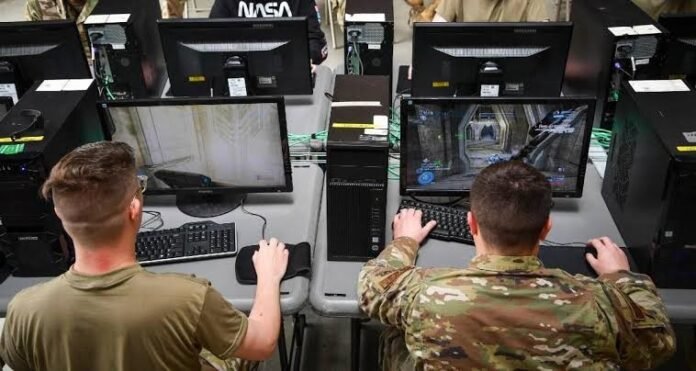
- Computer-Based or Computer-Assisted Games: These can handle large palettes of forces, variables, terrain, time durations, and players. However, being heavily influenced by operations research and systems analysis (OR&SA) traditions, they prefer detailed mechanical models, emphasising quantifiable variables and complex mathematics. Computerised wargames can be used by a large number of players using a network of computers to play major operations. But they tend to focus exclusively on measurables, prioritising casualties as the measure of progress (thereby shifting the basic focus away from manoeuvre). Furthermore, they underrepresent human variables such as morale, cognition, leadership, and cohesion, while generating tempos of operations that are not matched by empirical observation of wars and would be unsustainable in real life.
Effective wargames create realistic environments that test judgment, adaptability, and decision-making under pressure. They enable officers to learn valuable lessons without the costs and consequences of actual conflict
Two Additional Wargame-like Activities
Two concepts—course-of-action (COA) wargaming and red-teaming—are closely associated with wargaming.
The former (COA) is not a simulation, but rather progresses in an argument–response–counterargument sequence along crucial paths or aspects of a COA, such as an avenue of attack, a defensive battle, or a logistics pause. Their purpose is to fill or enrich the Decision Support Matrix (DSM). As the technique evolved out of systems-theory-based IPB procedures, it is normally dismissed as too sequential to represent reality. While this critique is absolutely correct, COA wargaming can be easily readjusted to the requirements of the curriculum and its contemporary relevance.
The other concept, red-teaming, is not wargaming but the practice of utilising a ‘red team’ that thinks like the enemy and plays the devil’s advocate at all junctures of a COA. Its role is simply to challenge a plan and identify all possible points of failure so that the plan can be made more justifiable and highly resilient. As the impacts of each event or decision on the red side are not actually carried forward—meaning that, unlike in a wargame, residual combat power and other balances are not updated continually—classical ‘red teaming’ is not really a two-sided wargame. Instead, it serves as an appropriate brainstorming tool for maximising lessons to be learnt and practicing various battle contingencies and their associated complex issues.
Computerising land wargames is challenging because the units of land forces considered by force commanders do not remain static; instead, they continually regroup and reorganise, while the terrain is fractured into complex types. In contrast, air and naval wargames are comparatively easier to design due to the greater cogency of forces and homogeneity of the environment.
However, it is seen that the computerised air wargame used at the DSSC is properly based on the legacy of the ‘Deep Blue’ system, acting as a large mission planner and simulator, which has gone into relatively greater depths regarding the staff and coordination aspects of air operations. Furthermore, aspects of ‘Escalation Control’ and the optimisation of PGMs against critical strategic targets are significantly integrated into the wargames. This ensures that an adversary’s brinkmanship does not upset the planning process for the operationalisation of strategic plans.
Operation ‘Sindoor’ showcased the precision strikes undertaken by the IAF against certain strategic targets with utmost synergetic professionalism. Escalatory constraints obviated further punitive action against these critical targets, but the message sent across by India was very transparent. It boldly reiterated that we can undertake unimaginable destruction avenged by tri-service synergy if we are convinced that the perpetrators of terrorism and crime committed on Indian soil will face lamentable consequences—serving as a deterrence to avoid strategic punitive action.
The growing complexity of warfare makes realistic and adaptive wargaming indispensable. The next stage is to examine how these tools can be applied specifically to staff training and operational decision-making.

Lt Gen S K Gadeock is a distinguished military leader, global strategist, and scholar who served as the Commandant of the Defence Services Staff College. A decorated veteran and former Logistics Advisor to the Botswana Defence Force, he has held numerous high-ranking appointments including Director General of the Amity Institute of Defence & Strategic Studies. Serving on the Advisory Board of Raksha Anirveda, he is a prolific writer and motivational speaker.





