


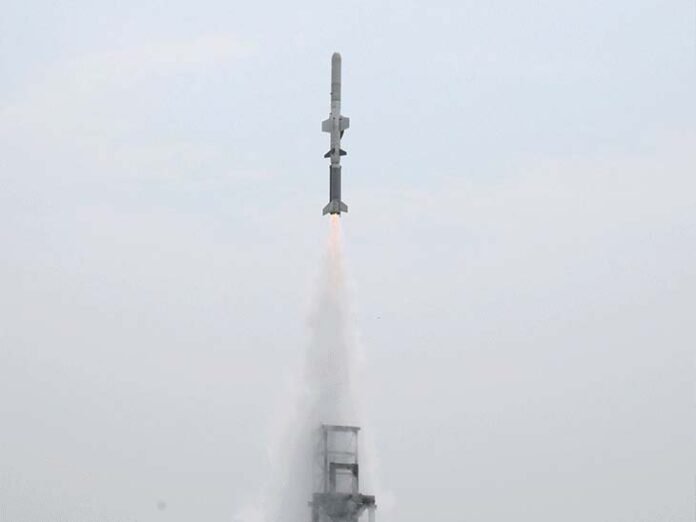
The multi-layered Ballistic Missile Defence (BMD) tests confirm India’s ability to intercept and neutralise long-range ballistic missile threats, including those in the Intercontinental Ballistic Missile (ICBM) class (up to 5,000 km range), placing India in an elite group of nations (alongside the US, Russia, China, and Israel) with operational BMD shields.
The trials involved a complex “shoot-on-fly” scenario where multiple missiles were in the sky simultaneously:

AD-2 Interceptor (Exo-atmospheric): The first interceptor engaged the target outside the Earth’s atmosphere (mid-course phase). Designed to destroy threats at very high altitudes before they re-enter, this missile operates at hypersonic speeds (Mach 6–7) to neutralise incoming warheads in space.
AD-1 Interceptor (Endo-atmospheric): The second interceptor engaged a separate target within the Earth’s atmosphere (terminal phase). This acts as a “last line of defence,” utilising advanced guidance algorithms to track and destroy fast-moving missiles that may have evaded the outer layer.
NASM-MR (Maiden Flight): While primarily a BMD demonstration, the third successful flight test was the maiden trial of the Naval Anti-Ship Missile – Medium Range (NASM-MR). This indigenous missile demonstrated precision navigation and sea-skimming capabilities, intended to strengthen the Indian Navy’s maritime strike capacity.
Strategic Significance and Technical Capabilities

Target Simulation: The interceptors successfully engaged Agni-series missiles launched from Dhamra, which mimicked hostile Intermediate Range Ballistic Missiles (IRBMs) and ICBMs.
Network-Centric Warfare: The tests validated the integration of indigenous long-range tracking radars (deployed on land and sea), low-latency communication links, and mission control centres. All systems operated in full operational mode to handle multiple targets simultaneously.

Regional Deterrence: This capability is a direct counter to the expanding missile arsenals of neighbouring powers, specifically China’s Dongfeng series and Pakistan’s Shaheen-III and MIRV-capable Ababeel missiles.
Phase-II Validation: These trials marked the culmination of India’s Phase-II BMD programme, which is designed to defeat more advanced, high-speed threats than the currently deployed Phase-I shield protecting Delhi and Mumbai.
Future Roadmap: Phase-III
Following this success, DRDO has initiated work on Phase-III of the BMD programme. This next generation will focus on developing interceptors (internally designated AD-AH and AD-AM) capable of countering emerging threats such as:
Hypersonic Glide Vehicles (HGVs): Weapons travelling above Mach 5 with manoeuverable trajectories.
MIRVed Warheads: Missiles carrying multiple independently targetable re-entry vehicles.






