India’s security environment demands a proactive shift from reacting to current threats to anticipating future warfare. CENJOWS (Centre for Joint Warfare Studies), an autonomous think tank, leads this transformation by fostering tri-service integration, leveraging civil-military synergy and bridging policymakers, industry and academia. Through institutional independence and strategic foresight, it builds the intellectual foundation for a resilient, self-reliant defense ecosystem.
Dedicated to driving jointness and integration in support of national power, it serves as a strategic platform to rise above sectoral legacies and examine joint warfare and synergy issues. CENJOWS organises Annual Trident Lecture Series, from 2025 onwards. The Second Annual Trident Lecture, will be held on Tuesday, September1, 2026, at the Ashoka Conference Hall, Manekshaw Centre, New Delhi. The theme of this year’s lecture is: “National Resurgence Through the Lens of Defence Forces”.

The event is being organised to commemorate the organisation’s Foundation Day and to strengthen strategic dialogue within the national security community. It is the organisation’s flagship event and serves as a premier forum for informed discussions on national security, defence policy, jointness and military transformation.
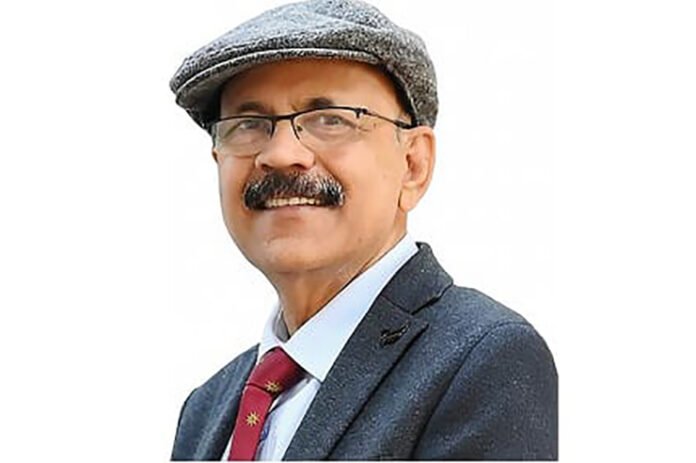
Raksha Anirveda’s Editor Ajit Thakur spoke to Major General (Dr) Ashok Kumar, VSM (Retd), Director General – CENJOWS, to understand the centres’ objectives, its journey so far since 2007 and how the Trident Lecture Series contributes to the defence ecosystem of India.
RA: Last year’s inaugural Trident Lecture was anchored on ‘Dominating the Future Battlespace’. The theme chosen for this year’s Second Annual Trident Lecture is ‘National Resurgence Through the Lens of Defence Forces’. What specific areas will the deliberations focus on? Kindly provide a detailed account.
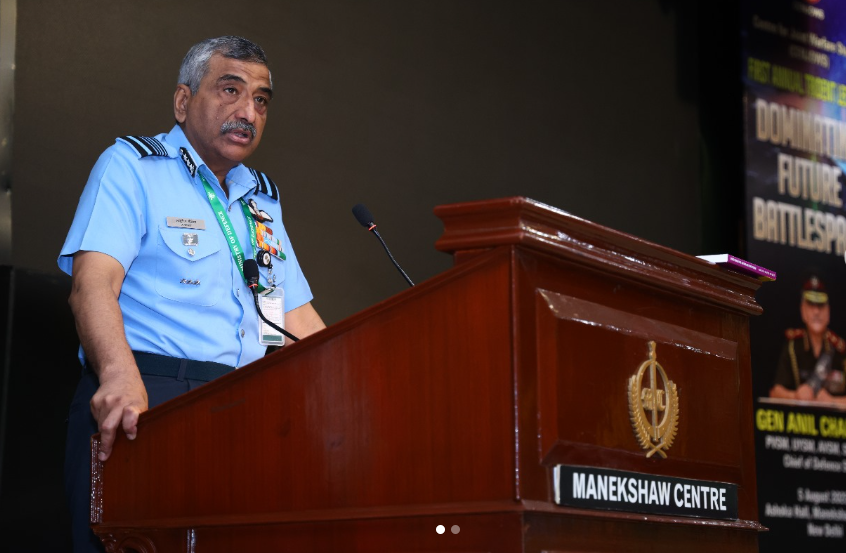
AK: The shift from last year’s focus on “Dominating the Future Battlespace” to this year’s “National Resurgence Through the Lens of Defence Forces” is deliberate. Last year, we examined the changing character of warfare; this year, we are widening the lens to look at how the Defence Forces contribute to building national capability and resilience.

The deliberations will broadly cover three interconnected areas. First, the next generation and its role in nation-building i.e. how India can convert its demographic strength into knowledge, innovation, technology, entrepreneurship and military capability.
Second, jointness and integration – how we move beyond Service-wise approaches towards integrated capabilities and decision-making across the land, maritime, air, cyber, space, electromagnetic and information domains.

Third, civil-military fusion – how India’s scientific, technological and industrial ecosystem can be better connected with defence requirements, particularly in areas such as AI, autonomous systems, semiconductors, advanced communications and space.
These subjects have been chosen because they concern capabilities that take years to build, but may be required at a very short notice. Strategic foresight is therefore essential. The Trident Lecture series is intended to provide precisely that space – to step back from immediate requirements and examine the longer-term choices that will determine India’s strategic preparedness.
RA: CENJOWS was raised in 2007 as India’s first tri-service think tank under HQ IDS. Nearly two decades on, how has the Centre’s mandate evolved, and what role does it play today in examining jointness and synergy issues across the three Services in their entirety?
AK: The core purpose of CENJOWS remains unchanged – to promote jointness and integration and support higher defence management through research. What has changed is the complexity of the security environment. While jointness in 2007 focused largely on Service integration, structures, doctrine and interoperability, today it encompasses a much broader spectrum of capabilities and domains.
The Trident Lecture pivots to examine how defence capabilities fuel broader national resilience. Deliberations focus on transforming demographic potential into technological and military strength, achieving seamless tri-service jointness across emerging domains and deepening civil-military technological fusion in critical areas like AI, space and semiconductors
Its work now encompasses future warfare, theatre-level operations, higher defence management, Manned-Unmanned Teaming, cyber and space, defence technology, acquisition and production, joint training, war-gaming and the broader national security ecosystem.
Over the years, CENJOWS has built substantial research and institutional experience through studies, seminars, publications and engagement with serving personnel, veterans, academics and experts.
Today, our role is to examine operational issues through a wider strategic lens, particularly those that cut across organisational boundaries. We do not seek to duplicate the work of the Services or government. Rather, we aim to identify emerging challenges, connect diverse perspectives and develop informed options for consideration going forward, I see an even greater role for CENJOWS in strategic foresight-identifying developments that may not yet constitute immediate operational concerns but could have major implications for India’s security environment over the next decade or two.
RA: CENJOWS is often described as a bridge between the government, private sector, academia, NGOs and civil society on defence matters. Could you elaborate on how the Centre actually operationalises this interface – through seminars, publications like Synergy, or structured dialogues – and how it ensures each stakeholder’s voice genuinely shapes the outcome?
AK: The purpose of being a bridge is not simply to bring people into the same room. It is to ensure that different forms of expertise interact meaningfully. A serving officer brings an understanding of operational requirements. A scientist may understand the technological possibilities. Industry understands production and scalability. Academia can provide research and comparative perspectives. Policymakers bring the larger institutional and strategic context.
CENJOWS attempts to bring these perspectives together around a specific security problem or capability challenge. We use different formats, depending on the objective. Seminars and conferences allow a broad exchange of ideas. Closed-door discussions are useful where a subject requires more candid professional examination. Research projects allow deeper investigation, while publications provide a means of taking the discussion to a much wider audience. Increasingly, our engagement with industry is also becoming more problem-oriented. Instead of asking simply, “What technology is available?”, the more useful question is, “What operational problem are we trying to solve, and which technology can address it?”
Since its inception in 2007, CENJOWS has expanded beyond basic tri-service interoperability to navigate a multi-domain operational landscape. Modern research targets higher defence management, manned-unmanned teaming, cyber-space warfare and war-gaming, providing decision-makers with the strategic foresight necessary to anticipate long-term security shifts
Our Synergy journal is an important component of this effort, taking issues raised through such interactions into deeper research and wider professional discourse. It provides a platform for sustained scholarship on jointness, integration and wider defence issues, rather than limiting our engagement to individual events.
We also believe that the interface must work in both directions. CENJOWS not only assist in simply communicating the requirements of the Armed Forces to external stakeholders, but also brings back technological possibilities, academic insights and alternative approaches for consideration within the defence community. That is how a bridge becomes useful – it must allow ideas to travel in both directions.
RA: Given that CENJOWS functions under the aegis of HQ IDS, yet, it is meant to offer an independent and unbiased platform, so that competing viewpoints and unconventional alternatives can genuinely emerge, rather than the conversation defaulting to an official line, how?
AK: CENJOWS’ institutional association with HQ IDS and its intellectual independence are not contradictory. The Centre has a defined institutional mandate to facilitate free and informed discussion and develop independent policy options. We do not approach every subject with a predetermined conclusion.
Understanding the official position is not the same as being bound by it. In fact, on difficult issues, the value of a think tank lies precisely in asking questions that may not be comfortable: What are the weaknesses in the existing approach? What are the alternatives? What are the unintended consequences? What assumptions are we making? and, what might an adversary exploit?
We therefore encourage speakers and researchers to present evidence-based arguments even when they differ from prevailing views. At the same time, independence does not mean disregarding institutional or security requirements. A defence think tank should understand the legitimate boundaries concerning classified information, operational security, operational realities, institutional constraints and national interest. Within those boundaries, however, intellectual candour is essential.
A strategic institution should not function as an echo chamber. Our discussions must be evidence based, professionally argued, and consistent with national interests and security considerations.
We aim to ensure that decision-makers are presented with well-researched arguments, competing perspectives and viable alternatives, allowing them to make better-informed decisions.
CENJOWS operationalises multi-stakeholder collaboration by shifting the focus from available technology to solving concrete operational problems. Through policy briefs, closed-door discussions and publications like Synergy, it translates military needs to industry and academia while channeling technological possibilities and academic research back into the defence establishment
RA: You have described CENJOWS as a referral and support think tank to the Ministry of Defence and HQ IDS. Could you walk us through a recent instance where CENJOWS generated research or a policy paper – such as the General Bipin Rawat Paper on Manned- Unmanned Teaming – directly informed a decision or debate within the defence establishment?
AK: I would distinguish between informing a debate and directly determining a decision. It would not be appropriate for us to claim that a particular CENJOWS paper caused a specific government decision unless that linkage is formally established.
The General Bipin Rawat Paper on Manned-Unmanned Teaming exemplifies our approach. Rather than viewing MUM-T merely as an acquisition of unmanned platforms, the paper examines its implications for future war-fighting concepts, command and control, human machine interaction, doctrine, training and force organisation.
Our contribution, therefore, is best understood as an idea-to-policy continuum: identifying emerging challenges, generating research, bringing stakeholders together, testing competing perspectives and placing these ideas before the wider defence establishment.
Some recommendations may eventually influence doctrine, training, capability development or policy; others may not. A think tank’s value is not simply whether every recommendation is adopted, but whether it frames emerging problems early, identifies capability gaps and expands the range of informed choices available to decision-makers. That ultimately, is how CENJOWS seeks to support the defence establishment: not by making decisions, but by helping decision-makers make better-informed ones.
Operating under HQ IDS, CENJOWS preserves objective analysis by challenging default assumptions and evaluating strategic risks. Intellectual candor – asking uncomfortable questions about operational vulnerabilities and adversary exploits – complements national security boundaries, ensuring leadership receives evidence-based alternatives rather than echoed positions
RA: How does CENJOWS structure its engagement with policymakers, serving officers, scholars and defence experts – is it primarily through closed-door consultations, published policy briefs, seminars like Kalam and Kavach, or a combination – and how do you measure whether that engagement is actually influencing decision-making?
AK: Our engagement operates at several levels, and each serves a different purpose. At the foundational level is research – studies, policy papers, monographs and analytical work. The second level is professional dialogue through lectures, podcasts, seminars, conferences and closed-door discussions. The third is dissemination through publications such as Synergy, issue briefs and reports.
Our Kalam & Kavach initiative is one example of how we are expanding the ecosystem of defence dialogue beyond conventional military conferences. Its recent edition brought together discussions around defence reforms, defence technology, manufacturing and acquisition, in the context of India’s effort towards technological self-reliance.
Similarly, the Trident Lecture is designed as a strategic foresight platform rather than simply a ceremonial lecture. Thus, it is very much a combination, because different questions require different forms of engagement.
In terms of measuring influence, we look beyond attendance figures. We examine whether our research leads to requests for further examination, consultations, follow-on studies, professional discussions or engagement by relevant institutions.
A think tank’s influence is often cumulative rather than immediate. Its contribution may be one of several inputs into a decision, rather than the single identifiable source of that decision. Our responsibility is therefore, to ensure that when a decision-maker encounters a particular strategic problem, sound research and multiple perspectives are already available for consideration.
Any think tank’s impact is measured by how effectively it shapes debates rather than directly dictating decisions. The General Bipin Rawat Paper on Manned-Unmanned Teaming highlights this approach, reframing platform acquisitions into comprehensive doctrine, command-and-control and force-organisation models to expand options for defence planners
RA: Jointness in warfare increasingly depends on indigenous technology and platforms. How does CENJOWS connect with the domestic defence industry – public and private to advance Aatmanirbhar Bharat and Make in India initiatives, and what more do you think is needed to align industrial capacity with the Services’ operational requirements for integrated theatre commands?
AK: CENJOWS engages with both the public and private defence industry, including MSMEs and start-ups, around emerging capability requirements. This year’s engagements alone have addressed areas such as unmanned systems, counter-drone capabilities, critical-component indigenisation, semiconductors, defence procurement and emerging technologies.
For instance, we recently organised a two-day workshop on defence procurement, iDEX, TPCR and testing procedures for MSMEs and start-ups, in collaboration with HQ IDS (Indigenisation Directorate). It brought together the Armed Forces, DRDO, industry, MSMEs, start-ups and academia to examine procurement pathways, testing and certification requirements, operational needs and the practical challenges faced by emerging enterprises in entering the defence ecosystem.
Similarly, our engagement on emerging technologies has included a seminar on the challenges faced by the defence drone and counter-drone manufacturing ecosystem, as well as a seminar, organised with the HQ IDS Medical Branch, on Brain-Computer Interfaces and their strategic implications.
The latter brought together the Services, DRDO, PSUs, academia and industry, with more than 200 participants and nine industries showcasing their capabilities. CENJOWS’ role is to facilitate the conversation between the operational requirement and the technological solution, and to identify where institutional gaps may be preventing that connection.
CENJOWS advances Aatmanirbhar Bharat by directly connecting operational requirements with private industry, MSMEs and startups. Targeted initiatives on drone warfare, procurement pathways and Brain-Computer Interfaces address critical ecosystem bottlenecks, facilitating direct alignment between commercial industrial capacity and integrated theatre command needs
RA: Looking ahead, what would you consider a genuine marker of success for the Trident Lecture Series five years from now – in terms of its influence on actual joint warfare doctrine and theaterisation, rather than just as an annual event on the defence calendar?
AK: The Trident Lecture Series was instituted as a platform bringing together government and political representatives, military leadership, veterans, academics, think tanks, industry and the media to exchange perspectives on issues shaping India’s future security and defence preparedness. Its core purpose is to provide foresight on emerging challenges and highlight areas where India needs to prepare ahead.
Five years from now, its success should be judged by whether Trident has become a credible forum for identifying important security issues early and generating informed discussion around them. If its deliberations help stakeholders identify capability gaps, shape further research and policy discussions, and improve preparedness in areas such as future warfare, jointness, technology and civil-military cooperation, then Trident will have served its purpose.
The objective is not to create another event on the defence calendar. It is to create a continuing intellectual process that contributes to India’s preparation for future warfare. In simple terms, the measure of success will be whether Trident helps us think ahead and prepare better.