


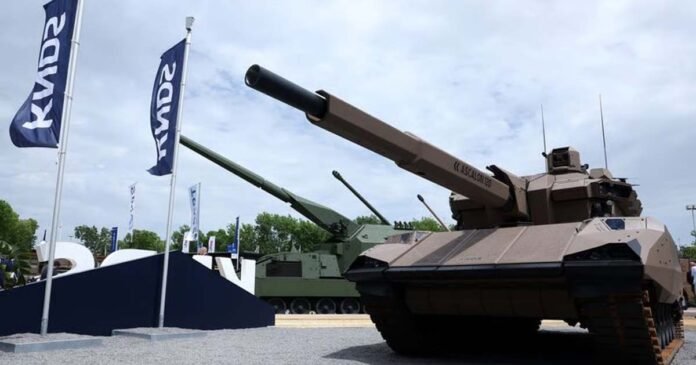
PARIS. Franco-German defence conglomerate KNDS has unveiled its new “CAPINT” intermediate battle tank at Eurosatory 2026, creating a vital stopgap system to counter delayed next-generation European armour timelines.
The sudden unveiling highlights deep structural challenges facing European defence integration. Engineered as a temporary replacement for the French Army’s aging Leclerc fleet, the new armour platform surfaces just one week after France and Germany officially terminated their heavily disputed, collaborative FCAS fighter jet programme.

The CAPINT: A Hybrid Technological Compromise
Rather than waiting for the multi-decade Main Ground Combat System (MGCS) project – which is currently running roughly ten years behind its original schedule -KNDS rapidly engineered the CAPINT (Intermediary Capability) tank. The system acts as a direct physical bridge between current operational gear and future combat architectures by merging existing technologies:
- German Heavy Mobility: Utilising a ruggedised, modified main battle tank chassis engineered by KNDS’s German division.
- French Strike Precision: Integrating a high-velocity, autoloading tank gun system built entirely by the conglomerate’s French division.
Securing Sovereignty Amid Political Friction
The introduction of the CAPINT comes at a highly critical geopolitical juncture. With the French Leclerc tanks scheduled for phased retirement by 2038 and the joint MGCS successor not expected to reach combat-ready status until well into the 2040s, frontline armies face a critical, decade-long armor gap.
Compounded by persistent fears of expansionist Russian military posture and shifting political dynamics in the United States regarding NATO spending, European capitals are moving aggressively to secure immediate, sovereign land combat mass. The hybrid CAPINT tank represents a pragmatic pivot away from sluggish, highly politiciced academic defence projects toward immediate, production-ready manufacturing reality.






